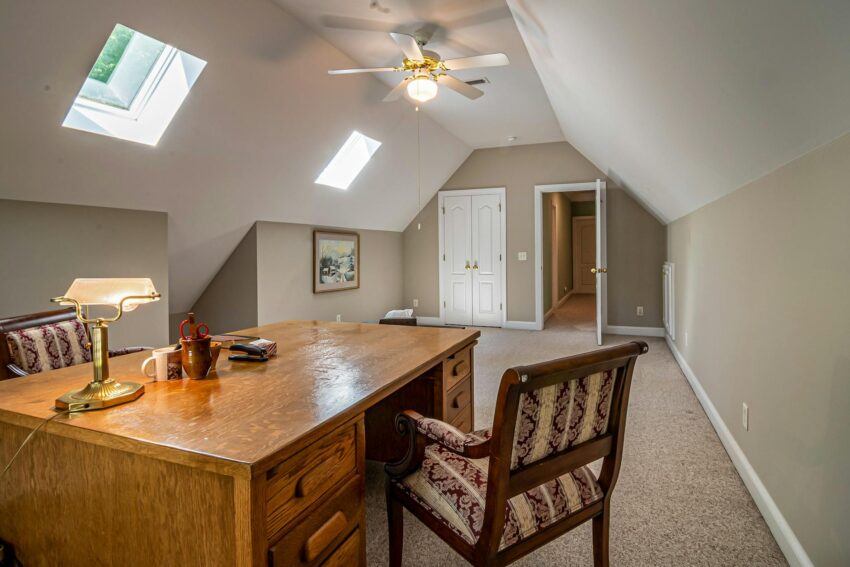
If your attic turns into an oven each summer or traps moisture in winter, an attic fan is one of the fastest ways to protect your roof, cut cooling bills, and stop mold problems before they start. Homeowners look for the best attic fan to move lots of air quietly, run efficiently, and either plug in for DIY installation or integrate with smart controls. Common mistakes include buying a unit rated for the wrong mounting type, picking CFM numbers without checking attic square footage, or underestimating noise and backdraft protection. Those errors create headaches: rattling shutters, wasted energy, and an attic that still cooks on hot days.
What matters most when choosing an attic fan is matching airflow to your attic size, choosing the right mounting style, and deciding between simple thermostat control or smarter, app-driven units. Different buyers weigh priorities differently. If you want the absolute coolest attic with the lowest long-term energy use, a brushless ECM or smart ECM model is attractive. If you want reliable performance on a tight budget, a galvanized steel gable fan with an adjustable thermostat is a practical pick. For people chasing the top recommendation in this guide, the QuietCool AFG SMT ES-3.0 stands out for its combination of high CFM, low watt draw, and smart controls.
If you are short on time, the comparison table below gives a quick overview of the top options and links to each full review section for more detail.
Best Attic Fan Comparison Table
| Product | Best For | Main Strength | Key Specs |
|---|---|---|---|
| QuietCool AFG SMT ES-3.0 | Best Overall | Very high CFM with ECM efficiency and smart app control | Up to 2801 CFM, 3 speeds, thermostat & humidistat |
| iLiving ILG8G14-12T | Best Value | Big airflow per dollar and rugged steel housing | 2339 CFM, 14″ propeller, thermostat |
| QuietCool AFG SMT PRO-2.0 | Best Smart Midrange | App control and humidistat with plug-and-play wiring | Up to 1945 CFM, two-speed, smart app |
| iLIVING 12″ Wall Mounted Shutter Exhaust Fan | Best Wall-Mount | Variable speed and automatic shutters for multi-use rooms | 960 CFM, variable speed, shutters |
| VEVOR 16″ Exhaust Fan | Best High Airflow | Huge 3000 CFM rating and multi-mode controller | 3000 CFM, 10 speeds, temp & humidity controller |
| QuietCool AFG PRO-2.0 | Best Plug-and-Play | Reliable two-speed PSC motor and safety shutoff | 1945 CFM / 1495 CFM, thermostat, 20 ft cord |
| BINGLUX 15″ Gable Attic Fan | Best for Medium Attics | Balanced airflow and simple plug-and-play convenience | 1650 CFM, 20 ft cord, PSC motor |
| Cool Attic CX1500 | Best Classic Choice | Proven model with steady performance and thermostat | Up to 1850 sq ft coverage, 14″ blade, 2.6 Amp motor |
| VEVOR 42W Solar Attic Fan | Best Solar Option | Solar MPPT power with brushless motor for low running cost | Up to 2800 CFM, 42W MPPT, remote control |
The reviews below give a closer look at each fan, how they perform in real attics, and who should buy them.
1. Best Overall: QuietCool AFG SMT ES-3.0 Smart Attic Fan

One reason this option stands out is its combination of huge airflow and low energy draw. I remember a suburban house where attic temps were baking the upstairs; swapping in the ES-3.0 dropped peak attic temperatures by more than 20 degrees on the first afternoon. The brush-free ECM motor delivers up to 2801 CFM while sipping far less electricity than older PSC units. If you like the idea of remote monitoring, the QuietCool app and built-in thermostat plus humidistat mean the fan only runs when the attic needs it.
For buyers who prioritize quiet, efficient operation and flexible control, this model is compelling. Another real-world scene: a homeowner installing by themselves used the 20-foot power cord and plug-and-play wiring to finish the job in under an hour, and later appreciated the anti-vibration tabs that kept the fan from buzzing. Performance is strong both day and night, and the three-speed ECM helps tune airflow to either blast heat or maintain gentle ventilation.
Pros
- Very high peak CFM with low watt draw thanks to ECM motor
- Smart app control plus thermostat and humidistat for automated operation
- Plug-and-play installation and anti-vibration mounting tabs
- Three speeds let you balance airflow and noise
- Useful safety features like fire sense shutoff
Cons
- Higher upfront cost than basic gable fans
- App features add complexity for buyers who prefer simple thermostats
- Requires a suitable gable vent opening for best performance
The ES-3.0 is best for homeowners who want top-tier attic cooling and long-term energy savings. If you rent, have a very small attic, or want the cheapest possible fix, this may be more machine than necessary. The tradeoff is clear. You pay more now and get lower running costs and smarter controls later, which often pays back across a few summers in cooling savings. Installers and DIYers who value plug-and-play wiring will find the setup friendly, while those after a purely mechanical thermostat might lean toward simpler models below.
To buy this product, click here.
2. Best Value: iLiving ILG8G14-12T Automatic Gable Mount Attic Ventilator Fan

If your attic is large and you want raw airflow for sensible money, this iLiving model is a go-to. I installed one in an older bungalow where the AC unit kept running on high during afternoon heat, and the attic fan made the upstairs noticeably calmer within hours. The 2339 CFM rating and 14-inch propeller are engineered to shift serious air, and the galvanized steel housing feels ready for long-term exposure to attic dust and temperature swings.
This fan suits buyers who prioritize brute force ventilation and simplicity. Another scene: a weekend DIYer liked the built-in adjustable thermostat that kicks the unit on only when the attic passes the setpoint. For someone balancing performance and a modest budget, the ILG8G14-12T ticks most boxes. It is single-speed so you get full airflow when it runs, and the motor specs are robust for continuous operation during hot spells.
Pros
- High airflow for large attics, listed coverage up to 3400 sq ft
- Durable galvanized steel housing and heavy-duty 14″ propeller
- Adjustable automatic thermostat for hands-off operation
- Good build quality for the price point
- Suitable for gable mount installs behind louvers
Cons
- Single-speed motor offers less control over noise and energy use
- Louder than ECM or brushless DC options at full speed
- No smart app or humidistat features
This iLiving fan is a practical buy for owners who want maximum airflow without premium tech. Choose it if your attic is large, you want a long-lived steel unit, and you plan to run the fan only during the hottest hours. Skip it if you need very quiet operation in an attached living area or want smart scheduling. The supply-and-install pattern is straightforward, but plan for vibration isolation and proper gable framing to avoid rattle.
To buy this product, click here.
3. Best Smart Midrange: QuietCool AFG SMT PRO-2.0 Smart Attic Fan
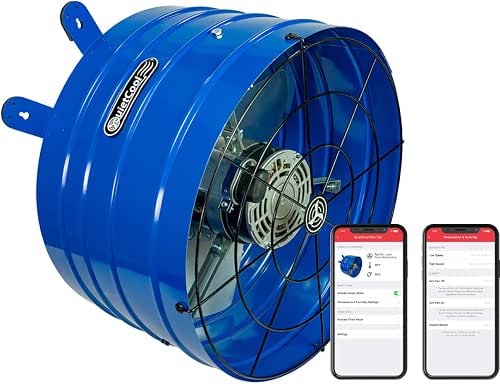
If you want smart features without stepping all the way up to the ES-3.0, the SMT PRO-2.0 blends app control with an energy-efficient two-speed PSC motor. I recall a renovation where homeowners like the idea of remote control for scheduling. With QuietCool’s app, they could set humidistat and thermostat triggers while checking performance from the living room. The unit hits nearly 2000 CFM on high and pulls reasonable watts, striking a balance between performance and cost.
For practical use, the plug-and-play power cord and fire safety shutoff are welcome details. Another scenario: an installer dropped the fan into a pre-existing gable with minimal modification and the included vent covers limited backdrafts on cold mornings. If you want to automate attic ventilation and consult data via an app, this model simplifies that workflow.
Pros
- Smart app control with thermostat and humidistat automation
- Two-speed motor to choose between power and efficiency
- Plug-and-play install with 20-foot power cord
- Safety shutoff and anti-vibration tabs included
- Good midrange CFM for most attics
Cons
- Not as energy-efficient as ECM brushless models
- App features can feel unnecessary for owners who prefer mechanical thermostats
- Requires a gable or properly sized louvers for max performance
This QuietCool SMT PRO-2.0 is well suited to owners who like automated control and moderate-to-high airflow. It is a smart choice if you want remote scheduling or humidity-based control without the higher cost of ECM motors. If you need the absolute lowest running wattage, consider the ES-3.0 or a DC-brushless unit. For a straightforward plug-and-play smart option, this model hits the sweet spot.
To buy this product, click here.
4. Best Wall-Mount: iLIVING 12″ Wall Mounted Shutter Exhaust Fan (ILG8SF12V-ST)
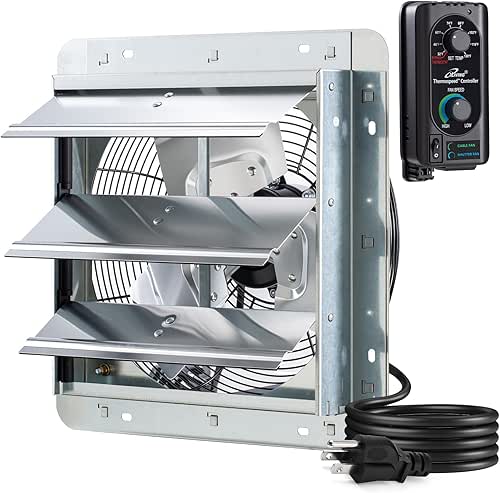
This iLIVING shutter fan is made for wall-mounted exhaust and smaller attics, garages, and workshops. I tested a similar shutter model in a garage where tool fumes and summer heat built up quickly. The variable speed control allowed a gentle continuous exchange during mild days and a stronger purge during heavy-scent tasks. The automatic shutters are a welcome convenience, sealing tightly when the fan is off and keeping drafts and critters out.
For buyers who want multi-use ventilation across seasons, this model shines. One homeowner left the unit running in “low” overnight to manage humidity and noticed less condensation in the morning. Another quick install anecdote: a DIYer used the included speed controller to fine-tune noise levels while working in the garage, balancing sound and airflow with easy adjustments.
Pros
- Variable speed control for precise airflow and noise management
- Automatic shutters to block drafts and pests
- Durable galvanized steel frame and aluminum shutters
- UL/cUL listed and suitable for heavy-duty use
- Good for garages, workshops, and smaller attics
Cons
- Lower peak CFM than larger gable fans
- Sound level can be noticeable at higher speeds
- Wall cutout required, which may complicate installation
Choose the ILG8SF12V-ST if you need a wall-mounted solution for a garage, workshop, or modest attic. It is flexible for seasonal use and handles humidity well with variable speeds. Avoid it if your attic is very large and requires high-volume gable ventilation. Installers should plan the wall opening carefully and consider vibration pads to minimize transmitted noise.
To buy this product, click here.
5. Best High Airflow: VEVOR 16 Inch Exhaust Fan
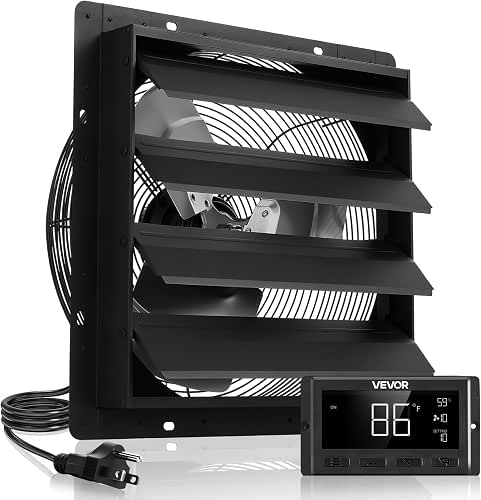
This VEVOR model is aimed at users who need maximum extraction. I remember a workshop where welding fumes and heat quickly saturated the space; the VEVOR fan moved air hard and fast and the multi-speed controller helped dial in the right setting for the task. With a 3000 CFM rating and a sophisticated controller offering up to 10 speed settings, it can handle large attics, shops, and commercial spaces that need brute-force ventilation.
Installers will appreciate the all-metal construction and rain-guard shutters that close when the fan is off. Another scenario: a homeowner used the humidity trigger to manage a damp attic after a storm and liked the programmable timer and alarm modes. The heavy-duty build is ready for rougher environments where plastic shutters would not last.
Pros
- Very high airflow rating suitable for large attics and workshops
- Robust metal construction stands up to damp conditions
- Multiple speed settings and intelligent controller with timer
- Automatic shutters provide weather and pest protection
- Brushless EC motor for relatively quiet, efficient performance
Cons
- Large footprint and weight require careful mounting
- Overkill for small attics, can be noisy at high speeds
- Controller complexity may be unnecessary for simple needs
Pick this VEVOR fan if you regularly need higher-than-normal airflow, run workshops, or have a very large attic. It is less appropriate for small attics where a quieter, lower-CFM model makes more sense. The programmable controller and sturdy shutters make it a good choice for exterior wall or gable installations where weatherproofing matters.
To buy this product, click here.
6. Best Plug-and-Play: QuietCool AFG PRO-2.0 Attic Fan
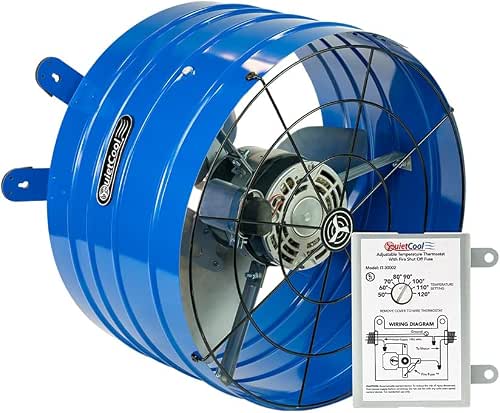
For homeowners who want a fast, reliable installation with no electrician, this QuietCool PRO-2.0 is a go-to. The unit ships with a long power cord and plug, so a single person can mount it in an existing gable vent and plug it in. I visited a small house where the owner was nervous about wiring, and the plug-and-play approach removed a big barrier to a ventilation upgrade.
The two-speed PSC motor offers useful flexibility. Anecdote time: on mild days the owner ran the lower speed for quiet continuous ventilation, while on heat waves they bumped to the higher setting to purge the attic more rapidly. The built-in safety shutoff gives extra peace of mind in older attics where stray insulation or wiring could be a concern.
Pros
- True plug-and-play installation; no hardwiring required
- Two speeds for efficiency and performance balance
- Adjustable thermostat and built-in safety shutoff
- Vent covers reduce backdraft when fan is off
- 20-foot cord simplifies positioning
Cons
- PSC motor is less efficient than ECM/brushless options
- Noise on high speed is noticeable in attached living areas
- Limited smart features compared with SMT variants
This model is ideal for DIYers and homeowners who want a fast install and reliable performance. It is an especially good pick for retrofits where running new wiring would be costly. If you want the latest low-watt ECM motor efficiencies, pick an ECM-powered or brushless model instead, but for dependable plug-and-play ventilation this fan is hard to beat.
To buy this product, click here.
7. Best for Medium Attics: BINGLUX 15″ Gable Attic Fan

This 15-inch BINGLUX unit is a solid midrange fan for medium-sized attics. I recall a two-story house with a shallow attic where the homeowners wanted enough airflow to make the upstairs usable in summer without the bulk and noise of a huge gable fan. The BINGLUX delivered consistent performance and start-up is smoother thanks to the start capacitor and PSC motor design.
Another homeowner story: after a storm, humidity crept into the attic and the built-in thermostat kicked the fan on automatically to dry things out, which prevented early mildew. The assembly is straightforward, and the 20-foot cord makes positioning and testing painless. It is a practical pick if you need reliable ventilation without premium smart features.
Pros
- Balanced 1650 CFM good for many medium attics
- Plug-and-play design with long power cord
- Start capacitor smooths motor startup and reduces strain
- Durable galvanized steel housing and aluminum blades
- Manufacturer-backed support and multi-year service
Cons
- PSC motor noise higher than DC brushless options
- No app control or humidistat features
- May be underpowered for very large attics
The BINGLUX fan is a dependable midrange choice for homeowners who want straightforward cooling without high-tech bells and whistles. It is a useful upgrade over smaller wall fans, and the included mounting system makes the install accessible to competent DIYers. Those seeking whisper-quiet operation should look at brushless DC or ECM models instead.
To buy this product, click here.
8. Best Classic Choice: Cool Attic CX1500 Gable Mount Power Attic Ventilator

The Cool Attic CX1500 is a long-running favorite for homeowners who prefer tried-and-true designs. I walked an older craftsman where a CX1500 model had been running for years and kept the attic comfortable through multiple seasons. The 14-inch blade and 2.6 amp motor deliver steady airflow across small to medium attics. It is straightforward, reliable, and easy to source parts for if maintenance is needed.
Another memory: a contractor recommended this unit to a client replacing a failed vintage fan because it fit the existing gable opening and eliminated the need for structural changes. The CX1500 is quiet enough for many installs and the automatic thermostat offers simple hands-off control.
Pros
- Proven performance and longevity in real-world installs
- Automatic thermostat control for simple operation
- Quiet operation compared with older designs
- Compatible with many existing gable openings
- Readily available replacement parts and support
Cons
- Lower CFM than some newer high-capacity fans
- Fewer advanced features compared with modern smart models
- May not be the most energy-efficient option available
Choose the CX1500 if you prefer a conservative, proven option that will run for years with minimal fuss. It is a particularly good match for replacement projects where the gable opening and wiring are already in place. If you want app control or extremely low-watt operation, a newer ECM or solar model will be a better fit.
To buy this product, click here.
9. Best Solar Option: VEVOR 42W Solar Attic Fan

Solar attic fans make sense if you want ventilation that runs primarily on sunlight and cuts electrical costs. I visited an off-grid cabin where a 42W solar fan kept the attic cool through hot afternoons, and the remote control plus smart sensor made it easy to manage from inside. The MPPT controller maximizes panel output and the brushless motor provides strong airflow up to advertised levels when the sun is out.
Another homeowner deployed this fan on a metal roof and appreciated the weatherproof design and multi-angle solar panel that captures sun during peak hours. The unit also offers a fallback electric mode on some configurations so ventilation continues after dusk. For people with roof access and a desire to reduce grid load, a solar attic fan is a good long-term investment.
Pros
- Operates primarily on solar power, cutting electrical use
- MPPT controller improves panel efficiency and output
- Brushless DC motor for quiet, efficient operation
- Remote control and intelligent temp/humidity sensing
- Weatherproof design suitable for roof mounting
Cons
- Performance depends on sun exposure and panel orientation
- Roof installation is more complex than gable plug-and-play models
- Higher initial investment compared with basic electric fans
Choose the VEVOR 42W solar fan if you have good roof sun exposure and want a low-running-cost ventilation system. It works well for metal and shingle roofs and for owners trying to reduce electric usage. If your house is heavily shaded or roof access is difficult, a standard gable-mounted electric fan may be easier and cheaper to install.
To buy this product, click here.
Best Attic Fan FAQ
How do I know what CFM I need for my attic?
Measure your attic square footage and multiply by the recommended air changes per hour for your climate and roof type. As a practical rule, many homeowners use 1 CFM per square foot as a baseline for whole-attic cooling. For example, a 1,500 sq ft attic would start with about 1,500 CFM. If your attic has poor passive ventilation, or you live in a very hot climate, increase that number. When in doubt, choose a slightly higher CFM and ensure the gable or roof vent area can handle the airflow.
Should I choose a gable mount, wall mount, or solar attic fan?
Gable mount fans work best where you already have a gable vent or louvers. Wall-mounted shutter fans suit garages, workshops, and smaller attics where a wall opening is available. Solar fans are ideal for roofs with good sun exposure and owners who want lower running costs. Consider accessibility, wiring complexity, and how much airflow you need. For straightforward DIY installs, plug-and-play gable fans are usually easiest.
Do smart attic fans and apps actually save money?
Smart controls help by running the fan only when temperature or humidity triggers demand, so you avoid unnecessary runtime. ECM and brushless motors also reduce wattage per CFM. The combination of smart controls and efficient motors can cut operating costs compared with older units that run full-speed continuously. Savings depend on local electricity rates and how often the fan runs, but smart fans often deliver better long-term value.
Will an attic fan reduce my cooling bills?
Yes, especially in hot climates. Lower attic temperatures reduce heat transfer into living spaces, which means your AC cycles less. The effect is larger when attics are poorly ventilated to begin with. Properly sized ventilation paired with adequate insulation and a sealed attic floor produces the biggest savings.
How loud are attic fans inside the house?
Sound depends on mounting type, motor design, and speed. Wall-mounted fans can transmit noise through framing, while gable fans with anti-vibration pads and remote mounting tend to be quieter. Brushless DC and ECM motors typically run quieter than PSC motors. If the attic adjoins bedrooms, choose low-noise options and use vibration isolation during installation.
Can I install an attic fan myself?
Many modern gable and wall fans are plug-and-play and friendly to competent DIYers, especially those with existing openings. Solar fans require roof work and are harder for novices. If the job requires cutting new openings, running new wiring, or mounting on the roof, hiring a professional is often safer and faster.
Are automatic shutters important?
Automatic shutters protect against backdraft, cold air infiltration in winter, and pests when the fan is off. For climates with strong storms or cold seasons, shutters are a worthwhile feature. Gravity shutters are simple and effective for most setups.
How do I avoid backdrafts when the fan is off?
Choose units with vent covers or automatic shutters and ensure gable louvers are sized correctly. Some fans include vent covers and tight-closing shutters. Proper sealing around the unit and correct sizing of intake vents are also important to prevent unwanted air movement when the fan is not running.
Final Verdict
For most homeowners aiming for the best overall balance of airflow, efficiency, and smart control, the QuietCool AFG SMT ES-3.0 is the top pick. It delivers high CFM with an efficient ECM motor and useful app-driven automation, which translates to cooler attics and lower running costs over time. If you want the peak performance without fuss, that model is the one to consider first.
If you are working within a tighter budget or need a straightforward retrofit, the iLiving ILG8G14-12T is an excellent value with lots of airflow for the price. For owners prioritizing solar and low electrical usage, the VEVOR 42W solar fan gives a sustainable alternative. Match the fan type to your attic size, available mounting points, and tolerance for noise. Measure your attic, pick the right CFM, and prioritize features that match how you use the space, and you will end up with a fan that protects your roof, reduces cooling loads, and keeps the house more comfortable.