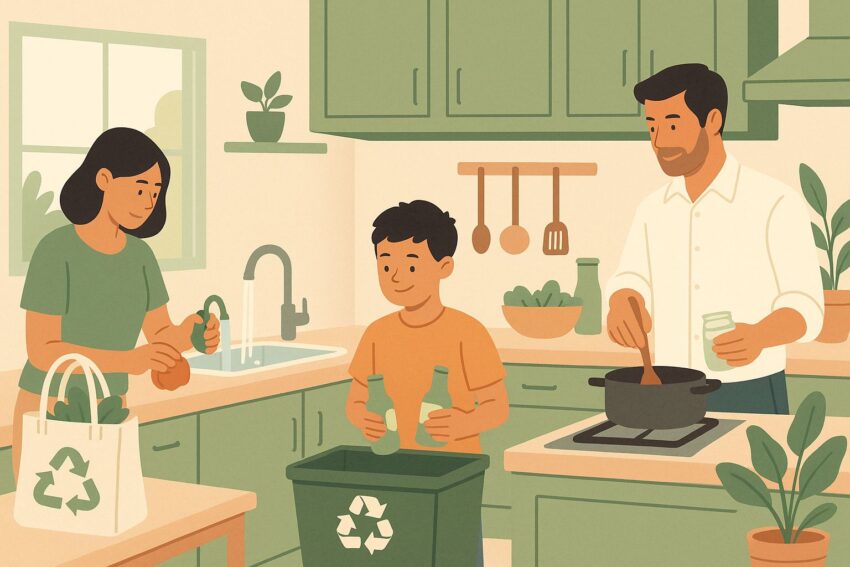
Over the past decade, “low-carbon living” has grown from a niche concept into a conscious lifestyle that more people genuinely want to adopt. Whether your goal is to reduce your environmental footprint, avoid unnecessary waste, or simply create a home filled with thoughtful, reliable items, one of the most effective steps you can take is to choose products that are sustainable, durable, and made to last.
In the 2020s, sustainability and good living no longer conflict with each other. In many cases, the most eco-friendly choice is also the most economical and the most enjoyable to use. This guide takes a practical, down-to-earth approach to selecting products that support both your lifestyle and the planet.
1. Mindful Consumption: The Foundation of Sustainable Living
Low-carbon living doesn’t mean buying nothing at all.
It means buying with intention, reducing replacements, and choosing items that truly serve a purpose.
A sustainable approach to consumption encourages you to:
-
Think before purchasing
-
Consider the product’s entire lifecycle
-
Prioritise long-term usability
-
Avoid the cycle of “buy → break → replace”
When something lasts several years instead of just a few months, you reduce waste, save resources, and minimise repeated manufacturing emissions — all while saving your own time and money.
At the heart of sustainable living is a simple question:
“Will this still be useful to me in five years?”
2. Materials Matter: What to Look For (and What to Avoid)
A product’s environmental impact is heavily shaped by the materials used to make it. Some materials are designed for durability and reusability, while others are destined for the bin.
Below are materials that support a more sustainable lifestyle:
✔ Stainless Steel
Highly durable, corrosion-resistant, and fully recyclable.
Ideal for cookware, storage containers, drinkware, and household tools.
✔ Glass
Non-toxic, easy to clean, and endlessly recyclable.
Excellent for food storage, jars, bottles, and everyday kitchen items.
✔ Solid Wood & Bamboo
When responsibly sourced, these materials are renewable and sturdy.
Bamboo grows especially fast, making it a strong eco-friendly option.
✔ Natural Fibers (Cotton, Linen, Hemp)
Perfect for reusable bags, cloths, and storage solutions.
Long-lasting and free of microplastics.
Materials to Reduce or Avoid
-
Low-grade plastics
-
Brittle and quick-to-crack polymers
-
“Disposable” items designed with a short lifespan
Better materials lead to longer product lifecycles and lower environmental impact.
3. A Simple Framework for Choosing Sustainable Products
To make eco-conscious shopping easier, here’s a straightforward method you can apply across any product category:
The “3 Looks”
-
Look at Lifespan: How long can this realistically last?
-
Look at Repairability: Can parts be replaced or fixed?
-
Look at Compatibility: Are parts and accessories standardized?
The “2 Don’ts”
-
Don’t buy items that need frequent replacement
-
Don’t buy on impulse — buy intentionally
Frequent replacements multiply environmental costs: manufacturing, packaging, shipping, and disposal.
4. Sustainable Doesn’t Mean Compromising on Quality
There’s a long-standing myth that eco-friendly products are less durable or less enjoyable to use. Fortunately, this hasn’t been true for years.
In 2025, many of the most reliable and satisfying products are also the most sustainable — because durability and sustainability naturally reinforce each other.
When assessing whether a product is both sustainable and high-performing, consider:
-
Warranty length
Long warranties often signal strong build quality.
-
Material solidity
Products with fewer fragile parts typically last longer.
-
Long-term user reviews
Look for reviews written after months or years of usage, not just first impressions.
-
Simplicity of design
A well-made single-function tool often outlasts complicated multi-function gadgets.
Sustainability is not about sacrifice — it’s about choosing items that elevate your daily life.
5. Where to Start: High-Impact Categories Worth Focusing On
If you’re looking to build a home with fewer, better, and longer-lasting items, these categories are excellent places to begin:
Kitchen & Food Storage
Glass containers, stainless-steel cookware, silicone lids, and high-quality wooden utensils reduce waste and last for years.
Cleaning Tools & Supplies
Durable brushes, washable cloths, reusable mop pads, and long-life cleaning tools minimize disposable plastics.
Storage & Household Organisation
Natural fiber baskets, bamboo organisers, and wooden shelving are more sustainable than cheap plastic alternatives.
Small Electronics & Household Tools
Energy-efficient, repairable devices with standardized parts help reduce electronic waste.
These areas represent everyday essentials — improving them yields a meaningful impact on your environmental footprint.
6. Want In-Depth Reviews of Everyday Household Items?
When evaluating sustainability, durability, and real-world usability, detailed product reviews can make decision-making much easier.
You can explore more detailed long-term reviews on a review website dedicated to household and lifestyle products:
👉 https://www.reviewhot.com/household-stuff/
This section focuses on home essentials, small appliances, and lifestyle items — all reviewed from a perspective of durability, material quality, and long-term practicality.
7. Sustainable Living Is a Long-Term Journey
Low-carbon living has never been about restricting yourself or embracing a life of discomfort.
It’s about choosing with clarity—being intentional rather than impulsive, and thinking not only about what you bring into your home today, but also how it will shape your life tomorrow.
If you can:
-
pause before buying
-
choose items built to last
-
prioritize quality materials
-
reduce unnecessary replacements
-
and read long-term reviews before deciding
then your home naturally becomes more sustainable, calmer, and more cost-effective.
Every durable item you bring into your home is a step toward reducing waste and living with intention.
And these small, consistent steps create meaningful change over time.
When you choose products that last—whether it’s a piece of cookware, a simple tool, or an everyday household item—you reduce the cycle of replacing and discarding. You cut down on waste naturally, without even thinking about it. And in return, your space becomes calmer, tidier, and far more cost-effective.
These decisions may seem small on their own, but practiced consistently, they reshape the rhythm of daily life. Each durable item you welcome into your home becomes a gentle commitment to living with intention. And these slow, steady, almost unremarkable steps are exactly the ones that accumulate into meaningful, long-lasting change—both for your own wellbeing and for the world around you.