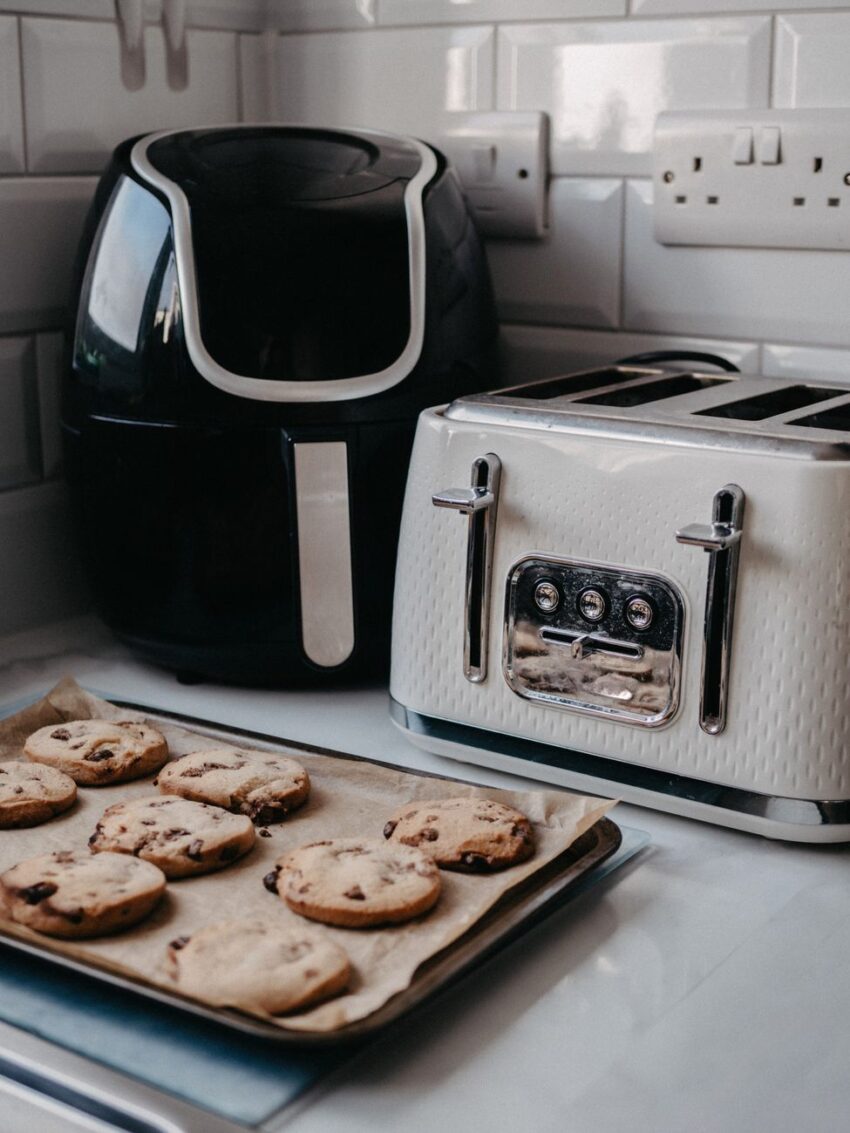
Many people start comparing an air fryer and a toaster oven after noticing how often the full-size oven gets turned on for small meals. A tray of fries, a few chicken thighs, reheating leftovers, toasted sandwiches, roasted vegetables. Those quick jobs can make the kitchen hot and quietly add to the electric bill.
If you are looking at air fryer vs toaster oven electricity cost, the short answer is this: an air fryer usually costs less to run per use, mainly because it is smaller, heats up faster, and often finishes cooking sooner. But that does not automatically make it the better choice for every home. A toaster oven can still be the more practical and sometimes more efficient option if you cook larger portions, want more versatility, or would otherwise need to run the air fryer multiple times.
The real difference is not just wattage. It is wattage plus cooking time plus food volume. A higher-watt appliance that cooks in 12 minutes can cost less than a lower-watt appliance that takes 25 minutes. That is where a lot of people get tripped up.
This guide breaks down the actual electricity cost, how to estimate your own usage, where the savings are usually meaningful, and when the cheaper appliance to run is not necessarily the best appliance to own.
Air fryer vs toaster oven electricity cost at a glance
For most everyday cooking, an air fryer is usually the lower-cost appliance to run. Typical air fryers use about 1,200 to 1,700 watts. Typical toaster ovens use about 1,000 to 1,800 watts. On paper, those numbers can overlap quite a bit, so the key difference is usually cooking time.
An air fryer often finishes food faster because it circulates hot air in a smaller chamber. A toaster oven may take longer to preheat and longer to cook the same item, especially if you are trying to crisp food rather than simply warm it.
| Appliance | Typical wattage | Typical cooking time | Estimated electricity cost per use* | Usual best use |
|---|---|---|---|---|
| Air fryer | 1,200 to 1,700 W | 8 to 20 minutes | $0.05 to $0.15 | Small, quick, crispy meals |
| Toaster oven | 1,000 to 1,800 W | 12 to 30 minutes | $0.06 to $0.20 | Toast, baking, reheating, larger portions |
*Based on a common residential electricity rate range of roughly $0.15 to $0.25 per kWh. Actual rates vary widely by utility and region.
That means the difference for one meal might only be a few cents. Over time, though, frequent use can add up. If you use one of these appliances several times a week, the annual difference becomes easier to notice.
If appliance use is only one part of your concern, Reduing Electricity Bill puts these kitchen savings in the bigger household context.
How electricity cost is calculated
You do not need a complicated formula to compare kitchen appliances. The basic calculation is simple:
Watts ÷ 1,000 = kilowatts
Kilowatts × hours used = kilowatt-hours (kWh)
kWh × your electricity rate = cost
Here is a quick example.
- A 1,500-watt air fryer running for 15 minutes uses 0.375 kWh
- If your electric rate is $0.20 per kWh, that costs about $0.075
- That is roughly 7.5 cents for that cooking session
Now compare it with a toaster oven.
- A 1,500-watt toaster oven running for 25 minutes uses 0.625 kWh
- At $0.20 per kWh, that costs about $0.125
- That is roughly 12.5 cents for that cooking session
The wattage is the same in this example. The cost difference comes from runtime.
Why wattage alone can be misleading
A lot of product pages highlight wattage because it is easy to list, but wattage by itself does not tell you what the meal will cost to cook.
For example, a 1,700-watt air fryer may still use less electricity than a 1,200-watt toaster oven if the air fryer finishes the job much faster. The opposite can also happen. If a toaster oven cooks a larger batch in one cycle while the air fryer needs two rounds, the toaster oven may end up using less energy per serving.
Typical residential electricity rates in 2026
Electricity prices vary a lot by location. In some areas, rates are still close to the mid-teens per kWh. In others, especially where delivery charges and time-of-use pricing are high, the real cost can be well above $0.25 per kWh.
For household planning, these rough benchmarks are useful:
- Low-cost power area: around $0.12 to $0.16 per kWh
- Moderate-cost area: around $0.17 to $0.24 per kWh
- Higher-cost area: around $0.25 to $0.40+ per kWh
If you live in a high-rate area, small appliance efficiency matters more. A few cents per cooking session turns into a noticeable annual number faster.
Real-world air fryer vs toaster oven electricity cost examples
It helps to look at food people actually cook, not just appliance specs. Below are realistic examples using common wattage and cooking times. These are not exact for every model, but they are close enough to show how the comparison usually works.
Example 1: Frozen fries for two people
| Appliance | Wattage | Cook time | Energy used | Cost at $0.20/kWh |
|---|---|---|---|---|
| Air fryer | 1,500 W | 15 min | 0.375 kWh | $0.08 |
| Toaster oven | 1,400 W | 22 min | 0.513 kWh | $0.10 |
For crisp frozen foods, the air fryer often wins on both speed and electricity cost.
Example 2: Reheating pizza slices
| Appliance | Wattage | Cook time | Energy used | Cost at $0.20/kWh |
|---|---|---|---|---|
| Air fryer | 1,400 W | 6 min | 0.14 kWh | $0.03 |
| Toaster oven | 1,200 W | 10 min | 0.20 kWh | $0.04 |
Here the savings are tiny in absolute terms, but the air fryer still tends to use a bit less electricity.
Example 3: Roasting vegetables for a family meal
| Appliance | Wattage | Cook time | Energy used | Cost at $0.20/kWh |
|---|---|---|---|---|
| Air fryer, two batches | 1,600 W | 18 min x 2 | 0.96 kWh | $0.19 |
| Toaster oven, one batch | 1,500 W | 28 min | 0.70 kWh | $0.14 |
This is where the toaster oven can pull ahead. If the food volume exceeds the air fryer basket and requires multiple cycles, the electricity advantage may disappear.
Example 4: Toasting bagels in the morning
| Appliance | Wattage | Cook time | Energy used | Cost at $0.20/kWh |
|---|---|---|---|---|
| Air fryer | 1,300 W | 5 min | 0.108 kWh | $0.02 |
| Toaster oven | 1,100 W | 5 min | 0.092 kWh | $0.02 |
For basic toasting, the difference is often negligible. In some cases, the toaster oven can even use slightly less power.
Why air fryers often use less electricity
The main reason is size. An air fryer usually has a smaller cooking chamber, so there is less air to heat and less interior space losing heat during cooking.
It also tends to move hot air aggressively with a fan, which helps food cook faster. That can reduce both preheat time and total runtime.
Smaller cavity, faster cooking
If you are heating a handful of tater tots or a salmon fillet, the air fryer is not wasting much energy on empty space. A toaster oven has a larger cavity, which can be helpful for flexibility but less efficient for small jobs.
Less preheating in many cases
Some air fryer recipes skip preheating altogether, or only need 2 to 3 minutes. Many toaster ovens either require preheating or perform better if you allow time for the chamber and tray to heat up.
That extra 5 minutes does not sound like much, but it matters when the actual cook time is only 8 to 12 minutes.
Better for crisping small portions
Air fryers are especially good at foods people want crispy fast:
- frozen snacks
- fries
- chicken wings
- leftover roasted potatoes
- breaded items
That performance edge often translates to lower electricity use per serving for small portions.
Why toaster ovens can still make sense on electricity cost
Toaster ovens are not automatically the expensive option. In some kitchens, they are the smarter long-term choice.
They can handle more food at once
If you are cooking for three or four people, basket size becomes a real issue. An air fryer may need two batches to avoid overcrowding. A toaster oven can often roast, bake, or reheat everything in one go.
One longer cooking cycle can beat two shorter cycles.
They are often more versatile
A toaster oven can usually:
- toast bread more evenly
- bake small trays of cookies
- heat casseroles
- broil or melt cheese
- fit pans and bakeware an air fryer cannot
If owning one appliance instead of two keeps you from using the full-size oven often, a toaster oven may save enough electricity overall to offset its somewhat higher per-use cost compared with an air fryer.
Some modern toaster ovens are surprisingly efficient
Not all toaster ovens are old-fashioned glowing-box appliances. Newer convection toaster ovens can be much better than older models. Some cook faster, distribute heat more evenly, and close part of the performance gap with air fryers.
In fact, many countertop ovens now include an air fry setting. These combination models blur the line, so model-specific performance matters.
Annual electricity cost comparison
A few cents per meal does not sound like much. Over a year, though, regular use can create a noticeable difference. Here are some simple estimates.
Scenario: Using the appliance 4 times per week
Assume these averages:
- Air fryer session cost: $0.08
- Toaster oven session cost: $0.12
- Usage: 4 times per week
| Appliance | Cost per use | Weekly cost | Annual cost |
|---|---|---|---|
| Air fryer | $0.08 | $0.32 | $16.64 |
| Toaster oven | $0.12 | $0.48 | $24.96 |
That annual difference is about $8.32. Not huge, but real.
Scenario: Daily use in a high-rate electricity area
Now assume:
- Air fryer session cost: $0.12
- Toaster oven session cost: $0.18
- Usage: 7 times per week
| Appliance | Cost per use | Weekly cost | Annual cost |
|---|---|---|---|
| Air fryer | $0.12 | $0.84 | $43.68 |
| Toaster oven | $0.18 | $1.26 | $65.52 |
In that case the annual difference is about $21.84. Still not life-changing, but enough to matter if you are already trying to trim kitchen energy use.
Why purchase price usually matters more than electricity cost
If you are deciding whether to buy one or the other strictly to save power, keep expectations realistic. The electricity cost difference between an air fryer and toaster oven is often modest. The upfront price, durability, cooking performance, and how often you actually use it usually matter more.
For many households, the best money-saving move is not choosing the absolute cheapest appliance to run. It is choosing the one that reliably replaces full-size oven use.
Air fryer vs toaster oven vs full-size oven
This is where the real savings often show up.
Both air fryers and toaster ovens usually use much less electricity than heating a full-size electric oven for a small meal. A standard electric oven typically uses around 2,000 to 5,000 watts, depending on the model and whether the heating element cycles heavily during preheat.
If you are baking a full tray of food for a family, the big oven may still make sense. But for a couple of portions or quick reheating, using a countertop appliance is usually cheaper.
| Appliance | Typical wattage | Best for | Relative electricity cost for small meals |
|---|---|---|---|
| Air fryer | 1,200 to 1,700 W | 1 to 2 portions, crisp foods | Lowest |
| Toaster oven | 1,000 to 1,800 W | Small baking, toast, reheating, 2 to 4 portions | Low |
| Full-size electric oven | 2,000 to 5,000 W | Large meals, batch cooking | Highest for small meals |
So if your real decision is whether to use the countertop appliance or the big oven, both the air fryer and toaster oven are usually the better low-cost option.
Factors that change the true electricity cost
The labels on the appliance only tell part of the story. Day-to-day habits change actual energy use quite a bit.
Portion size
Small portions favor the air fryer. Larger portions often favor the toaster oven.
If you routinely cook two chicken breasts and vegetables for one or two people, an air fryer often wins. If you regularly cook open-faced sandwiches, six pieces of toast, or a sheet pan of vegetables, a toaster oven may be more efficient overall.
Preheating habits
Some people always preheat. Others almost never do. For short cooking tasks, unnecessary preheating can raise electricity use by a noticeable amount.
If your toaster oven takes 5 to 7 minutes to preheat and your food only needs 10 minutes to cook, that extra time matters.
Batch cooking vs single servings
If you can cook tomorrow’s leftovers at the same time, the cost per serving drops. That applies to either appliance.
For example, roasting enough vegetables for dinner plus lunch tomorrow in one toaster oven cycle may use less total electricity than two separate air fryer sessions.
Model efficiency
Not all appliances with the same wattage perform equally. Better insulation, airflow design, thermostat control, and cooking chamber size all affect real usage.
Two 1,500-watt appliances can have different cooking times and different real-world costs.
Your local electric rate
If your power is expensive, every minute counts more. In lower-cost power areas, the difference may be too small to worry about unless you use the appliance constantly.
Common mistakes people make when comparing these appliances
Assuming the lower wattage appliance is always cheaper to run
This is probably the most common mistake. Lower wattage does not automatically mean lower cost. Runtime matters just as much.
Ignoring batch size
An air fryer can be very efficient for one serving and frustratingly inefficient for four. If you constantly run multiple rounds, your energy use goes up and so does your time in the kitchen.
Using the wrong appliance for the job
Some foods just fit better in one format than the other.
- For crisping frozen nuggets, an air fryer usually does the job faster
- For toast, bagels, or small baked dishes, a toaster oven may be simpler
- For reheating a casserole, an air fryer is often awkward
Choosing based on the food can be more efficient than always reaching for the same appliance.
Overcrowding the air fryer basket
People often try to force larger batches into an air fryer to save time. That usually backfires. Crowded food cooks less evenly, takes longer, and may need shaking or extra cycles. The result can be higher electricity use and worse food.
Running a large toaster oven mostly empty
A big-capacity toaster oven is convenient, but if you mainly use it to heat one slice of pizza or toast a single bagel, it may not be the most efficient countertop option.
How to choose based on your household
Choose an air fryer if you usually:
- cook for one or two people
- want fast cooking for frozen or crispy foods
- reheat leftovers in small portions
- care most about lower per-use electricity cost
- rarely need to bake in pans or toast many slices at once
Choose a toaster oven if you usually:
- cook for more than two people
- want one appliance for toast, reheating, baking, and roasting
- need a larger cooking area
- prefer trays and bakeware over baskets
- want to replace some full-size oven use without losing flexibility
Choose a combination countertop oven if you want:
- air fry features plus toaster oven capacity
- fewer appliances on the counter
- more cooking modes in one machine
Just be aware that combination models vary a lot. Some are excellent. Others are decent toaster ovens with a weak air fry mode.
Best ways to reduce electricity use with either appliance
If your goal is lower utility bills, habits often matter more than the appliance name on the box.
Cook the right amount at one time
Try to avoid repeated small cycles if one properly sized batch would do. If your toaster oven can cook dinner plus lunch leftovers in one tray, that can be more efficient than several separate runs.
Skip preheating when it is not necessary
Many foods do fine without a full preheat, especially reheating leftovers, toasting, or cooking small frozen snacks. For baking or foods that depend on texture, preheating still matters. The key is not doing it automatically for everything.
Keep it clean
Grease buildup and burnt crumbs do not directly spike electricity use in a dramatic way, but they can hurt airflow, make heating less even, and cause smoking that leads people to open the door more often.
Avoid opening the door or basket constantly
Every peek dumps heat. With an air fryer, shaking once halfway through is usually enough. With a toaster oven, repeated door opening can stretch the cook time.
Use residual heat smartly
For some foods, especially reheating, you can turn the appliance off a minute early and let the remaining heat finish the job.
Pick the right appliance for the food
If a toaster oven can handle four portions in one cycle, use it. If the air fryer can reheat lunch in six minutes instead of twelve, use that instead.
Environmental impact beyond the utility bill
If you are trying to lower your household footprint as well as your bill, the same logic applies. Using less electricity generally means lower emissions, although the exact impact depends on how power is generated in your area.
Still, it is worth keeping perspective. The biggest practical environmental win is often reducing use of the full-size oven for small meals. Whether you do that with an air fryer or a toaster oven matters less than making the switch consistently.
Durability matters too. A sturdy appliance you use for years is usually a better choice than a flimsy one replaced every 18 months.
Myths about air fryer vs toaster oven electricity cost
Myth: Air fryers barely use any electricity
They are efficient, but they are still high-wattage heating appliances. They just tend to run for shorter periods.
Myth: Toaster ovens are always inefficient
Not true. They can be very reasonable to run, especially compared with a full-size oven and especially for medium-sized portions.
Myth: The cost difference is huge
Usually it is not. For most households, the difference per use is often measured in cents, not dollars. The bigger savings come from replacing larger appliances and avoiding wasted cooking time.
Myth: Bigger appliances always waste more energy
Not if they cook more food in one cycle. Efficiency should be judged per meal or per serving, not just by appliance size.
Simple formula to estimate your own cost
If you want a more accurate answer for your kitchen, use this quick method.
- Find the appliance wattage on the label or manual.
- Estimate the average cooking time in minutes.
- Convert minutes to hours.
- Multiply kilowatts by hours used.
- Multiply by your electricity rate.
Example:
1,500 watts ÷ 1,000 = 1.5 kW
15 minutes = 0.25 hours
1.5 × 0.25 = 0.375 kWh
0.375 × $0.22 = $0.0825
That cooking session costs just over 8 cents.
If you want to go one step further, track five actual meals in each appliance. That gives you a more useful real-world average than relying on marketing claims.
FAQ
Is an air fryer cheaper to run than a toaster oven?
Usually, yes. An air fryer often uses less electricity per cooking session because it heats a smaller space and finishes faster. The difference is often a few cents per use, not a dramatic amount.
Does a toaster oven use a lot of electricity?
Not compared with a full-size electric oven. A toaster oven is generally a fairly efficient choice for small to medium meals, reheating, toast, and light baking. Its cost depends mostly on wattage and how long you run it.
Which is more energy efficient for a family?
For families or larger portions, a toaster oven can be more efficient if it cooks everything in one batch. An air fryer may lose its advantage if you need multiple rounds.
Is it cheaper to use an air fryer than an electric oven?
For small meals, almost always yes. Air fryers typically use much less electricity than heating a full-size electric oven for a small portion of food.
Do toaster ovens need more preheating than air fryers?
Often yes. Many toaster ovens benefit from preheating, while some air fryer cooking tasks need little or none. That extra preheat time can affect energy cost.
Are combo air fryer toaster ovens efficient?
They can be, especially if one appliance replaces both a separate air fryer and some full-size oven use. Actual efficiency varies by model, so cooking speed and capacity matter more than the label alone.
How much money can I save by switching to an air fryer?
If you replace frequent full-size oven use, the savings can be noticeable over a year. If you are only comparing an air fryer to a toaster oven, the savings are usually modest, often somewhere in the range of a few dollars to a couple dozen dollars annually depending on usage and local electric rates.
Bottom line on air fryer vs toaster oven electricity cost
For most small meals, the answer on air fryer vs toaster oven electricity cost is fairly simple: the air fryer usually costs less to run. It tends to heat faster, cook quicker, and use less electricity for small portions.
But the cheaper appliance per cycle is not always the better appliance for your kitchen. A toaster oven can be the smarter choice if you cook larger amounts, want more flexibility, or can replace more full-size oven use with it.
If your goal is lower utility bills, focus on the bigger picture. Use a countertop appliance instead of the full-size oven for small jobs. Match the appliance to the portion size. Avoid unnecessary preheating. Cook efficiently in batches when it makes sense.
That approach will usually save more money than chasing a tiny difference between two reasonably efficient countertop appliances.