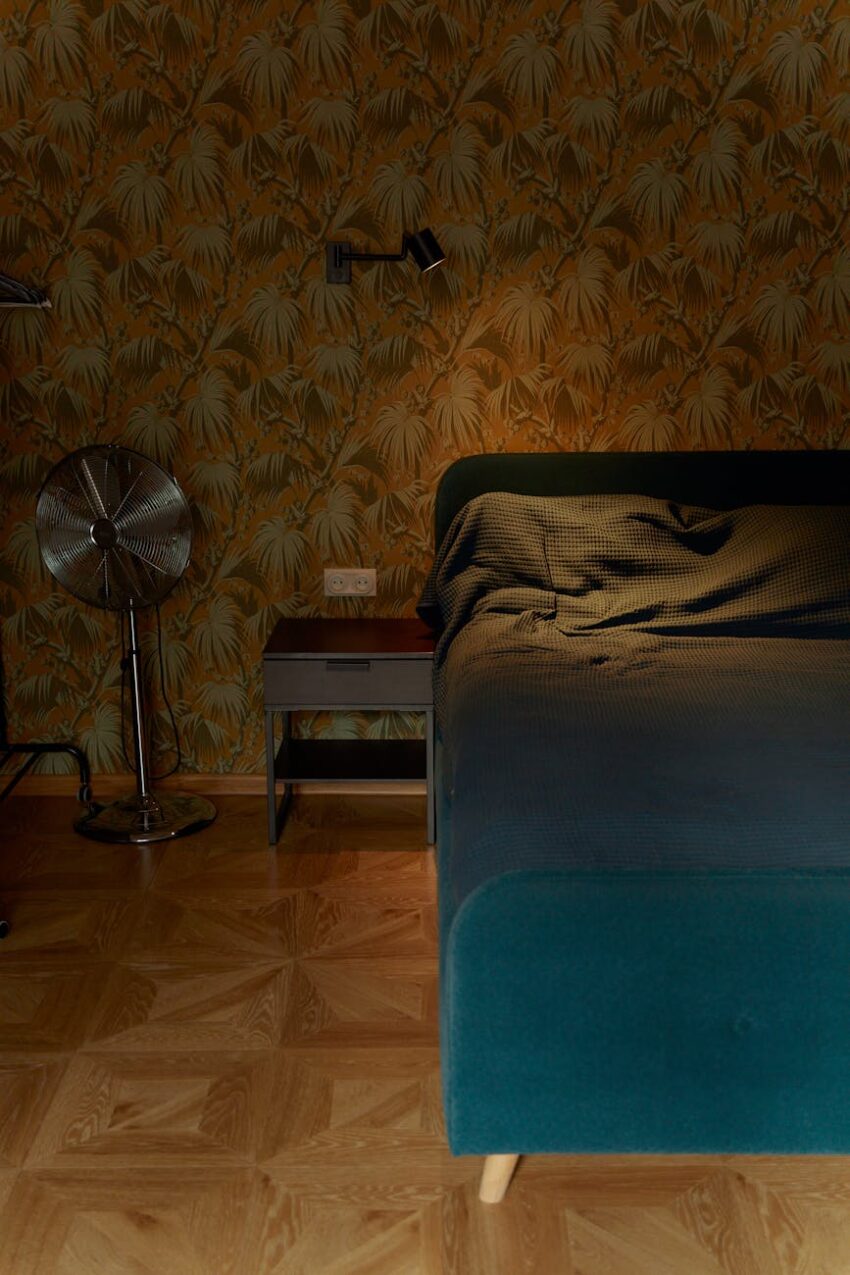
You open your utility bill and pause at the cooling charges. Many people ask whether running a bedroom fan is a cheaper way to stay comfortable than turning on the air conditioner. This article answers that question directly and practically, using real numbers and household scenarios. The phrase bedroom fan vs AC electricity usage will guide the comparison so you can choose what saves money, reduces energy use, and still lets you sleep comfortably.
Why this comparison matters for homeowners and renters
Cooling a living space is often the single largest source of summer electricity use. Renters with window units, homeowners with central air, and anyone setting a thermostat face the same practical trade-offs: comfort, cost, and convenience. Fans move air and make you feel cooler by increasing evaporation from your skin. Air conditioners remove heat from the room and lower the indoor temperature. Those are different functions, and they use electricity at very different rates.
This article explains the math in simple terms, shows typical energy and cost ranges, gives real-world examples for nightly and monthly use, and offers practical strategies to cut cooling costs while keeping comfort high.
How fans and air conditioners use electricity
Basic units: watts, kilowatt-hours, and cost
Electric devices draw power in watts (W). Running them over time uses energy measured in kilowatt-hours (kWh). One kWh equals 1,000 watts running for one hour. Utilities bill in kWh, so translating device watts into kWh gives real cost estimates.
Example calculation. A 50 W ceiling fan running for 8 hours uses 50 W × 8 hours = 400 Wh, or 0.4 kWh. If electricity costs $0.15 per kWh, that night costs 0.4 kWh × $0.15 = $0.06. That same overnight period for a 1,000 W window AC would use 1 kWh × 8 = 8 kWh, costing $1.20 at the same rate.
Typical power draws you can expect
Devices vary widely by model and age, so use these ranges as practical estimates. Your actual numbers may differ.
- Ceiling fan: 10 to 75 W, most modern efficient models are 15 to 35 W on medium settings.
- Pedestal or box fan: 40 to 120 W depending on size and speed.
- Small window AC (5,000 BTU): 400 to 600 W when running, higher starting draw.
- Medium window AC (8,000 BTU): 700 to 1,200 W running.
- Portable AC: 800 to 1,500 W, varies by capacity and efficiency.
- Mini-split (single zone): 600 to 1,500 W running, but variable-speed inverter models change power as needed and are often more efficient.
- Central air: 2,000 to 5,000 W while the compressor runs, depending on house size and system.
Quick comparison table: bedroom fan vs AC electricity usage
The table below gives practical operating-cost examples using simple assumptions: device power draw, cost per kWh of $0.15, and typical usage patterns. Adjust the numbers for your local price and device.
| Device | Typical power (W) | Cost per hour ($0.15/kWh) | Cost per 8-hour night | Cost per 30 nights (8 hr/night) |
|---|---|---|---|---|
| Ceiling fan (efficient, 30 W) | 30 | $0.0045 | $0.036 | $1.08 |
| Box/pedestal fan (70 W) | 70 | $0.0105 | $0.084 | $2.52 |
| Window AC (5,000 BTU, 500 W) | 500 | $0.075 | $0.60 | $18.00 |
| Window AC (8,000 BTU, 1,000 W) | 1,000 | $0.15 | $1.20 | $36.00 |
| Mini-split, single zone (900 W average) | 900 | $0.135 | $1.08 | $32.40 |
Notes. These are running-power estimates. Many AC units cycle on and off, and inverter mini-splits often modulate power, so average running watts can be lower than peak compressor draw. Fans generally run continuously while they are on.
Real-world scenarios: nightly and monthly cost examples
Numbers help pick the right strategy. Below are sample scenarios using the same $0.15/kWh electricity price. Replace that number with your local rate to get precise results.
Scenario A: Fan-only nights
- Device: efficient ceiling fan, 30 W.
- Usage: 8 hours per night.
- Nightly energy: 0.24 kWh.
- Nightly cost: $0.036.
- Monthly cost (30 nights): about $1.08.
Scenario B: Window AC nightly
- Device: 8,000 BTU window AC, average running power 1,000 W.
- Usage: 8 hours per night.
- Nightly energy: 8.0 kWh.
- Nightly cost: $1.20.
- Monthly cost (30 nights): $36.00.
Scenario C: Hybrid approach
- Use AC to cool the room for the first 1 to 2 hours, then switch to a ceiling fan for the remainder of the night.
- Example: AC 2 hours (2 kWh), fan 6 hours (0.18 kWh). Total 2.18 kWh/night.
- Nightly cost: $0.327. Monthly cost: $9.81.
Trade-offs here are clear. Fan-only is very cheap but only cools occupants, not the room. AC cools the room but costs tens of dollars per month if run every night.
Comfort vs cost: when a fan is enough
Fans do not lower air temperature. They create a breeze that increases evaporation and heat transfer from your skin. That can make you feel several degrees cooler, and in many climates that is enough to sleep comfortably.
When a fan is a good choice
- You sleep in lightweight clothing and use light bedding.
- Nighttime temperatures are within a comfortable range, for example mid-60s to mid-70s F depending on personal preference.
- Humidity is moderate. Fans are less effective when humidity is very high because sweat does not evaporate as effectively.
- Your bedroom has good ventilation or cross-breeze, or you can use whole-house ventilation in the evening and night.
- Entry-level cooling is acceptable, and you want the lowest running cost.
When AC is preferable
- Nighttime temperatures stay high, such as above the high 70s or 80s F, making sleep uncomfortable even with a fan.
- High humidity causes sticky discomfort and reduces fan effectiveness.
- There are health needs, such as heat-sensitive conditions or medications that make cooling essential.
- Noise or vibration from fans prevents good sleep, or fans cannot create a stable, cool environment in rooms with poor airflow.
Combining fans and AC to lower electricity use
Using fans strategically with AC is one of the best ways to reduce cooling costs without sacrificing comfort. Fans allow you to raise the thermostat setpoint while maintaining the same perceived comfort.
How to use both effectively
- Set the AC thermostat 3 to 4 degrees higher than you would without a fan. Each degree higher can save roughly 3 to 5 percent in cooling energy, so a few degrees adds up.
- Use ceiling fans or a small oscillating fan aimed at the bed to maintain airflow. Fans cool people, not rooms, so position matters.
- Turn off fans when you leave the room. Fans cool people directly, not the air, so they are wasteful in unoccupied rooms.
- Run the AC for an initial period to remove heat and humidity from the room, then switch to fan-only mode for the rest of the night if the room stays tolerable.
- Use sleep timers and smart thermostats to coordinate. For example, run AC for two hours after bedtime, then switch to a higher setpoint with a fan running.
Real savings example
Suppose your AC uses 1,000 W when running. If you normally run it all night for 8 hours, that is 8 kWh. Raise the thermostat 3 degrees and pair with a fan; the AC might run only 4 hours, using 4 kWh, plus a fan for 8 hours at 0.24 kWh. Total 4.24 kWh, compared to 8.24 kWh before. At $0.15/kWh that saves about $0.60 per night, or $18 per month. Your savings will vary with AC efficiency, insulation, and how much the AC compressor cycles.
Energy-efficient choices: fans and AC models that save money
Buying the right model matters. A small, efficient fan and a high-efficiency AC can reduce long-term costs significantly.
Choosing an efficient fan
- Look for DC motor fans. They use less power than AC motor fans and have finer speed control.
- Ceiling fans with larger blades move more air at lower speeds, which usually uses less power for the same perceived cooling.
- Use fans with a timer or remote so you do not leave them running unnecessarily.
- Check the fan’s wattage. Many manufacturers list power or energy usage on the spec sheet.
Choosing a more efficient AC
- For window units, pick a model with a high Energy Efficiency Ratio (EER) or ENERGY STAR label. Higher EER means less electricity per unit of cooling.
- Mini-split inverter systems are more efficient than old fixed-speed window units and central systems, especially if you cool only one room.
- Right-size the AC. Oversized units cycle on and off frequently, reducing efficiency and humidity control.
- Maintain filters and coils. A clogged filter or dirty coil reduces efficiency and raises electricity use.
Installation, sizing, and practical tips for efficiency
Equipment is only as good as installation and operation. Small mistakes add to electricity use and reduce comfort.
Sizing matters for AC
Cooling capacity is often rated in BTU per hour. A typical bedroom needs roughly 20 BTU per square foot as a starting point, adjusted for ceiling height, sun exposure, and occupancy. Oversizing by a large margin causes short cycling, which wastes energy and reduces dehumidification. Undersizing runs continuously and may not bring comfort levels down.
Ceiling fan placement and direction
- Install ceiling fans so the blades are at least 7 feet above the floor and 10 to 12 inches below the ceiling to move air efficiently.
- In summer, set blades to rotate counterclockwise to create a downward breeze. This increases the cooling effect on occupants.
Seal and insulate the bedroom
Reducing heat gain lowers the load on both fans and AC. Block direct sun with curtains or blinds during the hot part of the day, weather-strip windows, and seal gaps around window AC units. These low-cost fixes reduce AC runtime and monthly bills.
Common myths and mistakes about bedroom fan vs AC electricity usage
Misunderstandings lead to wasted energy. Below are frequent myths and what the data actually show.
Myth: Fans cool the room like an AC
Reality. Fans do not lower room temperature. They cool people by increasing air movement. If you leave a fan on in an empty room, it does not reduce the room’s heat content. Use fans only when someone is present.
Myth: Turning AC way down cools a room faster and saves energy
Reality. Lowering the thermostat makes the compressor run longer and uses more energy. It does not make the room reach the lower temperature faster in a meaningful way. A reasonable setpoint and patience save energy.
Myth: Running a fan and AC together is always wasteful
Reality. Fans let you raise the thermostat while retaining comfort. Running a fan with AC can cut overall electricity use if you raise the setpoint or run the AC for fewer hours. The key is setting coordination, not simultaneous operation at low thermostat settings.
Myth: Bigger AC is always better
Reality. Oversized AC creates short cycling, higher energy use, and poor humidity control. Size to the room and conditions, and consider variable-speed units for more precise comfort control.
How to measure your real electricity use
General estimates help at first, but measuring your specific devices tells the truth about your household usage. Here are low-effort methods.
Use a plug-in energy meter
- Devices like Kill A Watt or similar meters plug between the appliance and the wall and report watts and kWh over time.
- Measure a fan on different speed settings, and measure an AC while it runs. For AC, measure long enough to capture compressor cycling.
Smart plugs and home energy monitors
- Smart plugs with energy reporting give usage reports and often allow scheduling. They work well for fans and some portable ACs but not for hardwired ceiling fans without a switched plug.
- Home energy monitors that clip to the main panel show whole-house use and make it easy to see how much the AC adds to your load during peak times.
Look at your hourly utility data
Many utilities provide hourly or daily usage data through online portals. Watching overnight usage while you try different cooling strategies helps you quantify savings from thermostat changes or fan strategies.
Practical strategies to lower bedroom cooling costs
Beyond choosing appliances, behavior and small upgrades matter. The list below focuses on actions that require little investment and pay off quickly.
- Raise the thermostat at night and use a fan. Even a 3 degree setting change paired with a fan can save several percent in energy use.
- Use sleep timers. Run AC for the first one to two hours to remove heat and humidity, then switch to a fan while sleeping.
- Seal leaks and insulate. Weather-strip windows, add foam around window AC units, and use heavy curtains on windows that receive direct sun.
- Use ceiling fans correctly. Run them at moderate speeds; fans are most efficient at lower speeds that still move air comfortably.
- Maintain your AC. Clean or replace filters monthly during heavy use, and clear outdoor units of debris.
- Switch to efficient models when it’s time to replace. A quality inverter mini-split or an ENERGY STAR window unit costs more up front but uses much less electricity.
- Limit internal heat gains in the evening. Avoid running heat-producing appliances near bedtime, such as ovens or large electronics that produce heat.
- Consider zoning. If you only need to cool a bedroom, a mini-split or small window unit is often cheaper to run than cooling the whole house on central AC.
Costs and payback: When upgrades make sense
Upfront costs matter for many households. Here is practical guidance on when spending on efficiency is likely to pay back through lower electricity bills.
Fans
- Ceiling fan installation can cost from around $100 for a basic model and DIY installation to several hundred dollars if you include electrician costs. Energy savings are modest because fans use little electricity, but they enable thermostat setbacks that produce real AC savings.
- DC motor fans cost more up front but use 30 to 50 percent less electricity than comparable AC motor models. Payback depends on how often you use the fan, but for frequent use the investment is attractive.
Window AC
- Affordable window AC units can cost $150 to $400. Higher efficiency models cost more but can cut operating costs by 10 to 30 percent compared to low-efficiency units.
- Replacement is sensible when an old unit consumes significantly more power or fails to control humidity properly.
Mini-split
- Mini-splits cost more to purchase and install, typically starting around $1,200 to $2,500 for a single-zone system depending on brand and installer rates. In many cases, these systems use much less electricity than window units and provide better dehumidification and comfort.
- If you cool only one room regularly, mini-split payback is faster because you avoid cooling unused space with central AC.
Environmental angle without the hype
Lower electricity use usually reduces household greenhouse gas emissions, but the size of that reduction depends on how electricity is generated in your area. If your local grid is relatively clean, the emissions benefit per kWh is smaller. Focus on energy and cost savings first, and emissions reductions will follow where applicable.
Common mistakes that waste money
- Leaving ceiling or box fans running in empty rooms. Fans cool people, not rooms.
- Oversizing AC and relying on it to quickly drop temperatures rather than improving insulation and shading.
- Ignoring simple maintenance like cleaning filters, which can increase AC energy use by up to 15 percent or more when clogged.
- Running both a fan and AC at low thermostat settings without adjusting setpoint. The real benefit comes from raising the setpoint while using a fan.
Comparison checklist: choose what fits your situation
Answer these quick questions to pick a strategy that balances cost and comfort.
- Do nights cool down enough for a fan to be effective?
- Is humidity low to moderate, allowing evaporative cooling to work?
- Do you need to cool just one room or the whole house?
- Are there health or sleep quality reasons you must keep temperature and humidity low?
- Are you able to seal and shade the room to reduce heat gain?
FAQ
Q: How much can I save by using a fan instead of AC?
A: Direct savings depend on device wattage and usage. A typical efficient ceiling fan might cost a few cents per night, while a window AC can cost $0.60 to $1.20 per night or more. If you switch from AC every night to fan-only nights you could save tens of dollars per month. Exact savings depend on electricity price, AC efficiency, and climate.
Q: Can I leave a fan on all night and turn off the AC?
A: If nighttime temperatures and humidity are comfortable, yes. Use a fan to maintain airflow and avoid over-bundling with bedding. In very humid or very hot conditions, fan-only cooling may not be sufficient.
Q: Will using a ceiling fan allow me to raise the temperature on my thermostat?
A: Yes. Fans make occupants feel cooler without lowering room temperature. Raising the thermostat by 3 degrees while using a fan is a common strategy to reduce AC energy use while preserving comfort.
Q: Which fan type is most energy efficient?
A: DC motor ceiling fans are among the most efficient options. Large-blade ceiling fans moving air at lower speeds are generally more effective and use less energy for the same comfort than high-speed small fans.
Q: Are mini-splits worth the cost for one bedroom?
A: Often yes, especially if you cool only that room frequently. Mini-splits have higher upfront costs but much better efficiency and comfort control than older window units. They also avoid the need to cool the whole house with central AC.
Q: How do I measure the real electricity use of my AC or fan?
A: Use a plug-in energy meter for plug-in devices, smart plugs for devices that work with them, or a whole-home energy monitor for broader insight. Many utilities also provide hourly usage data online that helps track changes when you test different strategies.
Wrapping up: practical takeaways
For most households, a well-chosen and well-placed fan will be far cheaper to run than an air conditioner. Fans are particularly effective on cooler nights and in moderate humidity. Air conditioning is necessary when nighttime temperatures or humidity levels are high, or when health or sleep quality require a controlled indoor environment.
When comparing bedroom fan vs AC electricity usage, remember these quick rules: fans use very little electricity and should be used only when people are present; air conditioners remove heat and humidity but cost more to run; and combining AC for a short period with fans for the rest of the night often gives the best balance of comfort and cost. Measure your devices, seal and shade the room, and consider efficient upgrades like DC fans or inverter mini-splits if you want long-term savings and better comfort.