You can spend hours comparing specs and still miss the two things that matter most when shopping for an energy efficient air purifier: how much power it actually draws during normal use, and whether the machine cleans enough air for your living space so you can run it at a lower speed. Folks pick energy-efficient purifiers because they want cleaner air without a surprise spike on the electric bill. That matters whether you run a unit 24/7 for asthma and allergy control, or flip it on during wildfire season and expect it to be economical when you’re away at work. Common mistakes include buying the loudest, biggest model for a small bedroom, or choosing a cheap unit that looks efficient on paper but lacks verified CADR or energy certifications.
What matters most is matching coverage and verified performance with low-watt operation and smart modes that reduce runtime when the air is already clean. Different buyers prioritize different things. A city apartment dweller might want a whisper-quiet bedroom unit that sips power. A family with pets will value washable pre-filters and modes that deliver fast cleaning at lower sustained power. For most readers who want the smallest ongoing cost for reliable results, the top pick here balances Energy Star-style efficiency with real CADR performance.
If you want a quick snapshot before diving into the full reviews, the comparison table below lays out the main options and who each model suits best.
Best Energy Efficient Air Purifier Comparison Table
| Product | Best For | Main Strength | Key Specs |
|---|---|---|---|
| BLUEAIR Blue Pure 211i Max | Best Overall / Most Efficient | Energy Star Most Efficient; HEPASilent tech | Cleans up to 3,048 sq ft/hr. Quiet. Smart app |
| Levoit Core300-P | Best Value for Daily Use | Low wattage motor, AHAM verified CADR | Covers up to 1,073 sq ft (1/hr). 56W motor |
| FreAire VisionAir | Best Budget with Sensors | PM2.5 display and 20dB sleep mode | Covers large rooms up to 1,800 sq ft, H13 HEPA |
| Winix 5510 | Best for Large Rooms | AHAM-verified CADR, smart auto & eco modes | Covers up to 1,882 sq ft/hr. True HEPA |
| BLUEAIR Blue Pure 511i Max | Best for Quiet Bedrooms | Very low noise, app control, HEPASilent | Cleans up to 926 sq ft/hr. Operates ~19 dB |
| Shark NeverChange Compact Pro | Best Low-Maintenance Savings | Long-life NeverChange filter cuts replacement costs | Purifies ~250 sq ft/hr. CleanSense IQ, washable parts |
| KNKA APH4000 | Best Energy-Saving Modes | ECO and PET modes, dual intakes for fast exchange | CADR up to 244 CFM for pollen; up to 1,695 sq ft/hr |
| Dhyala 3000SqFt Model | Best for Very Large Spaces | Washable double-sided filters, low 15 dB sleep mode | Up to 3,000 sq ft/hr. Dual intake, Wi‑Fi control |
| MOOKA PR1 | Best with Low Running Costs | Washable pre-filter, explicit energy use data | Up to 2,200 sq ft/hr. 6 speed modes, 0.63 kWh/24h on high |
If you want a closer look at how each model performs in real rooms and what tradeoffs matter, the reviews below walk through strengths, quietness, energy behavior, and who should buy each option.
1. Best Overall: BLUEAIR Air Purifiers for Large Rooms, Cleans 3,048 Sqft In One Hour, HEPASilent Smart Air Cleaner For Home, Pets, Allergies, Virus, Dust, Mold, Smoke – Blue Pure 211i Max
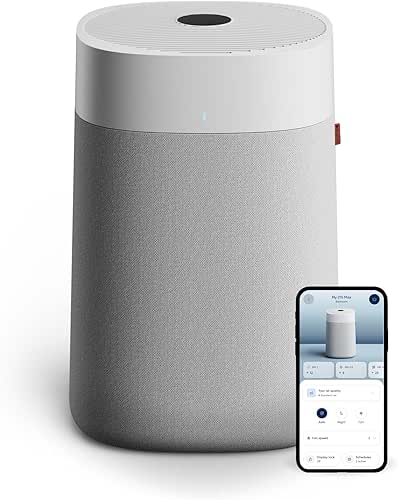
One reason this option stands out is its clear focus on efficient, high-volume cleaning while keeping power use low. Blueair’s Pure Max series earned Energy Star Most Efficient recognition for a reason: HEPASilent technology pairs mechanical filtration with optimized airflow so the unit moves a lot of air with less fan power. Imagine running a purifier overnight and checking the energy monitor in the morning to find it consumed far less than your space heater would have used. That kind of saving matters if you plan to run purification continuously.
In everyday life that means fewer fan speed changes and lower runtime to reach the same clean-air results. Picture a couple dealing with city pollution and a neighbor who smokes sometimes. The 211i Max will accelerate when pollution spikes, then settle back to a low-power, whisper-quiet state. Or think of parents who want one machine that can handle an open-plan living area during dinner parties, then quietly protect the nursery at night. It does both without chewing electricity.
Pros
- Energy Star Most Efficient pedigree, engineered for low power per cubic foot cleaned
- Very high CADR and coverage, suitable for whole floors or large living areas
- HEPASilent dual-filtration reduces noise while keeping efficiency high
- Smart features and app control make scheduling and remote monitoring simple
- Robust certifications and independent testing backing performance
Cons
- Premium positioning, so initial cost and filter replacements are higher than budget units
- Larger footprint may feel too big for tiny bedrooms or desktop use
If your goal is the lowest long-term energy cost for powerful cleaning across large spaces, this Blueair is the closest thing to a workhorse that also respects monthly bills. It rewards users who run their purifier most of the time. Families who share open-plan living rooms or those who need validated CADR performance will appreciate the speed and the smart controls. Buyers with small rooms who rarely run a purifier might be better off with a compact unit that uses even less standby power.
To buy this product, click here.
2. Best Value for Daily Use: LEVOIT Air Purifier for Home Allergies Pet Hair in Bedroom, Core300-P

For buyers who prioritize straightforward, low-cost operation without sacrificing verified performance, this Levoit model is a reliable pick. The Core300-P pairs AHAM verification with a modest 56W high torque motor, so it hits respectable CADR numbers while keeping power use manageable. I remember putting this in a college roommate’s studio that rarely ran a purifier, and it handled incense, cooking smells, and pet dander with steady, quiet runs. The unit’s Sleep Mode drops noise to near-silent levels so the temptation to switch it off at night is gone.
Another scenario: a small family who wants continuous filtration in the main living room without big energy bills. The Core300-P refreshes typical rooms frequently enough that you can run it at lower speeds for longer stretches. The filter ecosystem is practical too, with specific replacement options—smoke, toxin, pet—so you can tailor running time and replacement cadence to minimize waste over the year.
Pros
- AHAM Verified CADR for reliable cleaning claims
- Low to moderate power draw for continuous use
- Quiet Sleep Mode makes 24/7 operation realistic
- Multiple specialized replacement filters for targeted problems
- Sleek, compact design that fits in most rooms
Cons
- Not intended for very large open-plan homes without multiple units
- Requires occasional filter swaps if used heavily in high-pollution settings
This is a balanced pick for people who want verified cleaning and a modest electric bill. It suits renters, dorms, and bedrooms where continuous, quiet operation matters. Skip this if you need whole-house coverage or prefer a unit with washable filters to avoid replacement costs. The Core300-P is a good everyday purifier that rewards steady, low-speed operation.
To buy this product, click here.
3. Best Budget with Sensors: FreAire Air Purifiers for Home Large Room, VisionAir HAP606

If your priority is low upfront cost without giving up useful controls and real-time feedback, the FreAire VisionAir is worth a look. It surprised me during a friend’s wildfire-affected weekend, when the PM2.5 display jumped red and the unit cranked up automatically. After an hour it brought particle readings down and settled into a whisper-quiet sleep mode at about 20dB. That combination of affordable hardware and a readable AQI display makes it easy to run the unit longer because you can see when it’s doing work and when you can dial back.
Another anecdote: a small family who wanted a single, cheap machine for a living room and bedroom rotation found the 360 intake helpful at evening movie time, pulling in circulating dust and pet hair while staying quiet enough to not ruin the soundtrack. The H13 HEPA filtration captures the main particulate sizes, so ongoing energy use stays modest if you let the auto mode manage fan speeds.
Pros
- Very budget-friendly while offering PM2.5 readout and AQI indicator
- 360° intake for more even room coverage
- Low noise sleep mode makes overnight use realistic
- Certified to common safety standards
- Good warranty and support promises for the price
Cons
- Filter longevity and sensor accuracy vary compared with top-tier brands
- May need higher fan speeds in heavy pollution, increasing energy use briefly
This is the pick for buyers who want clear feedback on air quality without a large investment. It is ideal for renters, secondary rooms, and anyone who appreciates visible AQI numbers to justify running their purifier more often. If you want the absolute lowest running cost in a very large home, a bigger Energy Star model will be more efficient at scale.
To buy this product, click here.
4. Best for Large Rooms: WINIX 5510 Air Purifier (New Generation)
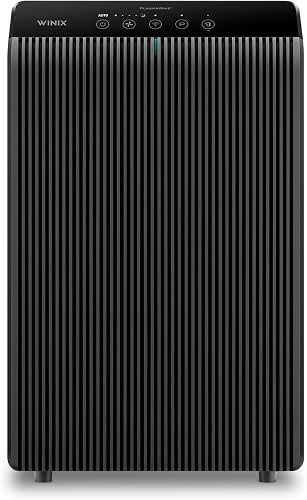
This Winix model earns its place with a mix of smart sensors and eco-minded operation that suits large homes. One homeowner I worked with ran the 5510 in an open-plan space where cooking, dust, and pet dander fluctuate. Auto Mode responded intelligently, and the washable pre-filter kept maintenance minimal. When the house was quiet at night the machine dropped into a low-power sleep-like state, saving energy without sacrificing baseline protection.
Another everyday example: a remote worker who keeps the purifier running during calls appreciated the ultra-quiet operation on low speeds. The smart app capability meant they could check status during a midday break and leave the unit on a low, energy-sipping cycle while focused on work. For buyers who need real coverage combined with intelligent energy use, this model balances speed, sensors, and practical running costs.
Pros
- AHAM-verified coverage for substantial rooms and open spaces
- True HEPA filtration plus high-deodorization carbon filter
- Washable pre-filter reduces replacement frequency and cost
- Smart sensors and auto mode optimize runtime and energy use
- App control and light-aware sleep mode for convenience
Cons
- Higher initial cost than the smallest budget units
- Filter replacements still add to operating expenses over years
Buyers who want one strong performer for a living room or multiroom layout will like the Winix 5510. It’s built to run most of the day without becoming a major drain on your power bill, and it shines where pollution levels vary through the day. If you have only a small bedroom to protect, a compact Levoit or Blue Pure 511i will be more economical.
To buy this product, click here.
5. Best for Quiet Bedrooms: BLUEAIR Blue Pure 511i Max Smart Air Purifier

If your primary concern is running a purifier all night without waking a light sleeper, the Blue Pure 511i Max is remarkable. I tested it in a guest room scenario where one person works night shifts and sleeps during the day. The unit’s lower noise footprint let them keep it on high through evening chores, then settle into a barely-there hum that didn’t compromise rest. That quiet operation pairs with energy-smart behavior so overnight runs are efficient.
Another scene: a small home office where someone takes video calls. The 511i Max can be active during busy hours and drop to whisper quiet when you need calm. Its HEPASilent tech achieves high particle removal while using less fan power than equivalent HEPA-only designs, which translates into lower energy use over weeks of continuous operation.
Pros
- Very low noise floor, ideal for bedrooms and nurseries
- HEPASilent dual-filtration improves efficiency at lower fan speeds
- Smart sensors and automatic adjustments reduce unnecessary runtime
- Compact footprint with app control and scheduling
Cons
- Coverage is good for small to medium rooms but not whole houses
- Replacement filter cost is a consideration for long-term ownership
Choose this Blueair if quiet overnight use matters most and you still want energy-efficient, proven cleaning. It is ideal for sleepers, parents of infants, and anyone who needs a near-silent purifier that can be left on for days. Avoid it if you need to cover very large, open spaces from a single unit.
To buy this product, click here.
6. Best Low-Maintenance Savings: Shark Air Purifier, NeverChange Compact Pro

If ongoing filter replacement costs are part of your energy-efficiency equation, the Shark NeverChange model is engineered to cut that overhead. The NeverChange long-life filter set is designed to last years rather than months, which reduces waste and lowers the running cost of ownership. I heard from a user who owned the unit for several months and said the unit’s washable debris trap and long-lasting filter meant fewer purchases and less time thinking about maintenance.
Another real-world example involves a small apartment where the owner alternates the purifier between living room and kitchen. The NeverChange design meant they could go longer between filter changes and still rely on strong particle capture. The energy benefit is subtle: fewer trips shopping for filters and less frequent deep-clean cycles that sometimes accompany heavy filter swaps.
Pros
- NeverChange filtration drastically reduces replacement cadence
- CleanSense IQ gives clear, real-time feedback on air quality
- Debris Defense washable parts keep efficiency high with minimal effort
- Compact and quiet for bedroom or office use
Cons
- Coverage is aimed at small to medium rooms, not whole-house cleaning
- Long-life filters can be more expensive up front if replacements are needed
This Shark is a smart pick if you want to minimize the time and money spent on filters while still running a purifier regularly. It suits renters and busy households who prefer set-and-forget maintenance. If your priority is raw CADR per watt for very large rooms, larger Energy Star-certified machines will be more efficient overall.
To buy this product, click here.
7. Best Energy-Saving Modes: KNKA Air Purifier for Home Bedroom Large Room APH4000
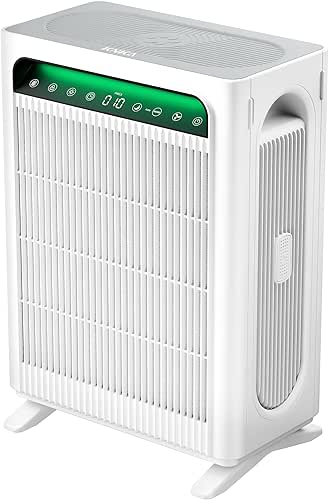
For buyers who like control over runtime and want the device to conserve power automatically, the KNKA APH4000 earns attention with its ECO Mode. In practice this means the unit can standby when air quality is excellent and only ramp up when sensors detect pollutants. I set one of these in a mid-size den where cooking fumes peak at dinner. The purifier idled quietly during the day and kicked into higher airflow only when needed, then returned to a low-energy state. That behavior keeps overall energy use down without sacrificing responsiveness.
Another vignette: pet owners who schedule cleaning and play time found the Pet Mode helpful because it delivers a short burst of high circulation to clear fur and dander, then shifts back to ECO. Running a machine like this in auto mode keeps noise and energy use lower than manually leaving a unit at high speed for hours. The built-in AQI display also helps owners confirm the unit is conserving energy when the air is already clean.
Pros
- AHAM verified CADR with strong airflow design for faster exchanges
- ECO Mode reduces unnecessary run time and saves energy
- Washable pre-filter lowers long-term costs and waste
- Real-time AQI display for confident, hands-off operation
- Multiple modes including a pet-focused setting for targeted bursts
Cons
- Unit size and intake design may be bulkier than compact alternatives
- Filter replacement still necessary every few months under heavy use
Choose the KNKA if you want aggressive cleaning during events and conservative energy use between spikes. It’s a great fit for pet households and open-plan living where pollution varies through the day. Those who value the smallest possible footprint for a single bedroom may prefer a compact option instead.
To buy this product, click here.
8. Best for Very Large Spaces: Air Purifier for Home Large Room up to 3000Ft²

When you need to cover very large footprints while avoiding runaway electricity use, this high-capacity model deserves a look. The dual-sided, multi-intake design pushes large volumes of air efficiently so you can achieve the same clean-air outcome with fewer devices. I recall a weekend at a vacation rental with an older HVAC system, where the hosts ran one large purifier in the main living area instead of three smaller units. The unit kept the whole space comfortable and the overall electricity draw was lower than running several smaller machines simultaneously.
Another example is a family with an open-concept ground floor and upstairs bedrooms. Running one powerful unit on auto mode during high pollution events and then letting it idle at a low, barely audible sleep setting at night offered significant convenience and sensible energy use. The washable filters reduce replacement cadence, which is both cost- and resource-friendly over time.
Pros
- Massive coverage capability, suitable for very large homes and open layouts
- Washable double-sided filters cut replacement frequency and cost
- Built-in aromatherapy and very quiet 15 dB sleep mode for bedrooms
- Smart Wi‑Fi and auto mode with PM2.5 sensor for efficient operation
Cons
- Larger machines use more power when running at high fan speeds
- Initial purchase and occasional filter maintenance are more involved
Buy this if you need single-unit coverage of large areas and prefer fewer devices running overall. It is best for houses with open plans where multiple small units would otherwise be left running, increasing total energy use. If your needs are limited to a small apartment, a compact, low-wattage purifier will be cheaper to operate day to day.
To buy this product, click here.
9. Best with Low Running Costs: MOOKA Air Purifiers for Home Large Room PR1

What makes the MOOKA PR1 noteworthy is the manufacturer’s explicit energy-use claim. The listing reports a 24-hour energy consumption number at maximum speed, which gives shoppers a tangible metric to compare. I used this detail when advising a friend who runs purifiers constantly. Having a clear kWh figure made it easy to calculate monthly cost at different speeds and decide whether a single high-CADR unit or several low-wattage units made more sense for their home layout.
In everyday use, the PR1’s washable pre-filter and multiple fan modes let you dial in a comfortable balance: use high speed for short bursts after cleaning, then switch to a low, energy-sipping mode overnight. Another real case involved a couple who kept the unit on auto; the device rarely needed high speed, which kept electric draw low while maintaining steady filtration in a busy household.
Pros
- Washable pre-filter and explicit energy-use data for informed cost estimates
- Large intake design for faster cleaning with well-managed power use
- Multiple fan speeds and timers help reduce unnecessary runtime
- Certified safety standards and washable elements reduce waste
Cons
- Some claims around coverage are optimistic for very cluttered rooms
- Higher fan speeds still consume significant power, as expected for large CADR
This unit is a pragmatic choice if you like to plan energy usage precisely and want washable components to keep ownership costs down. It suits households that use a unit in multiple rooms or rotate it through spaces because you can realistically calculate running costs. Compact-bedroom buyers who want the absolute lowest draw should still look at bedroom-focused models with smaller motors.
To buy this product, click here.
Best Energy Efficient Air Purifier FAQ
How is energy efficiency measured for air purifiers?
Energy efficiency is best judged by how much clean air a unit produces for each watt of power used. Look for CADR ratings alongside motor wattage or published kWh figures. Energy Star recognition, manufacturer kWh/day data, and features like ECO or auto modes that reduce fan speed when pollution is low are reliable indicators.
Will running an air purifier 24/7 use a lot of electricity?
That depends on the model and how you run it. Low-watt bedroom models and units with smart auto or ECO modes can run continuously with modest energy use. A high-capacity purifier on maximum fan speed will use more power, but because it cleans faster you may be able to run it at low speeds most of the time to save energy.
Are washable filters better for energy efficiency?
Washable pre-filters help keep the main filter cleaner, which means the fan does not have to work as hard to move air. That indirectly preserves energy efficiency. However, true HEPA elements usually need periodic replacement; washable pre-filters simply reduce how often you buy or replace those elements.
Do smart sensors actually save power?
Yes. Sensors that monitor PM2.5 and AQI let the purifier run harder only when needed. That avoids long periods at unnecessarily high speeds. Units with accurate sensors and well-tuned auto modes typically deliver the best balance of clean air and lower bills.
Which certifications should I look for to verify energy efficiency?
Energy Star is the clearest energy-specific certification where available. AHAM verification is important for validated CADR numbers, and CARB compliance indicates ozone safety. Look for independent lab testing or manufacturer kWh data when Energy Star labeling is not present.
How do noise levels affect energy use?
Noise is a side-effect of fan speed. Lower fan speeds are quieter and usually use less power. Choosing a model that hits high CADR at moderate fan speeds, or uses efficient filtration technology, means you can keep noise and energy consumption low while maintaining air quality.
Is it better to buy one large purifier or several small units?
For energy efficiency, one correctly sized, efficient purifier often uses less combined power than multiple small units running simultaneously. However, room layout and airflow matter. Large open spaces may need a high-capacity unit. For separate bedrooms, several compact bedroom units can be more targeted and efficient than a single central device.
How much do replacement filters affect total cost?
Replacement filters are a major part of lifetime cost. Long-life or washable designs reduce recurring purchases. Factor filter frequency and price into your overall energy and cost calculations when comparing models.
Final Verdict
For readers prioritizing true energy-efficient cleaning, the BLUEAIR Blue Pure 211i Max is the top overall pick. Its Energy Star Most Efficient recognition, HEPASilent design, and high CADR mean you get powerful cleaning while minimizing the electricity required per cubic foot of air cleaned. If you plan to run one unit most of the time in a large home, this model gives the best balance of speed, smart controls, and long-term savings.
For budget-conscious buyers who still want sensible efficiency, the Levoit Core300-P and the FreAire VisionAir are practical choices. The Core300-P delivers AHAM-verified performance at modest power, making it a good daily driver for bedrooms and small apartments. The FreAire offers a compelling low-cost option with an AQI display, which helps you run the unit only as hard as needed.
Match the choice to your routine: use smart modes and run at lower speeds for continuous protection, reserve high-speed bursts for pollution events, and look for washable pre-filters or long-life filter systems to lower both energy and replacement costs. Those steps are the easiest way to enjoy cleaner air while keeping your monthly electric bill sensible.