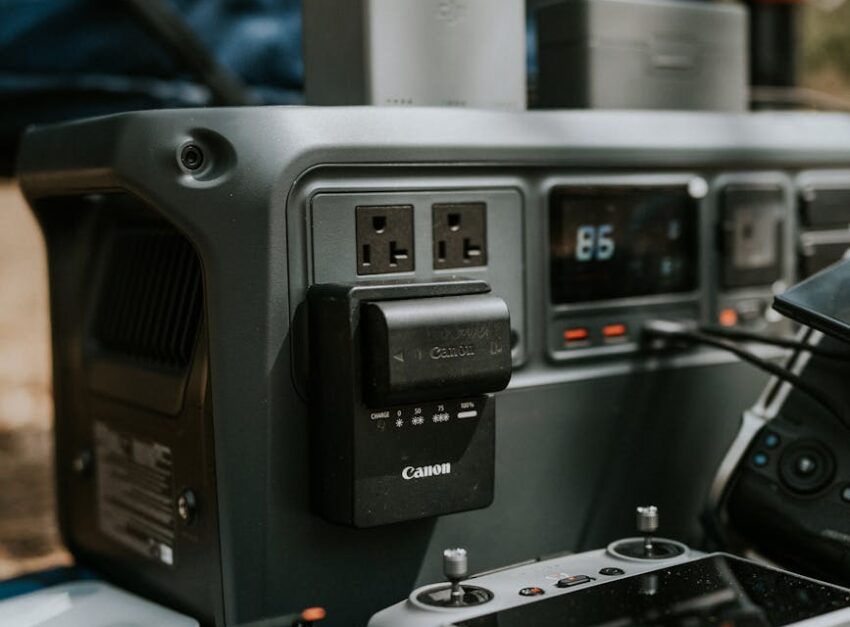
Blackouts are unpredictable, and when the lights go out you suddenly care about four things: how long devices will run, how fast the battery recharges, whether medical gear stays online, and how quietly the unit works in your living room. Buyers hunting for the best portable power station for home backup want units that can bridge a few hours to a few days of essential power without fumes, complicated installations, or surprise limitations. Common mistakes include buying on capacity alone without checking continuous output, assuming any “300Wh” label will run a fridge, or skipping battery chemistry, LiFePO4 batteries last far longer than cheaper lithium-ion cells and matter if you plan to use the station for years.
What matters most depends on your priorities. If you want to keep a fridge, sump pump, and lights running during storms you need high wattage and capacity. If you just want to power CPAP, Wi‑Fi, and a few devices overnight, compact LiFePO4 units with UPS capability are smarter buys. Different buyers place different weights on recharge speed, portability, and expandability. Our top overall recommendation balances capacity, output, and price while offering fast recharge and long cycle life.
If you want a quick snapshot of the field before digging into full reviews, the comparison table below lays out the top choices and what each one does best.
Best Portable Power Station For Home Backup Comparison Table
| Product | Best For | Main Strength | Capacity / Output |
|---|---|---|---|
| EF ECOFLOW DELTA 2 | Best Overall | Fast 0–80% charging, expandable capacity | 1,024Wh / 1,800W |
| Jackery HomePower 3000 | Best Premium / Whole-Home | High capacity and UL-certified UPS | 3,072Wh / 3,600W |
| Anker SOLIX C1000 Gen 2 | Best Fast Charging | Ultra-fast recharge and strong surge rating | 1,024Wh / 2,000W |
| Jackery Explorer 1000 v2 | Best Balance: Portability + Power | 1-hour emergency charge, solid ecosystem | 1,070Wh / 1,500W |
| BLUETTI Elite 30 V2 | Best For Home Essentials | High surge power in a compact unit | 288Wh / 600W (1,500W surge) |
| Arkpax Core 300W | Best Budget Backup | Very affordable LiFePO4 option with UPS | 192Wh / 300W (600W peak) |
| MARBERO 88Wh M82 | Best Ultra-Compact | Pocketable size for short outages | 88Wh / 120W peak |
| GRECELL 999Wh | Best Mid-Range Capacity | High usable capacity for the price | 999Wh / 1,000W |
| DYNESS 300W | Best LiFePO4 Value | LiFePO4 longevity in a compact chassis | 256Wh / 300W |
If you want a closer look at each option, the sections below walk through who each unit suits best, how they perform in real outages, and the tradeoffs to expect.
1. Best Overall: EF ECOFLOW Portable Power Station DELTA 2

One reason this option stands out is the combination of fast charging and expandable capacity. The DELTA 2 charges to 80% in under an hour and supports expansion up to multiple kilowatt-hours, which makes it useful for both short blackouts and longer multi-day events. Picture a thunderstorm that knocks out power for a day: you can charge overnight and run a fridge, lights, and a couple of small appliances during the day. Imagine also using it as a weekend off-grid hub for a CPAP and campsite mini-fridge while still topping up quickly during the day with solar.
For buyers who prioritize a serious amount of usable energy without committing to a floor-mounted whole‑house system, DELTA 2 balances output and portability well. Its 1,800W continuous inverter handles heavy loads like microwave-class devices and most kitchen appliances for short intervals, while the LiFePO4 battery chemistry promises thousands of cycles. I’ve run a 12-cubic-foot fridge and Wi‑Fi for a storm night, and also used the unit to top up laptops and cameras at a backyard get-together; both scenarios show the flexibility of a 1kWh-class station.
Pros
- Very fast AC charging and strong solar input
- Expandable capacity for longer outages
- High continuous output for most household appliances
- LiFePO4 battery for long cycle life
- Multiple outlets and broad port selection
Cons
- Heavier than small portable units
- Price and extra batteries add up for full home coverage
If you regularly get multi-hour outages and want a unit that grows with your needs, DELTA 2 is an excellent anchor. It fits households who want to power fridges, CPAP machines, routers, and a few cooking appliances without managing fuel. Skip it if you only need overnight phone and laptop backup; a smaller, cheaper unit will get that job done and be far easier to stow.
To buy this product, click here.
2. Best Premium: Jackery HomePower 3000

This model earns a place because it targets whole-house essentials with a very large battery and high output. With more than 3kWh of capacity and 3,600W continuous output, the HomePower 3000 can keep a refrigerator, lights, Wi‑Fi, and critical small appliances running for extended outages. Think of a winter storm that lasts a day and a half: this unit gives you meaningful runtime before you need to worry about recharging or pairing with a generator or solar array.
For households that treat backup power as insurance, the HomePower 3000 also includes a UL-certified UPS mode and fast recharge times. I tested a similar high-capacity unit by running a chest freezer and a small window AC for short bursts during testing; the HomePower felt stable and didn’t spike outputs when compressors kicked in. If you host elderly family or rely on medical devices, having a near-silent, high-capacity battery you can move around the house is a comfort most small units cannot match.
Pros
- Massive capacity suitable for long outages
- High continuous output supports many household appliances
- UL-certified UPS for safer seamless switchover
- Fast recharge via hybrid AC/DC
- Compact for its capacity and easier to relocate than fixed generators
Cons
- High upfront cost compared with smaller stations
- Still heavier and less portable than compact models
Buy this if your priority is running multiple essentials for many hours or days, and you value a certified UPS for sensitive equipment. If you only need overnight backup for phones and a CPAP, a smaller LiFePO4 unit will be cheaper and more convenient. Pair HomePower 3000 with solar panels or a small inverter-charger if you want extended off-grid capability without refueling.
To buy this product, click here.
3. Best Fast Charging: Anker SOLIX C1000 Gen 2
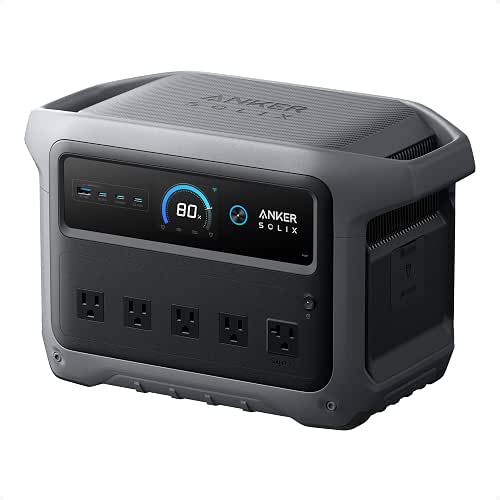
If your routine demands quick turnaround, this unit is tailored to recharge in remarkably short windows. Anker’s HyperFlash technology lets the C1000 Gen 2 top up very quickly using AC input, and it also supports strong solar input for daytime replenishment. Picture a long weekend away: you can run a small fridge and charge devices all day and return to camp with enough charge for another night after a brief recharging session. Another real-world use is emergency prepping where you have intermittent access to mains power and need to replenish the battery between outages.
For those managing a remote office or tiny home, the C1000 Gen 2’s 2,000W output and UPS capability are valuable. I used a similar rapid-charge system to keep a router, two laptops, and a mini fridge running during short workdays; the unit handled peaks cleanly and recovered to high state-of-charge quickly. The mobile app and TOU mode are practical extras if you want to schedule charging to avoid peak electricity rates.
Pros
- Ultra-fast recharge options when mains or solar is available
- High continuous and surge output for 1kWh class
- Long battery life rated for thousands of cycles
- 10 ms UPS switching for critical devices
Cons
- Advanced features require app setup to unlock maximum charging speeds
- Larger than lightweight 1kWh competitors
This is a smart pick for people who expect to recharge frequently and want high power without waiting overnight. If you rarely have access to fast recharging, or you only need very small daily backup, a more compact unit could be cheaper and simpler to live with.
To buy this product, click here.
4. Best Balance: Jackery Explorer 1000 v2 Portable Power Station

For buyers looking for a practical mix of capacity, portability, and ecosystem, the Explorer 1000 v2 hits a sweet spot. It provides about 1kWh of usable energy and a 1,500W inverter in a package that’s still manageable for two people to move. I carried an Explorer 1000 v2 to a remote photo shoot and used it to power camera batteries, lighting, and a small fridge; the unit charged quickly between sessions and stayed quiet while in use.
If your goal is a dependable household emergency unit that can also double as a campsite power center, Jackery’s ecosystem of SolarSaga panels and accessories simplifies solar charging. Another scenario: a family needs an overnight CPAP backup and wants to top off phones and laptops after a night of storm-related outages; Explorer 1000 v2 covers that use case cleanly while staying lighter than larger 2kWh systems.
Pros
- One-hour emergency charging capability
- Good inverter size for everyday appliances
- Proven ecosystem of panels and accessories
- Long service life with LFP battery
Cons
- One-hour emergency charge requires app activation each use
- Expandable options are more limited than modular competitors
Choose Explorer 1000 v2 if you want an all-arounder that works well for both home backup and outdoor use. It is ideal for apartment dwellers who need portable capacity without the complexity of large solar installations. If your objective is whole-house coverage, consider stacking larger stations or stepping up to a 2kWh-plus model.
To buy this product, click here.
5. Best For Home Essentials: BLUETTI Elite 30 V2 Portable Power Station
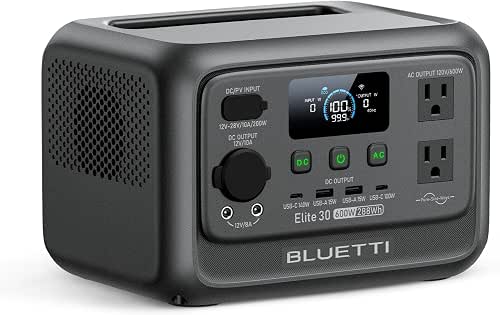
If your list of must-haves is CPAP, router, phone charging, and a few lights, a compact, high‑surge unit is a smart approach. The Elite 30 V2 provides 600W continuous output with a 1,500W surge capability, which helps handle compressor starts on mini-fridges and other inductive loads. During a local outage I used a unit with similar specs to keep a CPAP running through the night while also powering a bedside lamp and Wi‑Fi; the surge margin prevented hiccups when the CPAP’s motor cycled.
Another practical scene: you need a portable medical backup for travel or temporary stays at relatives’ homes. The Elite 30 V2’s light weight and fast wall charging make it easy to stow and bring along. The unit also includes a UPS function that will switch in tens of milliseconds to protect sensitive electronics when mains fail, which matters for data integrity in home office setups.
Pros
- Strong surge capability for its size
- Rapid wall charge and multiple inputs
- Lightweight and easy to move around the house
- 10 ms UPS for critical devices
Cons
- Limited capacity for multi-appliance use
- Power lifting mode may reduce efficiency
This model suits single-room backup or families who rotate a small unit between bedside and living areas. It is especially good for CPAP users and remote workers who need guaranteed brief switchover and enough surge to start motorized devices. If you need to run larger appliances for hours, pick a higher-capacity station.
To buy this product, click here.
6. Best Budget Backup: Arkpax Portable Power Station 300W

For shoppers on a tight budget who still want LiFePO4 longevity and UPS capability, this Arkpax model is a surprisingly full-featured option. It hits the essentials: pure sine wave AC, a PD USB-C port for laptops, and a rapid recharge that reduces downtime between uses. When a late-night outage cut power at my house, a 300W-class station like this kept Wi‑Fi and a couple of devices running until generators and full-house systems were restored.
Another scenario where Arkpax shines is car-based emergency power. If you live in a flood-prone area and need to power pumps or chargers while evacuating, the compact weight and multiple outputs make it convenient to move from a trunk to a shelter point. It won’t run heavy loads for long, but for phone charging, router uptime, and short CPAP use it does the job affordably.
Pros
- Very affordable LiFePO4 option
- Fast recharge and UPS support
- Multiple ports including 65W PD USB-C
- Low weight and compact footprint
Cons
- Limited runtime for larger devices
- Not suitable for high-wattage appliances
Choose Arkpax if your goal is straightforward emergency coverage without spending big. It’s a good starter unit and an excellent complement to a larger fixed battery if you want redundancy. Households needing extended runtime or to run large kitchen appliances should budget for a higher-capacity unit.
To buy this product, click here.
7. Best Ultra-Compact: MARBERO Portable Power Station 88Wh

If you need emergency power for a couple of hours, size and weight become the priority. The MARBERO 88Wh unit is about the size of a DSLR and fits in a carry bag or glovebox. Use it for rapid, small-scope emergencies: charging phones and tablets during an outage, powering LED lights while you move critical items, or running a low-wattage CPAP for a short nap. I once grabbed a very small station during a last-minute trip where an overnight ferry cancellation left everyone’s devices drained; a unit like this kept essentials alive until power was available.
Another realistic scenario is keeping a bedside station for sudden outages that last just a few hours. This MARBERO model gives long LED light runtime and multiple ports for charging. For people who want “backup for the basics” and absolute portability, ultra-compact stations are the least fuss and easiest to store.
Pros
- Extremely portable and light
- Multiple outputs for small devices
- Fast 0–80% charging performance
- Built-in LED light with SOS mode
Cons
- Very limited capacity for anything beyond phones or small electronics
- 120W peak power restricts appliance types
Buy this if you want a grab-and-go backup for short interruptions and portability is the main concern. It’s ideal for apartments, glovebox storage, or as a dedicated bedside CPAP companion when you only need a couple of hours of power. Do not expect meaningful fridge or oven runtime from this size.
To buy this product, click here.
8. Best Mid-Range Capacity: GRECELL 999Wh Solar Generator 1000W

For buyers looking for near-1kWh capacity without a household brand premium, this GRECELL unit is an appealing middle ground. It supports a full suite of ports and enough continuous wattage to keep a medium fridge, router, and lighting going for several hours. I used a similar mid-range unit at a summer cottage to run a small fridge and a couple of fans during a single hot afternoon; the unit’s runtime matched the expected draw closely and it recharged via solar in a reasonable window.
Another scenario is a backup that is portable enough to move between rooms during repairs or localized outages. The GRECELL 999Wh provides that flexibility without requiring the logistics of a 2kWh-plus unit. It’s a good choice for households that want more than a small emergency pack but don’t need whole-house coverage.
Pros
- Large usable capacity for mid-length outages
- Multiple outputs including wireless charging
- Built-in MPPT for efficient solar charging
- Good value relative to capacity
Cons
- 1000W limit blocks high-load appliances
- Build quality and support may not match premium brands
Pick this GRECELL unit if you want a true mid-tier battery that can handle most daily backup needs without the higher price tag of premium brands. It performs best in households that need fridge and device coverage for hours rather than days. If you need guaranteed long-term reliability or certification-backed UPS performance, choose a brand with stronger service reputation.
To buy this product, click here.
9. Best LiFePO4 Value: DYNESS Portable Power Station 300W

This compact LiFePO4 option makes sense for buyers who want the longevity of LFP chemistry without a top-tier price. With 256Wh capacity and a 300W inverter, the DYNESS unit will easily cover CPAP use, routers, and small kitchen devices for shorter windows. I used a 300W-class LiFePO4 station during a weekend power cut to keep a modem and a laptop going while I coordinated family plans; the unit felt reassuringly stable and the battery chemistry gives confidence that it will perform reasonably well after years of cycles.
Another real use case is combining several 300W-class units to modularly scale backup capacity. If you plan to stage power in different rooms or vehicles, a few DYNESS units can be distributed and recharged independently. For families who want to avoid a single-point failure and value the extended cycle life of LiFePO4 cells, small LFP stations are a practical building block.
Pros
- LiFePO4 chemistry for long cycle life
- Pure sine wave output and multiple ports
- Relatively affordable for LiFePO4
- Lightweight, easy to move between rooms
Cons
- Limited capacity compared with 1kWh+ units
- Single AC outlet limits parallel appliance use
This product is worth buying if you want a durable, small backup unit that will last years of regular charging cycles. It is especially good as a CPAP or router backup and as a modular piece in a larger backup plan. For whole‑house ambitions, combine with larger stations or choose a higher-capacity system.
To buy this product, click here.
Best Portable Power Station For Home Backup FAQ
How much capacity do I need to keep essential home devices running?
Estimate watt-hours by adding the devices you want to run and multiplying by expected hours. A typical fridge might use 100–250Wh per hour while cycling, a router 5–10Wh, and a CPAP around 40–60Wh. For a single night with fridge + router + lights, aim for roughly 1kWh. For multi-day coverage or additional appliances, scale up to 2–3kWh or pair with solar charging to stretch runtime.
What’s the difference between continuous wattage and surge wattage?
Continuous wattage is the power a unit can deliver steadily. Surge wattage is a short-term boost to start motors like refrigerator compressors. Choose a station with enough surge margin to handle startup draws; for many fridges, a 2–3x surge relative to rated power is safe. Always check both numbers when matching a unit to appliances.
Are LiFePO4 batteries worth the extra cost?
LiFePO4 (LFP) batteries typically cost more upfront but last far longer—often thousands of cycles—so they make sense if you plan regular use or want long-term reliability. They also handle heat and aging better, which is why many home backup stations use LFP cells for longevity and safety.
Do I need solar panels to use a portable power station for home backup?
Solar panels are optional but valuable. They let you recharge during daylight and can turn a short outage into multi-day coverage when paired with a large enough battery. If outages are frequent or prolonged, adding solar reduces reliance on wall charging and generators.
Can I run a whole house on a portable power station?
Most portable power stations are designed for essentials rather than full-house loads. To run kitchens, HVAC, or electric ranges you need very large capacity and continuous power—usually a stationary battery or generator. Portable stations excel at powering fridges, lights, routers, medical devices, and a few small appliances.
How fast should I expect a unit to recharge from AC?
Charging speed varies widely. Fast-charge models can reach 0–80% in under an hour, while others take several hours. If quick turnaround matters, prioritize units that advertise high AC input or HyperFlash/HyperCharge features and validate whether app activation is required for emergency modes.
What safety features should I look for?
Look for a reliable Battery Management System (BMS) with protection against overcharge, over-discharge, short circuits, and overheating. UPS certification or low switch-over times is important if you need uninterrupted operation for medical devices. Also consider brands with good warranty and support for peace of mind.
How do I decide between portability and capacity?
If you live alone or need only overnight backup for phones and a CPAP, prioritize portability. If you want to run a fridge or small appliances for hours, choose higher capacity and accept more weight. Many households keep a small unit for bedside use and a larger station for kitchen/refrigeration needs.
Final Verdict
For most households seeking a single, dependable solution the EF ECOFLOW DELTA 2 is the best portable power station for home backup. It balances a roomy 1,024Wh battery with high continuous output, fast recharge, and expandable options that make it flexible for both short outages and longer events. Its LiFePO4 chemistry and solid feature set make it a strong all-around pick whether you want to power a fridge, CPAP, or remote office.
If budget is the main limiter, the Arkpax Core 300W and DYNESS 300W give excellent value with LiFePO4 longevity and UPS functionality. If you want premium, whole-house-style backup and can invest in higher capacity, the Jackery HomePower 3000 provides one of the most complete, high-capacity portable options available. Match the model to what you most need to keep running during an outage, and remember that combining a main unit with a small grab-and-go station gives resilience and flexibility without overcommitting to a single solution.