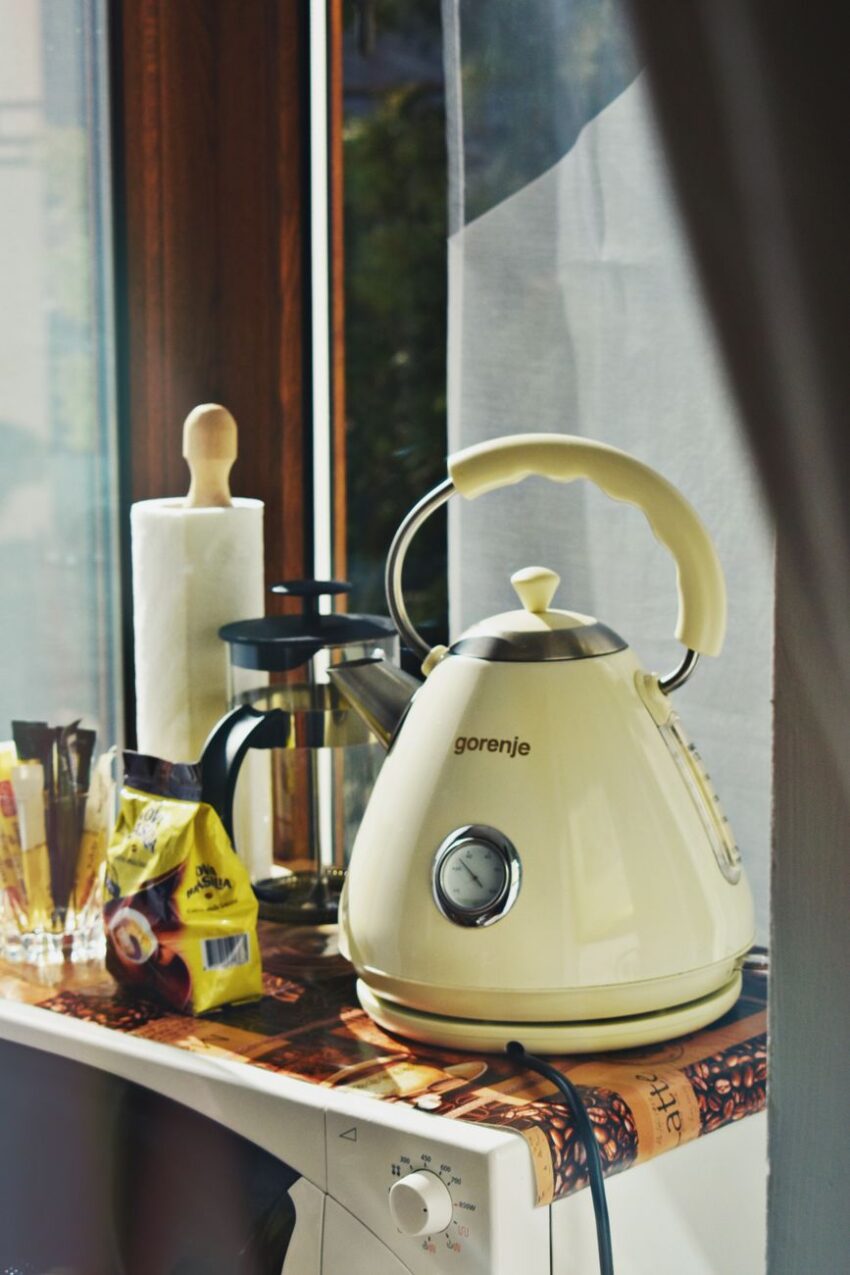
If you boil water every day, the choice between an electric kettle and a microwave can quietly show up on your power bill. The difference is usually not huge for one cup of tea or coffee, but over time the more efficient option can save both energy and a little hassle. For most households, the electric kettle vs microwave electricity cost comparison comes down to how much water you heat, how often you use it, and whether you value speed or convenience more than a small cost difference.
The short practical answer is this: an electric kettle is usually cheaper to run for boiling water, but the margin is often smaller than people expect. A microwave can be competitive for a single mug, especially if you only heat a small amount of water and you use the microwave efficiently. Once you start heating larger amounts, the kettle usually pulls ahead because it transfers heat into the water more directly.
That said, there are a few caveats. A kettle’s efficiency depends on its wattage, fill level, and how well it matches the amount of water you actually need. A microwave can waste more energy by heating the container, the turntable area, and the air inside the cavity. So the real answer is less about a universal winner and more about which appliance fits your routine.
Electric kettle vs microwave electricity cost: the basic comparison
Both appliances use electricity to heat water, but they do it in different ways. An electric kettle heats a built-in element that transfers energy straight into the water. A microwave uses electromagnetic waves to excite water molecules, which heats the water from the inside out, at least in broad terms. In practice, both methods work well, but the kettle is usually better at getting most of the electricity into the water itself.
That is why kettles are often faster and more efficient for boiling water. Microwaves can still be useful, particularly if you are heating a very small amount or you already have the microwave running for another reason. The cost gap usually comes down to efficiency, which is affected by how much water you are heating and how long the appliance runs.
To compare them fairly, you need to think in terms of energy use, not just power rating. A higher wattage appliance does not always cost more if it finishes the task sooner. A 3,000-watt kettle may use less total electricity than a 1,000-watt microwave if the kettle boils the water in three minutes and the microwave takes longer to reach the same result.
How much electricity does an electric kettle use?
Most electric kettles fall somewhere between 1,500 and 3,000 watts. That sounds high, but kettles only run for a short time. A typical boil for one or two cups might take two to four minutes, depending on the kettle and the amount of water.
To estimate energy use, you can use this simple formula:
Energy in kilowatt-hours = watts × hours ÷ 1,000
So a 2,400-watt kettle used for 3 minutes would use:
2,400 × 0.05 hours ÷ 1,000 = 0.12 kWh
If your electricity rate is around 15 to 30 cents per kWh, that boil costs roughly 2 to 4 cents. Rates vary a lot by region, but that is the general scale. Even if electricity is more expensive where you live, boiling a kettle once or twice a day is still usually a low-cost activity.
What matters more is repeated use. If you boil a full kettle when you only need one mug, you are paying for extra water that you never use. The kettle is efficient, but it is not magic. Matching the fill level to your actual need makes a real difference.
Why kettles are usually efficient
Electric kettles are designed for one job, and that helps. They heat water directly, with very little heat loss compared with an open pan on a stove. Most of the energy goes into the water rather than the surrounding air or the cookware.
They also tend to have an automatic shutoff feature, which reduces the risk of overboiling. That matters because it stops the heating cycle once the water reaches boiling point. You are not paying to keep the appliance running longer than necessary.
How much electricity does a microwave use to heat water?
Microwaves vary more widely than kettles. A common household microwave might draw 700 to 1,200 watts at the cooking stage, though the actual power input can be higher depending on the model. For heating water, the microwave may run for one to three minutes, sometimes longer if you are heating a larger mug or a nearly full bowl.
Using the same formula, a 1,000-watt microwave running for 2 minutes uses:
1,000 × 0.033 hours ÷ 1,000 = 0.033 kWh
At first glance, that looks cheaper than the kettle example above. But there is a catch. A microwave is not always converting electricity into water heating as efficiently as a kettle. It may take longer to bring the water up to temperature, and the container itself can absorb heat. If the microwave runs for 4 or 5 minutes because the water starts cold or the container is large, the cost can move closer to the kettle or even exceed it.
Microwaves also tend to be less convenient for boiling water safely. Water can become superheated in a microwave, which means it gets hotter than its boiling point without showing the usual bubbling. That is not something most people think about while making tea, but it is one reason many households still prefer kettles.
The cost depends on how much water you heat
With microwaves, the difference between heating a small mug and a full jug is significant. A single cup may be fine. A larger quantity often becomes inefficient quickly because the microwave cavity, container, and water all need to be heated at once.
Here is the simple rule: the smaller the amount of water, the more competitive the microwave can be. The larger the amount, the more likely the kettle is to win on both speed and efficiency.
Electric kettle vs microwave electricity cost in real numbers
It helps to see the comparison in a practical table. These numbers are approximate and will vary based on appliance efficiency, starting water temperature, and your local electricity rate.
| Task | Electric kettle | Microwave | Likely cheaper option |
|---|---|---|---|
| One small mug of water | About 0.04 to 0.08 kWh | About 0.03 to 0.07 kWh | Depends on timing and container |
| Two cups of water | About 0.07 to 0.12 kWh | About 0.08 to 0.15 kWh | Usually kettle |
| Full kettle or larger volume | About 0.10 to 0.20 kWh | Often inefficient or slow | Kettle |
| Frequent daily boiling | Predictable and efficient | Can add up if used often | Kettle |
If your electricity rate is 20 cents per kWh, boiling water might cost something like 1 to 4 cents per use with a kettle and a similar or slightly wider range with a microwave. That is not a huge difference per use, but if you boil water several times a day for months, the gap becomes more noticeable.
For example, suppose you boil water four times a day. If the kettle saves just 1 cent per boil compared with the microwave, that is about $14.60 a year. If the savings are 2 or 3 cents per boil, the annual difference becomes more meaningful. The exact number depends heavily on your habits, but the principle holds.
Which uses less electricity in everyday situations?
The answer changes depending on how you actually use the appliance. Real homes are not lab tests. People heat a mug of tea while getting ready for work, boil enough water for instant noodles, or warm water for a hot drink at night. That is where usage patterns matter more than the nameplate wattage.
For one cup of tea or coffee
A microwave can be surprisingly competitive if you only need a small amount of water and you heat it for just long enough. If your kettle is oversized and you keep boiling more water than needed, the microwave may edge ahead on cost for a single mug.
Still, a kettle is usually simpler. Fill it to the right level, press a button, and it shuts off when done. In most kitchens, that convenience is worth the tiny cost difference.
For multiple mugs or a pot’s worth of water
This is where the kettle usually wins. It is designed to heat water efficiently in a larger batch. A microwave starts to lose ground as the volume increases because it does not heat as evenly or as directly.
If you often make tea for two or more people, or you use hot water for oatmeal, soups, or cooking, a kettle is usually the better pick. You are less likely to waste energy, and you will spend less time waiting around.
For occasional use
If you only heat water once in a while, the difference in electricity cost may be too small to matter much. In that case, choose the appliance that fits your kitchen setup and habits. If your microwave is already there and you do not want another appliance on the counter, using it for an occasional mug is perfectly reasonable.
Why kettles often beat microwaves on efficiency
The main reason is heat transfer. A kettle is built to put nearly all its energy into the water. The heating element is in close contact with the liquid or sits directly beneath it, depending on the design. That makes the process fairly direct.
A microwave is more complicated. It can heat water, but it also interacts with the container, the shape of the vessel, and the distribution of water in the cavity. Some energy is lost because the appliance is heating a larger space than just the water itself. That is one reason why the microwave often feels less precise for water heating.
There is also the issue of leftover heat. A kettle turns off and usually leaves only a little residual heat in the base or element. A microwave may have warm air, a warm bowl, or leftover steam inside, which means some of the energy went somewhere other than the water.
Small efficiency losses add up
One or two lost percentage points do not matter much once. Over dozens or hundreds of uses, they do. That is why small, mundane appliances can still affect your electricity bill more than you expect, especially in homes where hot drinks or quick meals are part of the daily routine.
Convenience, speed, and safety matter too
Energy cost is only part of the decision. A cheaper method is not always the better one if it is slower, less safe, or more annoying to use.
Speed
Kettles are usually much faster. If you are making tea before work, waiting for a microwave to heat a mug of water can feel clumsy. A kettle also tends to heat more evenly, which is useful for drinks that taste better at a consistent temperature.
Safety
Microwaving water can be safe if done carefully, but there are well-known risks of superheating. That can cause the water to suddenly erupt when you move the cup or add a tea bag. It is not a constant danger, but it is enough to make many people prefer a kettle for routine use.
Kettles also have their own risks, mostly related to boiling water and steam burns. But the automatic shutoff and enclosed design generally make them straightforward for everyday kitchens.
Ease of use
For a tea drinker, the kettle usually wins on routine. You can fill it, switch it on, and walk away. With a microwave, you need to choose the right container, keep an eye on timing, and be careful when removing hot water. That extra attention can be a hassle if you use hot water multiple times a day.
Common mistakes that waste electricity
People often assume they are saving energy just by choosing one appliance over another. In practice, the bigger savings usually come from avoiding the habits that waste heat in the first place.
Boiling more water than you need
This is the most common mistake with kettles. If you need one mug, do not fill the kettle to the top. Heating extra water means using extra electricity. The kettle may still be efficient, but you are still paying for unnecessary heating.
Using the wrong container in the microwave
A wide mug or bowl can take longer to heat than a narrow one. If the container is too large, you may end up running the microwave longer just to warm a small amount of water. That wastes electricity and creates more uneven heating.
Reboiling the same water repeatedly
Some people let water cool, then boil it again several times. That is rarely efficient. If you know you will need hot water again soon, it is better to boil only what you expect to use. Reheating water that has already cooled is a small but avoidable energy loss.
Leaving appliances plugged in and forgotten
Most modern kettles and microwaves do not draw much standby power, but some do use a small amount when idle. It is not usually a major cost, but if your kitchen has several little devices always on, the numbers add up over a year. A smart power strip or occasional unplugging can help if you are trying to keep things tight.
How to calculate your own electricity cost
If you want a more personal answer, you can estimate the cost for your own kettle or microwave in a few minutes. This is more useful than relying on generic averages, especially if your utility rate is high or your appliance is unusually powerful.
- Find the wattage on the appliance label or manual.
- Estimate how many minutes it runs per use.
- Convert minutes to hours by dividing by 60.
- Multiply watts by hours, then divide by 1,000 to get kWh.
- Multiply kWh by your electricity rate.
Here is an example with a 2,200-watt kettle used for 4 minutes:
2,200 × 0.067 ÷ 1,000 = 0.147 kWh
If electricity costs 25 cents per kWh, the boil costs:
0.147 × $0.25 = about 3.7 cents
Now compare that with a 1,000-watt microwave running for 3 minutes:
1,000 × 0.05 ÷ 1,000 = 0.05 kWh
0.05 × $0.25 = 1.25 cents
On paper, the microwave looks cheaper here. But if the microwave takes longer to heat the water to the same useful temperature, the gap narrows quickly. That is why this type of calculation is helpful, but not the whole story. Real-world performance still matters.
What about gas costs, if you have a gas stove?
Some people compare kettles and microwaves to boiling water on a gas stove, especially in older homes or apartments. That can change the picture a bit. A gas burner may be inexpensive per use in some areas, but it is usually less efficient at transferring energy into the water than a kettle.
If your goal is specifically to reduce electricity usage, the kettle and microwave comparison is still the right one. But if you are trying to reduce overall kitchen energy costs, it can also be worth looking at how you boil water on the stove and whether that method is leaving heat unused.
For most households, a kettle remains the simplest efficient option for boiling water quickly, especially if the alternative is heating a large pot on a burner for a small amount of water.
Which appliance is better for tea, coffee, and cooking?
The best choice depends on the task. A hot water habit is not just a hot water habit. Tea, instant coffee, oatmeal, noodles, and cooking prep all use hot water differently.
Tea
A kettle is usually the better choice. It is faster, more predictable, and generally safer for routine tea making. If you drink tea every morning, the small efficiency gains and convenience add up.
Coffee
For pour-over or French press coffee, a kettle is again the more practical choice. Some people also prefer an electric gooseneck kettle because it gives more control over pour rate. A microwave can heat water, but it is not nearly as convenient for coffee brewing.
Instant meals
For ramen, instant oats, or other quick meals, the kettle again tends to be more useful if you are heating a moderate amount of water. It boils fast, and you can pour immediately. A microwave may still work for a mug-sized portion, but it is less flexible.
Cooking prep
When a recipe calls for hot water, a kettle is usually the better tool. It is quicker and easier to measure the amount you need. Microwave heating can work in a pinch, but it is not as neat or reliable for larger quantities.
Environmental impact in practical terms
For people trying to reduce household energy use, the environmental side usually tracks the cost side. If one method uses less electricity, it typically has a smaller footprint too. That does not mean you need to micromanage every cup of hot water, but it does mean small habits can help over time.
The kettle’s advantage comes from efficiency and speed. Less wasted heat usually means less electricity used, which is the cleaner choice in a practical sense. A microwave can still be reasonable for occasional small tasks, especially if you are avoiding heating a full kettle for one cup.
The bigger point is not to obsess over tiny differences. The more meaningful savings come from using the right amount of water, boiling once instead of repeatedly reheating, and choosing the appliance that matches the task. Those habits matter more than choosing between two perfectly acceptable appliances in isolation.
Buying considerations if you are choosing between the two
If you are deciding what to buy, the electric kettle vs microwave electricity cost comparison is only part of the decision. Think about how you live and what you actually want from the appliance.
Choose an electric kettle if you:
- boil water most days
- make tea, coffee, or instant meals regularly
- want faster boiling
- prefer a cleaner, simpler routine
- care about better efficiency for larger water amounts
Choose a microwave if you:
- only heat water occasionally
- need to avoid adding another countertop appliance
- already have a microwave and want a quick one-off solution
- usually heat very small amounts of water
There is also a space issue. In a small apartment kitchen, the microwave may be the appliance you already own and use for several jobs. In that case, using it for occasional water heating may make more sense than buying a separate kettle. But if you make hot drinks daily, a kettle usually earns its place quickly.
Myths and misconceptions about boiling water
“Microwaves are always cheaper because they use less wattage”
Not necessarily. Lower wattage does not always mean lower total energy use. If the microwave takes longer, the savings can disappear. What matters is the actual energy consumed over the whole task.
“Kettles are expensive to run because they draw a lot of power”
The wattage is high, but the runtime is short. That is why the cost per boil is usually low. A kettle may look power-hungry on paper, yet still be one of the more efficient ways to boil water at home.
“Microwaving water is the most efficient method for a single cup”
Sometimes it can be close, but not always. The result depends on microwave power, container shape, starting temperature, and how long it takes to reach a usable hot temperature. For many households, a kettle still edges it out even for smaller amounts, especially if the kettle is filled sensibly.
“Electric kettles waste a lot of electricity when left plugged in”
Some standby use exists on certain models, but the bigger energy draw happens during boiling. The real savings come from using the right water volume and not repeatedly reheating.
Practical tips to lower boiling costs
If your goal is to trim household energy use without making your routine annoying, these are the habits worth keeping:
- Boil only the amount you need. This is the easiest way to reduce waste.
- Descale your kettle regularly. Mineral buildup can make heating less efficient over time.
- Use the microwave only for very small, occasional amounts. It is useful, but not always the best default.
- Choose a kettle with an automatic shutoff. It helps avoid overboiling.
- Keep lids closed while heating. Heat loss goes down when steam stays where it belongs.
- Match the appliance to the task. Use the kettle for routine hot water, the microwave for the occasional one-off mug.
These are small adjustments, but they are the kind that actually stick. You do not need a perfect kitchen setup to see a difference. Just avoiding a few wasteful habits can help keep electricity use in check.
FAQ: electric kettle vs microwave electricity cost
Is an electric kettle cheaper to run than a microwave?
Usually yes, especially for regular use and larger amounts of water. A microwave can be competitive for a single small mug, but kettles are generally more efficient for boiling water.
How much does it cost to boil a kettle of water?
For a typical home kettle, often just a few cents per boil, depending on the kettle wattage, boil time, and your electricity rate. The exact cost varies by location and appliance.
Can I use a microwave to save electricity?
Sometimes, if you only need a very small amount of water and the microwave heats it quickly. For most regular hot water use, a kettle is usually the better energy choice.
Why does my kettle seem to use a lot of electricity?
Kettles have high wattage, but they run briefly. If you are boiling more water than needed or using it many times a day, the usage can add up. Descaling and filling it only as needed can help.
Is it safe to boil water in a microwave?
It can be safe, but there is a risk of superheating and sudden splashing. Use a microwave-safe container, avoid overheating, and be careful when removing the water. For routine boiling, a kettle is usually simpler and safer.
What is the best way to save money on boiling water?
Use the appliance that matches the amount you need, avoid overfilling, and do not reboil water unless necessary. For most homes, an efficient kettle is the best everyday choice.
Bottom line for everyday households
For most people, the electric kettle is the better long-term choice for boiling water. It is usually faster, more efficient for larger amounts, and easier to use safely day after day. A microwave can be a useful backup or a decent option for the odd small mug, but it usually does not beat a kettle for regular hot water use.
If you are trying to keep electricity costs down, focus on the habits that make the biggest difference: boil only what you need, use the right appliance for the task, and avoid repeated reheating. That approach matters more than chasing tiny savings on a single cup. For a busy kitchen, the smartest choice is often the one that wastes less water, less time, and less electricity over the course of a normal week.