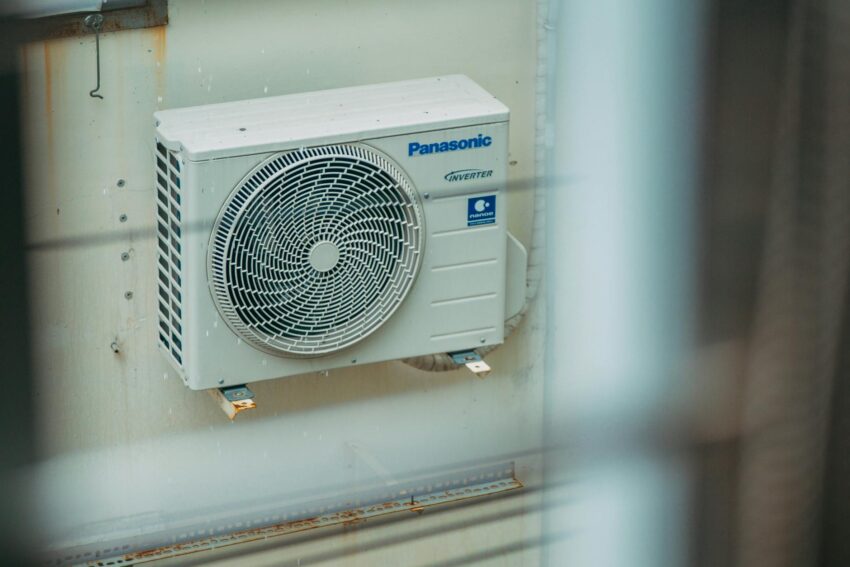
A surprising number of people only notice their cooling costs after opening a high summer bill. Choosing between a ceiling fan and an air conditioner is more than a preference question. It is a practical decision that affects monthly utility bills, comfort, and how you manage heat in your home. This guide compares ceiling fan vs air conditioner cost with plain-language examples, realistic estimates, and practical tips you can use right away to lower energy use without sacrificing comfort.
What a ceiling fan does versus what an air conditioner does
Before we look at numbers, it helps to be clear about how each device works. That makes it easier to understand why their operating costs differ.
Ceiling fans: moving air to cool people
A ceiling fan moves air across your skin to increase evaporation and heat loss. That makes you feel cooler even though the air temperature in the room does not change much. Fans are efficient because they use relatively little electricity. A typical modern ceiling fan with a standard motor draws roughly 15 to 75 watts depending on motor type and speed. Newer DC-motor fans are often on the low end of that range.
Important point: fans cool people, not rooms. If you leave a fan running in an empty room, it will not lower the room temperature and it will still use electricity.
Air conditioners: removing heat to lower temperature
An air conditioner actually removes heat from the air and transfers it outside. That lowers the room temperature. AC units use far more electricity than fans because they run a compressor and a pump. A window or portable AC will often draw 500 to 1,500 watts depending on capacity and efficiency. Central air systems commonly use 2,000 to 4,000 watts or more depending on house size and system efficiency.
ACs also control humidity to varying degrees. That matters in sticky climates. Cooler and drier air feels more comfortable, which is why AC is the right choice during heat waves or for people who need an actual drop in temperature for health or sleep.
How to compare energy use and cost
Electricity costs are simple to calculate: device power in kilowatts times hours of use gives kilowatt-hours, and kilowatt-hours times your electricity rate gives cost. We will use a couple of example electricity rates so you can see how regional prices change results. Check your own utility bill to use your local rate.
Basic formula
- Power (watts) ÷ 1,000 = kilowatts (kW)
- kW × hours used = kilowatt-hours (kWh)
- kWh × electricity price ($/kWh) = cost
Example: a 60 watt fan running 10 hours a day uses 0.06 kW × 10 h = 0.6 kWh per day. At $0.16 per kWh, that is 0.6 × $0.16 = $0.096 per day. Over a 30-day month, that adds up to roughly $2.88.
Real-world energy and cost examples
Below are three typical scenarios. Use them as starting points and adjust the numbers for your local electricity price and usage hours.
| Device | Typical power (approx.) | Cost per hour at $0.16/kWh | Cost per hour at $0.25/kWh | Monthly cost (8 h/day) at $0.16/kWh | Monthly cost (8 h/day) at $0.25/kWh |
|---|---|---|---|---|---|
| Ceiling fan (typical) | 20–75 W | $0.003–$0.012 | $0.005–$0.019 | $0.72–$2.88 | $1.20–$4.56 |
| Window or portable AC (small to medium) | 500–1,500 W | $0.08–$0.24 | $0.125–$0.375 | $19.20–$57.60 | $30.00–$90.00 |
| Central AC (typical home) | 2,000–4,000 W | $0.32–$0.64 | $0.50–$1.00 | $76.80–$153.60 | $120.00–$240.00 |
Notes on the table: the ranges reflect typical variations in size, model, and how hard the unit has to run. Window units at full blast use more energy than a ceiling fan by a large margin. Central systems vary widely based on home size and insulation.
Example calculations for a month
Here are direct calculations using a single set of example numbers to make the comparison concrete:
- Ceiling fan: 50 watts running 8 hours/day = 0.05 kW × 8 h = 0.4 kWh/day → 12 kWh/month. At $0.16/kWh the monthly cost is $1.92. At $0.25/kWh it is $3.00.
- Window AC: 1,200 watts running 8 hours/day = 1.2 kW × 8 h = 9.6 kWh/day → 288 kWh/month. At $0.16/kWh the monthly cost is $46.08. At $0.25/kWh it is $72.00.
- Central AC: 3,500 watts running 8 hours/day = 3.5 kW × 8 h = 28 kWh/day → 840 kWh/month. At $0.16/kWh the monthly cost is $134.40. At $0.25/kWh it is $210.00.
Those examples show the order of magnitude difference. Fans are typically a few cents per hour. Air conditioners can be tens of cents to more than a dollar per hour depending on the system and local price.
Upfront and installation costs
Operating cost is only one side of the equation. Upfront purchase and installation matter, especially if you are comparing adding a ceiling fan to installing an AC system.
Ceiling fan upfront costs
- Basic ceiling fans: $50 to $150 for a decent model.
- Higher-end fans with DC motors, integrated lights, or Wi-Fi control: $150 to $400.
- Installation: if you or a handy roommate installs it, cost is minimal. Hiring an electrician generally runs $100 to $300 depending on difficulty and whether new wiring or a rated junction box is needed.
For renters, many landlords allow fan installations when done safely. A clamp-style or plug-in circulator could be an option when hardwiring is not possible.
Air conditioner upfront costs
- Window AC units: $150 to $700 depending on size and features.
- Portable AC units: $250 to $700. These are convenient but often less efficient and noisier.
- Mini-split (ductless) systems for a single room: $1,000 to $3,000 installed. Multi-zone mini-splits add cost per additional indoor unit.
- Central air conditioning: $3,000 to $10,000 or more depending on house size, ductwork condition, and system efficiency.
Installation for window units can be DIY but requires care and safe mounting. Ductless mini-splits and central systems require professional installation and refrigerant handling.
Operating costs beyond electricity
Look past the kWh meter. Both fans and ACs have additional costs that affect lifetime expense.
- Maintenance. Ceiling fans need almost no maintenance beyond occasional cleaning and balancing. Air conditioners require filter changes, and annual professional service for central systems can help maintain efficiency.
- Repairs and parts. AC compressors, fans, and control boards can be expensive to repair. Fans are cheaper to fix or replace.
- Seasonal usage patterns. ACs have high peak demand during heat waves which may push you into higher billing tiers or demand charges in some areas. Fans typically do not trigger those.
- Noise and comfort. Portable ACs and older window units can be noisy. Noise can make people run units on higher fan settings or shorter cycles, affecting comfort and efficiency.
Which is cheaper overall: a short answer
If you only consider electricity cost per hour, ceiling fans are far cheaper. They are the low-cost choice for improving comfort in mild to moderate heat. However, if indoor temperatures are dangerously high, humidity is very high, or you need to control temperature for health reasons, an air conditioner is necessary despite the higher operating cost.
How to get the best of both
Most homes benefit from a blended approach: use a ceiling fan to raise the thermostat setting by a few degrees while maintaining comfort. Each degree you raise the thermostat can reduce AC energy use. A common rule of thumb is that each degree of thermostat raise can save around 3 to 5 percent on cooling energy, with the exact number depending on the system and climate. Using a fan to feel comfortable at a higher thermostat setting can multiply savings.
How to use ceiling fans to cut AC costs in practice
Fans can reduce your reliance on air conditioning when used correctly. Here are practical steps readers can implement today.
- Use fans to allow a higher thermostat. If you normally set the AC to 72°F, try raising it to 76°F while running ceiling fans. The fan creates a cooling sensation so the higher setting feels comfortable.
- Turn fans off in unoccupied rooms. Fans do not cool rooms; they cool people. Turn them off when no one is present to save energy.
- Set fan direction seasonally. Most ceiling fans have a switch to reverse blade direction. Run the fan counterclockwise during warm months to push air downward, increasing the breeze effect. Switch it in winter to circulate warm air if ceiling height and layout make that effective.
- Use fans with windows at night. In climates with cooler nights, use window fans to pull cool air through the house and run ceiling fans to circulate it. This reduces the need to run AC overnight.
- Combine with shading and ventilation. Close blinds on sunny windows, use exterior shading when possible, and use attic fans or ventilation to reduce heat buildup.
- Maintain filters and clear airflow. For both fans and ACs, keep vents and grills clean. Blocked airflow reduces effectiveness and increases runtime for ACs.
Practical scenario
A two-person household in a moderately hot climate sets the thermostat to 74°F. By switching to 76°F and using ceiling fans in occupied rooms, they report the same comfort level and a notable drop in runtime on their window AC. That change can reduce AC energy use by about 10 to 20 percent in many months, translating to tens of dollars saved depending on rates and usage.
Common myths and mistakes
There are several recurring misconceptions that cost people money.
Myth: Fans cool rooms
Reality: Fans provide a cooling sensation for people in the room. They do not change the room air temperature significantly. Running a fan in an empty room wastes energy.
Myth: Set AC very low and use fans and it will cool faster
Reality: Setting the thermostat lower than needed will not cool a room faster. It will simply run the AC longer and increase energy use. Use fans to feel comfortable without lowering the thermostat.
Mistake: Closing vents to save energy
Closing vents in unoccupied rooms in a central system may sound logical but can increase pressure in ducts and make the system work harder. If you want zoned cooling, consider zoning controls or ductless options designed for that purpose.
Myth: Bigger AC is always better
Reality: An oversized AC will short-cycle, which increases wear and lowers dehumidification. It will not be more efficient. Correct sizing by a professional pays off in comfort and energy use.
When a ceiling fan is the sensible choice
Choose a ceiling fan when:
- You want a low-cost way to improve comfort in mild to moderate heat.
- Your main goal is circulating air in occupied spaces.
- You need a quick, inexpensive upgrade for a rental or a room without existing AC.
- You want to boost comfort while reducing AC runtime by raising the thermostat a few degrees.
For many people the best first move is to install a quality ceiling fan in living spaces and bedrooms, especially if their AC is used sparingly or only during peak heat.
When you need an air conditioner
Air conditioning is necessary when indoor temperature or humidity creates health risks or when comfort demands an actual drop in temperature. Choose AC when:
- Temperatures are very high and fans are insufficient for relief.
- High humidity makes a fan ineffective. AC lowers humidity as it cools, making spaces feel much drier and more comfortable.
- Home occupants have medical needs that require stable indoor temperatures.
- Rooms house electronics or equipment sensitive to heat.
Selecting energy-efficient options
Buying the right model matters for both fans and ACs. Small differences in efficiency add up over a season.
What to look for in a ceiling fan
- Energy-efficient motor. Fans with brushless DC motors use less power at higher airflow than older AC motors.
- CFM per watt. Look for higher cubic feet per minute per watt for better airflow efficiency.
- Size and blade pitch. Match fan size to room dimensions. Oversized fans in small rooms are inefficient.
- Controls. Variable speed controls and timers help avoid wasted runtime.
- Certification. Some fans have ENERGY STAR certification or similar, which can indicate higher efficiency.
What to look for in an air conditioner
- For window and portable units, compare EER (Energy Efficiency Ratio) or SEER for installed systems. Higher numbers mean better efficiency.
- Consider inverter-driven mini-split systems for high efficiency and variable capacity. They tend to save energy versus conventional systems, especially when cooling needs vary.
- Proper sizing. A properly sized unit runs longer but cycles less, which improves dehumidification and efficiency.
- Programmable thermostats and smart controls. They reduce unnecessary runtime and align cooling with occupancy.
- Look for features like sleep mode and auto fan speed to optimize comfort with less energy use.
Cost comparison table: ceiling fan vs air conditioner cost and features
| Feature | Ceiling fan | Window / portable AC | Mini-split AC | Central AC |
|---|---|---|---|---|
| Typical upfront cost | $50–$400 | $150–$700 | $1,000–$3,000 per zone | $3,000–$10,000+ |
| Installation | DIY or $100–$300 pro | DIY possible, pro recommended for safety | Professional required | Professional required |
| Typical power draw | 15–75 W | 500–1,500 W | 600–3,000 W depending on size | 2,000–4,000+ W |
| Primary benefit | Low-cost personal comfort | Room cooling | Efficient room or zone cooling | Whole-house cooling |
| Maintenance | Minimal | Filter changes, occasional service | Filter changes, regular service | Annual service, duct cleaning |
| Best use | Occupied living areas and bedrooms | Smaller rooms or renters | Efficient cooling without ductwork | Homes with existing ductwork and multiple rooms |
Sample monthly scenarios to demonstrate savings
These scenarios show how small behavioral changes combined with fans can reduce cooling costs. Numbers are illustrative and depend on local rates and home characteristics.
Scenario A: Apartment with a window AC
Assumptions: window AC 1,200 W, used 8 hours/day; ceiling fan 50 W used 8 hours/day when occupied; electricity price $0.18/kWh.
- Window AC monthly cost: 1.2 kW × 8 h × 30 days × $0.18 = $51.84
- Ceiling fan monthly cost: 0.05 kW × 8 h × 30 days × $0.18 = $2.16
- Blended approach: increase thermostat by 3 degrees, reduce AC runtime to 5 hours/day while running fan 8 hours/day → AC cost becomes 1.2 × 5 × 30 × $0.18 = $32.40, plus fan $2.16 = $34.56. Monthly savings about $17 compared to air conditioning alone.
Scenario B: House with central AC
Assumptions: central AC effective draw 3,000 W, used 8 hours/day; fans used in occupied rooms; electricity price $0.20/kWh.
- Central AC monthly cost: 3.0 × 8 × 30 × $0.20 = $144.00
- With fans and a 4 degree thermostat raise, assume AC runtime drops to 6 hours/day. New AC cost: 3.0 × 6 × 30 × $0.20 = $108.00. Add fan cost (0.05 × 8 × 30 × $0.20 = $2.40) = $110.40. Savings about $33.60 per month in this scenario.
These examples show how modest changes can yield real savings. Your mileage will vary depending on house insulation, local climate, and the efficiency of your equipment.
Practical tips for renters and homeowners
- If you rent and cannot install a ceiling fan, use a portable pedestal fan or a box fan to create a similar cooling effect for occupied spaces.
- For landlords: installing ceiling fans in bedrooms and living rooms is a low-cost upgrade that tenants appreciate and that can reduce complaints about high energy bills.
- Use smart plugs and timers to avoid leaving fans running all day. Occupancy sensors can run ceiling fans only when a room is occupied.
- Seal and insulate. Cutting heat gain through windows and poorly insulated attics reduces AC runtime more than any single appliance change.
- Window AC placement. Place window or portable ACs where they can cool a primary living area and avoid blocked airflow. Regularly clean filters to keep units efficient.
When to consider upgrading your cooling system
Consider investing in a more efficient option if you run AC many hours each day, have high electricity prices, or want better humidity control.
- Mini-split systems provide efficient zone cooling and are often more efficient than window units or old central systems. They also allow targeted cooling so you can avoid running central AC for empty rooms.
- Upgrading an old central AC with a higher SEER unit can reduce energy consumption by 10 to 30 percent depending on the models compared and system condition.
- Adding attic insulation and sealing ducts can lower cooling needs. Sometimes these upgrades pay for themselves faster than replacing an AC solely for efficiency reasons.
Frequently asked questions
Do ceiling fans use more electricity than air conditioners?
No. Ceiling fans use a fraction of the electricity of air conditioners. A fan might use 15 to 75 watts, while window ACs use hundreds to over a thousand watts. Fans are far cheaper to run per hour. The catch is that a fan cools people, not rooms, so fans are a supplementary strategy, not a replacement in extreme heat.
Can I run fans and air conditioning at the same time?
Yes, and that is often the most practical approach. Running fans while raising the thermostat saves energy because the AC runs less while you maintain comfort. Turn fans off in empty rooms to avoid wasting energy.
How much will I save by raising the thermostat when using fans?
Savings vary, but a reasonable rule of thumb is about 3 to 5 percent of cooling energy per degree of thermostat change. The exact savings depend on how your system cycles, outdoor conditions, and insulation. Using fans to feel comfortable at a higher setting multiplies those savings.
Are DC motor fans worth the extra cost?
Often yes. DC motor fans tend to be quieter and use much less power for the same airflow compared to older AC motor fans. If you use a fan a lot, the higher upfront cost can be recovered in energy savings and improved comfort.
Is a mini-split cheaper to run than central AC?
In many cases a mini-split is more efficient because it provides dedicated cooling to the rooms you use. They tend to have high efficiency ratings and inverter compressors that adjust capacity. For homes without ducts, mini-splits are an efficient alternative to window units.
Do fans help at night?
Yes. Fans can make sleeping more comfortable at higher thermostat settings. If nighttime temperatures drop enough, using fans with open windows to bring in cool air is an efficient strategy. Remember to turn fans off when rooms are empty.
Common mistakes that increase your cooling bill
- Running fans continuously in empty rooms.
- Setting the AC far lower than needed to ‘‘cool faster’’. That simply increases runtime and costs.
- Neglecting maintenance like AC filter replacement. Clogged filters reduce efficiency and comfort.
- Failing to fix obvious problems like leaking ducts or badly sealed windows that let cool air escape.
Quick checklist to lower cooling costs today
- Install or use ceiling fans in occupied rooms and turn them off when rooms are empty.
- Raise the thermostat by a few degrees and rely on fans for the perceived cooling effect.
- Seal windows, add shading, and keep blinds closed on sunny sides of the house during the day.
- Service your AC and clean or replace filters before peak season.
- Consider a smart thermostat to avoid cooling empty rooms and take advantage of off-peak pricing if available.
- Evaluate a mini-split if you want efficient, zoned cooling without ductwork.
Conclusion
Comparing ceiling fan vs air conditioner cost quickly makes one point clear: ceiling fans are a low-cost, low-energy way to improve comfort. They are not a direct substitute for air conditioning when indoor temperature reduction or humidity control is required. In many homes, the most effective and economical strategy is a mix of both. Use ceiling fans to raise thermostat settings and cut AC runtime. When active cooling is necessary, choose the most efficient AC option you can afford and keep it well maintained. Small changes like running fans only in occupied rooms, setting a higher thermostat, and addressing basic insulation and shading often yield the biggest monthly savings while keeping your home comfortable.