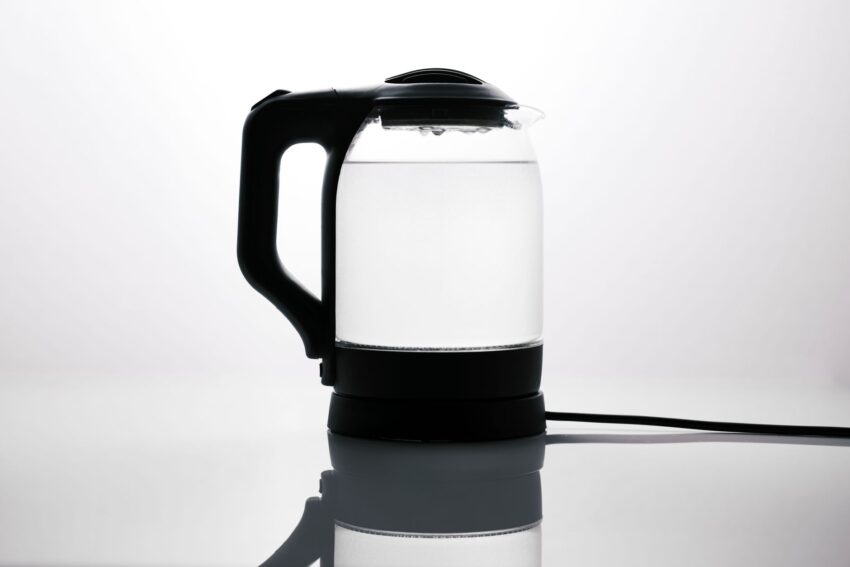
Many people start comparing kettles only after a simple habit, like making tea or coffee, starts to feel expensive, slow, or wasteful. If you are trying to figure out the real electric kettle vs stovetop kettle cost, the short answer is this: an electric kettle is usually cheaper to run for boiling water in most homes, especially if you boil small to medium amounts of water regularly.
That does not mean a stovetop kettle is always the wrong choice. If you already have one, use gas at a relatively low rate, or like a kettle that works during a power outage, the difference in total cost may be smaller than you expect. But in day-to-day energy efficiency, electric kettles usually waste less heat and boil faster, which often translates into lower running costs.
The catch is that the real answer depends on a few things: your local electricity and gas prices, how much water you boil, how often you reboil, and whether you tend to fill the kettle with more water than you need. Those habits matter more than many people realize.
This guide breaks down the numbers in a practical way. You will see how much each type of kettle typically costs to run, where the biggest differences come from, and which option makes more sense for your kitchen, budget, and energy-saving goals.
Electric kettle vs stovetop kettle cost at a glance
If you just want the quick comparison, here is the practical summary.
| Category | Electric kettle | Stovetop kettle |
|---|---|---|
| Typical energy efficiency | Usually higher | Usually lower |
| Speed | Fast | Often slower |
| Cost to boil small amounts | Usually lower | Often higher |
| Works during power outage | No | Yes, if gas stove works |
| Temperature control | Often available on many models | Rare |
| Heat lost to room | Lower | Higher |
| Upfront price | Often low to moderate | Low to moderate |
| Best for | Frequent tea, coffee, oatmeal, quick boiling | People who prefer stove use, gas households, simple setups |
For most households that boil water every day, an electric kettle tends to win on running cost and convenience. A stovetop kettle can still make sense, but usually not because it is more efficient.
Why electric kettles are usually cheaper to run
The main reason is simple. An electric kettle puts heat directly into the water with relatively little waste. A stovetop kettle heats the burner first, then the kettle body, then the water, and some of that heat escapes into the kitchen.
That wasted heat might not seem like a big deal for one mug of tea. Over weeks and months, it adds up.
Electric kettles convert energy more efficiently
Most electric kettles are quite efficient because the heating element is built into the appliance and sits right where the heat is needed. Real-world efficiency can vary, but electric kettles are often estimated around around 80 to 90 percent efficient in getting energy into the water.
Stovetop kettles are often lower in practice. A gas stove, in particular, loses a lot of heat around the sides of the kettle and into the surrounding air. Electric coil and ceramic cooktops can be better than gas in some setups, but they still tend to be less direct than a dedicated electric kettle.
They usually boil faster
Time matters because a burner running longer means more energy used. Electric kettles are designed for one job, so they often bring water to a boil faster than a stovetop kettle, especially for one or two cups.
That also makes them easier to use efficiently. People are less likely to walk away, forget the kettle, or leave heat running longer than necessary.
Auto shut-off helps avoid waste
Most electric kettles turn off automatically as soon as the water reaches boiling point. That feature prevents extra heating after the water is ready.
With stovetop kettles, especially whistling models, people often leave the burner on for another minute or two while they finish something else. It happens all the time in real kitchens, and it quietly increases cost.
How much electricity does an electric kettle use?
Most electric kettles in the US use roughly 1200 to 1500 watts. In countries with higher-voltage outlets, some models use even more power, which often means faster boiling.
High wattage sounds expensive, but wattage alone does not tell you the real cost. What matters is how long the kettle runs.
Boiling water usually takes only a few minutes. That means the total electricity used per boil is fairly small.
Example cost for one boil
Let’s use a simple example.
- Electric kettle power: 1500 watts
- Boiling time: 3 minutes
- Electricity rate: $0.18 per kWh
Energy used:
1.5 kW × 3/60 hours = 0.075 kWh
Cost:
0.075 × $0.18 = about $0.0135
That is about 1.4 cents per boil.
If your rates are lower, the cost drops. If your kettle runs longer or you boil more water, the cost goes up. But even then, one boil is usually still cheap.
Monthly electric kettle cost
If you boil water three times a day at about 1.4 cents per boil:
- Daily cost: about 4.2 cents
- Monthly cost: about $1.25
- Yearly cost: about $15
That is a rough estimate, not a guarantee. Some households use more, some less. But it gives you a realistic sense of scale. Electric kettles are not major electricity hogs in most homes.
How much does a stovetop kettle cost to use?
The answer depends on your stove type. A stovetop kettle on a gas burner has a different operating cost than one on an electric coil or induction hob.
This is where the comparison gets more nuanced.
Stovetop kettle on a gas stove
Gas prices vary a lot by region and utility plan. In many areas, gas can still be relatively cheap per unit of energy. But gas stoves are not very efficient at transferring that energy into water.
A lot of the heat goes into the room, around the kettle, and up the sides instead of into the water itself.
In practical terms, a gas stovetop kettle can cost roughly similar to or slightly more than an electric kettle per boil, depending on local rates and efficiency. In some households with very low gas prices, it may look competitive on paper. In real use, extra heating time and heat loss often reduce that advantage.
Stovetop kettle on an electric resistance stove
If you are using a traditional electric coil or smooth-top resistance stove, the stovetop kettle often costs more than a dedicated electric kettle.
The reason is not just energy price. It is also inefficiency. Heating the burner, then the metal kettle, then the water tends to waste more energy than plugging in an appliance designed just for boiling.
Stovetop kettle on induction
Induction changes the picture a bit. Induction cooktops are generally more efficient than gas or standard electric resistance burners. A stovetop kettle on induction can come much closer to the efficiency of an electric kettle.
If you already have induction, the cost difference may be modest. You may still find an electric kettle slightly cheaper or more convenient, but the gap is often much smaller.
Real-world cost comparison examples
Here are rough examples for boiling about 1 liter of water under common household conditions. These are broad estimates meant to show relative cost, not exact bills.
| Method | Typical efficiency | Approximate cost per 1 liter boil | Notes |
|---|---|---|---|
| Electric kettle | High | About 1 to 2 cents | Usually the lowest-cost option in daily use |
| Stovetop kettle on gas | Low to moderate | About 1 to 3 cents | Varies a lot by gas rate and burner efficiency |
| Stovetop kettle on electric coil or ceramic | Moderate | About 2 to 4 cents | Often slower and less efficient than electric kettle |
| Stovetop kettle on induction | Moderate to high | About 1 to 2.5 cents | Can be fairly competitive |
Those numbers may look small, and they are. Kettles do not usually make or break a utility bill on their own. But if you boil water several times a day, and especially if you often heat more than you need, choosing the more efficient option does save money over time.
What affects kettle cost more than the kettle itself
The biggest surprise for many people is that usage habits often matter more than brand or kettle type. Two people can use the same kettle and end up with noticeably different monthly costs.
Boiling more water than you need
This is the most common mistake.
If you are making one mug of tea but filling the kettle halfway, you are paying to heat water that you are not using right away. Then that water cools down, and you may reboil it later.
That doubles the waste.
For households that make tea, coffee, instant noodles, or oatmeal several times a day, simply boiling the right amount can cut kettle energy use significantly.
Reboiling water repeatedly
Some people boil water, get distracted, then boil it again 20 minutes later. This is common in busy households and home offices.
Electric kettles usually recover faster and shut off automatically, but reboiling still adds cost. Stovetop kettles can be worse because they often stay on longer and rely on the user to turn them off promptly.
Using a large burner for a small kettle
On a stovetop, burner size matters. If the flame or heating zone extends well beyond the kettle base, energy is being wasted. Matching the kettle to the burner helps, but it still usually does not beat the direct heating of an electric kettle.
Scale buildup
Limescale can reduce efficiency, especially in hard water areas. A heavily scaled electric kettle may take longer to boil. A stovetop kettle with mineral buildup inside can also transfer heat less effectively.
Regular descaling is simple and worth doing.
Upfront cost vs running cost
Purchase price matters too, but not as much as some people think.
Typical purchase price
- Basic electric kettle: about $20 to $40
- Better electric kettle with temperature control: about $40 to $100+
- Basic stovetop kettle: about $20 to $50
- Premium stovetop kettle: about $60 to $150+
You do not need a high-end model in either category to boil water efficiently. A basic electric kettle often performs very well for day-to-day use.
Does the lower running cost pay back the purchase price?
If you are deciding between buying a new electric kettle or using a stovetop kettle you already own, the financial difference is usually not dramatic. The savings from an electric kettle might be a few dollars to perhaps a couple dozen dollars per year, depending on how often you boil water and what kind of stove you use.
So if you already have a perfectly good stovetop kettle, replacing it purely to save money may not produce a quick payback.
But if you are buying a kettle anyway, an electric model often gives you:
- Lower running cost
- Faster boiling
- Automatic shut-off
- Less kitchen heat
- More predictable performance
That makes it the better value for many households.
Electric kettle vs stovetop kettle cost over a year
To make the comparison more concrete, here is a realistic example for a household that boils water 4 times per day.
Assume:
- Average cost per electric kettle boil: 1.4 cents
- Average cost per stovetop gas boil: 2 cents
- Average cost per stovetop electric resistance boil: 2.5 cents
| Method | Daily cost | Monthly cost | Yearly cost |
|---|---|---|---|
| Electric kettle | $0.056 | About $1.68 | About $20.44 |
| Stovetop kettle on gas | $0.08 | About $2.40 | About $29.20 |
| Stovetop kettle on electric resistance | $0.10 | About $3.00 | About $36.50 |
Again, those are rough examples. They are useful because they show the likely pattern. The electric kettle is often the cheaper option, but the annual difference is usually modest rather than huge.
If your goal is to lower household energy use overall, the better takeaway is this: efficient habits matter just as much as the appliance choice.
Which is cheaper if you use gas?
This is one of the most common follow-up questions.
If your home uses natural gas and your gas rate is relatively low, a stovetop kettle can sometimes look close in cost to an electric kettle. But low fuel cost does not automatically mean low operating cost.
Gas burners waste a fair amount of heat. You are not paying much per unit of gas in some areas, but you may be using more total energy to get the same result.
For small jobs like boiling one or two cups of water, electric kettles still often come out ahead because they are direct and efficient.
If you boil large quantities of water occasionally, the difference may narrow. For everyday mug-sized use, electric tends to be the more efficient and usually the cheaper option.
Which is cheaper if you have an electric stove?
If your stovetop is a standard electric coil or smooth-top resistance model, a dedicated electric kettle is usually the better bet on cost.
That is because resistance cooktops are not especially quick or efficient for small water-heating tasks. You have the losses from the burner heating up, then the kettle, then the water.
This is a common setup in apartments and older homes, and it is one reason so many renters find electric kettles more practical.
What about induction?
Induction is different. It heats the cookware more directly and usually wastes less energy than gas or older electric elements. If you already own an induction cooktop and an induction-compatible kettle, the stovetop option can be pretty efficient.
Even then, many people still prefer an electric kettle because:
- It frees up the cooktop
- It often shuts off automatically
- It is easy to use for one or two cups
- It may offer temperature settings
Environmental impact and energy use
From a low-carbon living perspective, electric kettles often make sense because they generally use less energy to do the same job. Less wasted energy usually means lower environmental impact, especially if your electricity comes from a cleaner grid or you have rooftop solar.
That said, there is no need to be dramatic about it. The footprint of boiling water for tea is still small compared with larger household energy loads like heating, cooling, water heating, clothes drying, or old refrigerators.
Kettle choice is more of a practical efficiency upgrade than a major carbon decision.
If you are trying to build lower-energy habits at home, it fits nicely into the bigger picture:
- Boil only what you need
- Avoid repeat boiling
- Choose efficient appliances for frequent tasks
- Keep appliances clean and in good working order
Convenience matters more than many people expect
Cost is important, but daily convenience affects how people actually use appliances. And that affects energy use too.
Why convenience changes the real cost
If an appliance is easier to use, people are more likely to use it efficiently.
An electric kettle usually encourages better habits because it is:
- Quick to fill
- Quick to boil
- Easy to shut off automatically
- Simple to use for small amounts
By contrast, stovetop kettles can lead to more accidental waste:
- Leaving the burner on too long
- Using a larger burner than needed
- Boiling extra water because the process feels slower
- Heating up the kitchen in warm weather
That last point matters more than it seems. In summer, adding extra stove heat can slightly increase air conditioning needs. It will not transform your power bill, but in a small apartment kitchen, the extra heat is noticeable.
Pros and cons of each option
Electric kettle pros
- Usually cheaper to run
- Faster boiling for daily use
- Automatic shut-off reduces waste
- Often better for small amounts of water
- Can include temperature settings for tea or coffee
- Usually adds less heat to the kitchen
Electric kettle cons
- Needs an outlet
- Does not work during power outages
- Plastic models may not appeal to everyone
- Can fail electronically sooner than a basic metal stovetop kettle
Stovetop kettle pros
- Simple and durable
- No separate appliance on the counter if you already use the stove often
- Works on gas during many outages
- Can last a long time with minimal parts to fail
Stovetop kettle cons
- Usually less efficient
- Often slower
- Can waste heat into the kitchen
- Requires more attention
- Easy to leave on too long
Common myths about kettle energy cost
Myth: Gas is always cheaper than electricity, so a stovetop kettle must cost less
Not necessarily. Gas can be cheaper per unit of fuel, but a gas stove is often less efficient at getting that heat into the water. The lower fuel price can be offset by higher losses.
Myth: Electric kettles use a lot of power, so they are expensive
They use a lot of power for a short time. That is different from an appliance that runs for hours. A kettle may draw 1500 watts, but if it runs only a few minutes, the total energy use is still small.
Myth: The cost difference is too small to matter
For one boil, yes, the difference is small. But repeated daily use adds up, and so does wasted water heating. If you boil water several times every day, efficient habits and a more efficient kettle can save a noticeable amount over time.
Myth: A whistle means the water is ready, so there is no extra waste
In theory, maybe. In real life, people do not always walk over immediately. A kettle can keep heating while you finish a text, feed the dog, or pour milk into a mug. Automatic shut-off is more consistent.
How to lower kettle energy costs no matter which type you use
You can cut kettle costs without buying anything new. These small changes are often more effective than people expect.
1. Fill only for what you need
If you are making one cup, boil one cup. This is the easiest win.
2. Descale regularly
If you live in a hard water area, mineral buildup can reduce performance. A simple vinegar or descaling treatment every so often helps keep heating efficient.
3. Use the right burner size
For stovetop kettles, match the burner to the kettle base. Flames or heated areas extending past the base waste energy.
4. Do not keep reboiling
If you only need hot water once, boil it once. If you often need several cups over a short period, consider pouring extra into an insulated flask rather than reboiling again and again.
5. Keep the lid closed
This sounds obvious, but it matters. A properly closed lid helps water boil faster and reduces heat loss.
6. Use an electric kettle for small, frequent boils
If you have both options available, this is often the most efficient setup. Use the electric kettle for tea, coffee, oatmeal, and quick hot water tasks.
Which kettle is best for different households?
Best for most households
A basic electric kettle is usually the best all-around choice for cost, speed, and ease of use.
Best for renters with electric stoves
Electric kettle, without much debate. It is usually cheaper to run than using an electric coil burner for every mug of tea or instant coffee.
Best for people with gas stoves who value simplicity
A stovetop kettle can still be reasonable, especially if you already own one and prefer not to add another appliance. Just know it is not usually the most efficient option.
Best for people with induction cooktops
Either can work well. The cost difference may be small enough that convenience matters more than energy savings.
Best for outage preparedness
A stovetop kettle on gas has an obvious advantage, assuming your gas stove can still be lit safely during an outage and your home setup allows it.
FAQ
Is an electric kettle cheaper than boiling water on the stove?
Usually, yes. In most homes, an electric kettle is cheaper to run because it heats water more efficiently and shuts off automatically.
Does an electric kettle use a lot of electricity?
It uses a high wattage for a short period, so the total electricity use per boil is usually low. For most households, the operating cost is only a few cents per day.
Is a stovetop kettle cheaper if I have natural gas?
It can be closer in cost than with an electric stove, but electric kettles still often come out ahead because gas burners lose a lot of heat. Local utility prices make a difference.
What is the cheapest way to boil water?
In many homes, the cheapest practical option is a reasonably efficient electric kettle used for only the amount of water needed. Good habits matter as much as the appliance.
Are electric kettles more efficient than stovetop kettles?
Most of the time, yes. They usually transfer more of the input energy into the water rather than heating the surrounding air or the cooktop.
Is the savings enough to justify buying an electric kettle?
If you boil water often and do not already own one, probably yes. If you already have a perfectly good stovetop kettle, the energy savings alone may not justify replacing it immediately, but the convenience and speed may still make it worthwhile.
Does boiling extra water really affect cost that much?
Over time, yes. Filling a kettle with twice as much water as you need means paying to heat that extra water every time. This is one of the biggest avoidable kettle-related costs.
Final thoughts on electric kettle vs stovetop kettle cost
If your main question is which option costs less to use, the practical answer is clear: for most households, the electric kettle wins. It is usually more energy efficient, faster, and better at avoiding wasted heating time.
The gap is not always huge, and it depends on whether your stove is gas, electric resistance, or induction. A stovetop kettle can still be a perfectly reasonable choice if you already own one, prefer a simpler tool, or want something that works during an outage.
Still, for everyday tea, coffee, instant meals, and quick hot water tasks, the better long-term choice on electric kettle vs stovetop kettle cost is usually an electric kettle, especially if you boil only what you need and avoid repeat heating.
If saving energy is the goal, do not stop at the appliance choice. The cheapest kettle to run is the one used efficiently.