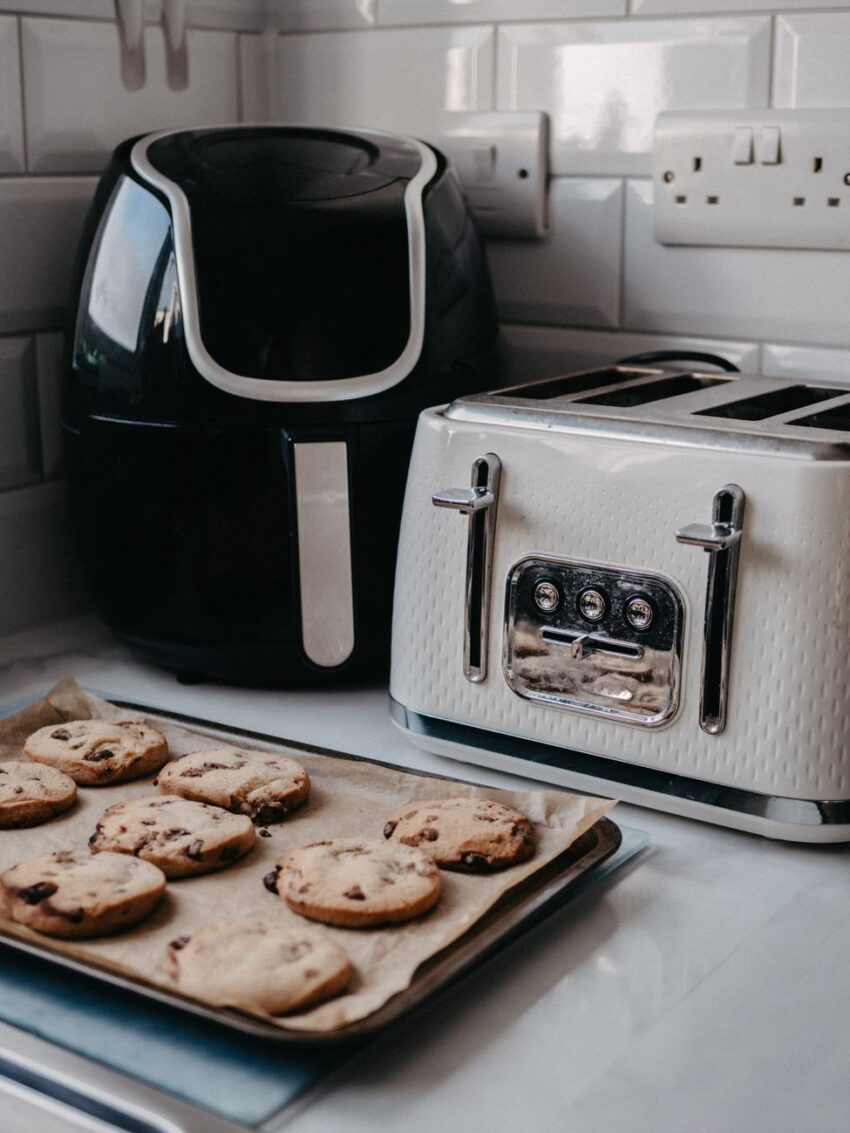
That frozen pizza that takes 18 minutes in a countertop air fryer may need 30 minutes in a full-size oven. The difference is not just convenience. A smaller cooking chamber usually heats faster and uses less electricity, which can make a noticeable difference if you regularly cook for one or two people.
So, is an air fryer cheaper to run than an oven? In most everyday situations, yes. An air fryer generally costs less to operate because it has a smaller cavity, reaches cooking temperature quickly, and often runs for a shorter time. The savings are not guaranteed for every meal, though. A large oven can be the better choice when you are cooking several portions at once, using multiple racks, or preparing a meal that would require several air-fryer batches.
The exact difference depends on the appliance’s wattage, cooking time, local electricity rate, and the amount of food being prepared. Even so, understanding the basic calculation makes it easier to choose the lower-cost option for each meal.
Why an air fryer usually uses less electricity
An air fryer is essentially a compact convection oven. It has a heating element and a fan that circulates hot air around the food. The main energy advantage comes from its smaller cooking space.
A conventional electric oven may need to heat a cavity of 4 to 6 cubic feet. An air fryer may have a basket or chamber holding only 2 to 8 quarts. There is less air and less metal to heat, so the appliance can reach its target temperature more quickly. The fan also moves hot air directly around the food, which can shorten cooking times.
Typical rated power ranges look like this:
| Appliance | Typical rated power | Common cooking time | Typical use case |
|---|---|---|---|
| Small air fryer | 1,000 to 1,400 watts | 10 to 25 minutes | One or two portions |
| Large air fryer | 1,500 to 2,000 watts | 15 to 35 minutes | Several portions or larger foods |
| Electric oven | 2,000 to 5,000 watts while heating | 25 to 60 minutes | Large meals, baking, and multiple dishes |
These figures are not a direct measure of what each appliance uses during the entire cooking cycle. Heating elements cycle on and off once the target temperature is reached. An oven rated at 3,000 watts does not necessarily draw 3 kilowatts continuously for an hour. The same is true of an air fryer.
Still, the ratings provide a useful starting point. A 1,500-watt air fryer can have a higher peak power draw than a small oven heating element, but it may run for only 15 minutes. The oven may take 10 minutes to preheat and then continue cycling for another 25 minutes. Total energy use can be higher even if the oven’s heating element is not operating constantly.
How to calculate the running cost
The basic calculation is straightforward:
Energy used in kilowatt-hours = watts ÷ 1,000 × hours of operation
Then calculate the cost:
Operating cost = kilowatt-hours × electricity price per kilowatt-hour
For example, suppose an air fryer is rated at 1,500 watts and runs for 20 minutes. Twenty minutes is one-third of an hour.
1.5 kilowatts × 0.33 hours = approximately 0.50 kilowatt-hours
At an electricity rate of 18 cents per kilowatt-hour:
0.50 kWh × $0.18 = approximately 9 cents
Now consider a 3,000-watt electric oven that preheats and cooks for a total of 40 minutes. Forty minutes is two-thirds of an hour.
3 kilowatts × 0.67 hours = approximately 2.01 kilowatt-hours
2.01 kWh × $0.18 = approximately 36 cents
This simple example suggests the oven costs about four times as much for that cooking session. Actual results may be lower because the oven cycles its heating elements and does not draw its full rated wattage continuously. Even after allowing for that, the air fryer can still be the less expensive option for a small meal.
Why your result may be different
Your electricity price may be much higher or lower than 18 cents per kilowatt-hour. Some households also pay time-of-use rates, where electricity costs more during evening demand periods. If you have solar panels, the financial cost may be different again, although the energy used by the appliance still matters.
Appliance size and insulation also affect consumption. A modern, well-insulated oven may retain heat better than an older model. An air fryer with a large basket may need nearly as much energy as a small countertop convection oven. Cooking temperature, food quantity, and whether the appliance needs preheating all change the final number.
For the most accurate answer, use a plug-in energy meter with a standard countertop air fryer. Do not use an ordinary plug-in meter with a built-in oven unless it is specifically designed and installed for that circuit. A qualified electrician can help measure a hardwired appliance safely.
Example running costs for common cooking tasks
The following examples use an electricity rate of 18 cents per kilowatt-hour. They are estimates rather than guarantees, but they show how cooking time and appliance size affect the result.
| Cooking task | Air fryer estimate | Oven estimate | Likely lower-cost option |
|---|---|---|---|
| Small portion of fries | 8 to 12 cents | 25 to 40 cents | Air fryer |
| Two chicken breasts | 10 to 18 cents | 25 to 45 cents | Air fryer |
| One frozen snack or pastry | 5 to 10 cents | 20 to 35 cents | Air fryer |
| Small tray of roasted vegetables | 10 to 18 cents | 25 to 45 cents | Usually air fryer |
| Large casserole for a family | 20 to 40 cents across several batches | 30 to 55 cents in one batch | Depends on quantity |
| Several pizzas or multiple baking trays | 30 to 60 cents across batches | 35 to 65 cents in one batch | Often oven |
The air fryer has the clearest advantage when it replaces a full-size oven for a small amount of food. If four people each want a full serving of fries, using a small basket three or four times may eliminate the expected savings. Cooking the entire meal in one oven cycle could use less energy overall.
Air fryer versus oven: what affects the comparison?
Preheating time
Many air-fryer recipes require little or no preheating. Some models reach cooking temperature in two to five minutes. A full-size oven can take 10 to 20 minutes, depending on its temperature, age, and heating system.
Preheating is not a trivial part of the calculation. During that time, the oven is consuming electricity without cooking the food. If you use the oven for a quick meal that takes 15 minutes to cook, preheating may represent a large share of its total energy use.
Some foods can go into a cold oven without affecting the result, while others benefit from a fully heated cavity. Follow the recipe when texture or food safety depends on preheating. Avoid leaving an oven heating unnecessarily while you prepare ingredients.
Cooking temperature
Air-fryer recipes often use a temperature about 25 to 50 degrees Fahrenheit lower than a conventional oven recipe. The circulating air transfers heat efficiently and can brown the surface quickly.
Lower temperature alone does not automatically mean lower energy use. The important factors are total power draw and cooking duration. In practice, though, the combination of a smaller cavity, faster preheating, and shorter cooking time generally helps the air fryer use less electricity for small portions.
Food quantity
Quantity is where the answer can change. An air fryer is efficient when the basket is used effectively, but overfilling it can cause uneven cooking. You may need to shake the basket, extend the cooking time, or run another cycle.
An oven can cook a large quantity in one batch. A family-sized lasagna, a full sheet pan of vegetables, or several trays of cookies may be more practical and more energy-efficient in the oven than in a compact appliance.
Cooking method
The two appliances do not produce identical results for every food. Air fryers are especially useful for foods that benefit from dry, moving heat:
- Frozen fries and potato wedges
- Chicken wings and small chicken portions
- Fish fillets
- Reheated pizza
- Roasted vegetables
- Frozen breaded foods
- Small pastries and snacks
A conventional oven remains more suitable for large baked dishes, deep casseroles, tall cakes, bread, and recipes that need a broad, stable cooking surface. Trying to force an air fryer to handle unsuitable food can lead to multiple batches and erase its energy advantage.
Is an air fryer cheaper to run than an oven for a family?
For a family, the answer depends on basket capacity and meal size rather than household size alone. A large air fryer or air-fryer oven may handle enough food for three or four people. A small 2-quart model may be economical for one person but inconvenient for a family meal.
Imagine cooking four chicken breasts. A large air fryer might cook them in one 20-minute cycle. A small air fryer may need two cycles of 20 minutes each. The total running time doubles, and the second batch may require additional reheating.
At the same time, an oven may use more energy during one cycle but cook chicken, potatoes, and vegetables together. If the oven would already be running for another dish, adding food to the available space costs very little extra energy. This is one of the strongest cases for using an oven.
A useful rule is:
- One or two portions: The air fryer is usually the cheaper choice.
- Three or four portions: Compare basket capacity and batch requirements.
- Large family meals: The oven may use less energy per portion if it cooks everything at once.
- Several unrelated foods: Use whichever appliance can complete the meal in the fewest total cycles.
How much could an air fryer save over a year?
Per-use savings may seem small, but regular cooking adds up. Suppose an air fryer costs 10 cents to run for a meal while the oven costs 32 cents. The difference is 22 cents per use.
Used five times per week:
22 cents × 5 uses = $1.10 per week
$1.10 × 52 weeks = approximately $57 per year
If the difference is closer to 35 cents per use, annual savings could approach $90. A household that uses the air fryer only once or twice a week will save less. The result also depends on whether the air fryer replaces oven use or simply becomes an additional appliance that runs alongside it.
Energy savings are usually more noticeable in households with high electricity rates, frequent small meals, and older ovens that lose heat or take a long time to preheat. The annual reduction may not justify buying an air fryer by itself, especially if you already own a reliable oven. The appliance can still pay for itself over time if it replaces frequent oven use and also fits your cooking habits.
Air fryer energy use compared with a gas oven
The comparison is less straightforward if your oven runs on natural gas rather than electricity. A gas oven may consume less electricity at the meter because its main heat source is gas, but it still uses some electricity for controls, ignition, lights, and possibly convection fans.
To compare costs fairly, you need to include both the gas consumed and the electricity used. Gas prices and electricity rates vary widely, so there is no universal winner based only on appliance type.
An air fryer may still be convenient and efficient for small portions because it heats a compact space quickly. However, the financial advantage can be smaller if gas is inexpensive in your area. The environmental comparison also depends on the local electricity mix, the efficiency of the gas oven, and how much food each appliance cooks in one cycle.
If you are comparing a new appliance purchase, look at your actual utility rates and cooking habits rather than assuming that electric always costs more or that gas always costs less.
How to reduce the cost of using an air fryer
An air fryer is already a relatively efficient cooking appliance, but careless use can reduce the benefit. These habits help keep energy use and operating costs down.
Choose the right size
A larger air fryer is not automatically more efficient. A 2-quart model may be ideal for one person, while a 7-quart model may make sense for a family. An oversized appliance can use more energy to heat than necessary, but an undersized model may force you to cook several batches.
Choose a capacity that matches your typical meal. Consider the physical shape of the basket as well as its advertised volume. A broad basket can be more useful than a tall one when cooking vegetables, fish, or several pieces of food in one layer.
Do not preheat longer than necessary
Many air fryers heat quickly. If a recipe calls for three minutes of preheating, there is little benefit in running the appliance empty for 10 minutes. Some foods, such as delicate baked goods, may need a preheated chamber, while frozen foods and small roasted items can often start in a cold basket with a modest time adjustment.
Cook in a single layer when possible
Overcrowding blocks airflow and makes food take longer to cook. A basket filled beyond its useful capacity may require extra time, which increases energy use and can produce disappointing results.
Use a rack or divider only if it allows air to circulate and the manufacturer approves the accessory. Stacking food tightly can undermine the reason for using a convection appliance in the first place.
Combine cooking tasks
If the air fryer has room, cook several compatible foods together. For example, chicken strips and sliced vegetables may finish at similar temperatures. Check food safety requirements and avoid mixing foods that need very different cooking times or could contaminate one another.
Keep the basket and heating area clean
Grease and food residue can affect airflow and create smoke. A dirty appliance may cook less evenly and require longer cooking times. Clean the basket, tray, and accessible interior according to the manufacturer’s instructions. Never immerse the main electrical unit in water.
Avoid unnecessary keep-warm use
Leaving an air fryer on to keep food warm may use less energy than a full oven, but it still consumes electricity. Cook as close as practical to serving time, or switch the appliance off once the food is ready.
How to reduce the cost of using an oven
There are times when the oven is the sensible choice. You can reduce its energy use with a few simple adjustments.
- Cook multiple items together: Use the oven’s available space for a main dish, vegetables, or another meal component when cooking times and temperatures are compatible.
- Limit door opening: Every opening allows heat to escape and can extend cooking time.
- Use the correct cookware: Dark, properly sized pans may absorb heat efficiently, while oversized pans can leave empty space that still needs to be heated.
- Turn the oven off slightly early: For some dishes, residual heat can finish cooking. Do not do this when precise temperature control or food safety requires continuous heat.
- Use convection mode: A fan-assisted setting may allow a lower temperature or shorter cooking time, depending on the recipe.
- Avoid using the oven for tiny jobs: Reheating one slice of pizza or cooking a small serving of vegetables usually does not justify heating the full cavity.
- Maintain the door seal: A damaged gasket lets heat escape and makes the oven work harder.
Do not use the oven as a substitute for household heating. An open oven can create burn, fire, and indoor air-quality hazards, and it is not an efficient way to heat a room.
Common mistakes that erase the air fryer’s savings
Running several small batches
Cooking a large meal in four separate batches may use more energy than one oven cycle. It also takes longer and may leave the first batches cooling while the rest finish.
Buying an air fryer without considering its capacity
A low-cost small air fryer may seem attractive, but it can be poor value if it cannot cook the portions you normally prepare. The purchase price matters less than the appliance’s usefulness over many years.
Using disposable liners incorrectly
Parchment liners and foil can restrict airflow if they cover too much of the basket. Some liners also create a fire risk if placed in the appliance without food weighing them down. Use accessories designed for the model and follow the safety instructions.
Assuming the wattage tells the whole story
A 1,800-watt air fryer is not automatically more expensive to use than a 1,400-watt model. If the higher-powered appliance finishes the food much faster, it may use less total energy. Compare wattage and operating time together.
Ignoring standby and convenience features
Standby power from an air fryer is usually small, but smart features, displays, and connected functions can draw electricity while the appliance is idle. Unplugging a countertop appliance after it cools is a simple option if you want to eliminate standby use, provided the plug and socket are accessible and safe.
Myths about air fryer electricity use
Myth: An air fryer always uses less electricity
It usually uses less for small meals, but not in every situation. Several batches, long cooking times, or an oversized model can change the result. The oven may be more efficient when it prepares a large amount of food at once.
Myth: The highest-wattage air fryer is the most expensive
Wattage indicates the maximum power draw, not the total energy used for a meal. A powerful model that cooks in 12 minutes may use less energy than a lower-wattage model that runs for 30 minutes.
Myth: Air fryers are always cheaper than microwaves
A microwave is often the lowest-energy choice for reheating food or cooking certain moist foods. It does not create the same crisp texture, so it cannot replace an air fryer for every task. For reheating leftovers, compare the result you need with the time each appliance takes.
Myth: Leaving the oven door open after cooking saves heating costs
The small amount of residual heat released into the room is not worth the safety risk or the stress placed on the appliance. Keep the oven door closed and allow it to cool normally.
Myth: An air fryer eliminates the need for an oven
An air fryer is useful for quick meals and small portions, but it cannot replace the capacity and flexibility of a full-size oven for every household. The most practical kitchen may use both, choosing the appliance that matches the job.
Which appliance is better for different foods?
| Food or meal | Usually the better choice | Reason |
|---|---|---|
| One or two servings of fries | Air fryer | Fast preheating and strong airflow |
| Reheating pizza | Air fryer | Restores crispness quickly |
| Large roast | Oven | More space and steadier capacity |
| Family-size casserole | Oven | One batch is usually easier |
| Small portion of roasted vegetables | Air fryer | Shorter heating time |
| Several trays of cookies | Oven | Greater surface area and fewer batches |
| Small breaded frozen foods | Air fryer | Quick cooking and crisp results |
| Large loaf of bread | Oven | Better shape, space, and temperature stability |
Should you buy an air fryer to save money?
An air fryer can lower cooking costs, but the purchase decision should include more than electricity savings. A basic model may cost less than a premium one, but build quality, basket capacity, controls, cleaning, and replacement parts all affect long-term value.
Before buying, consider:
- How many portions you normally cook
- Whether you have room to store the appliance
- How often you currently use the oven for small meals
- Whether the basket and tray are easy to clean
- Whether the model has a useful temperature and timer range
- How much electricity costs where you live
- Whether the appliance is durable enough to replace repeated oven use
Do not buy an air fryer solely because an advertisement promises dramatic bill reductions. A household that rarely uses the oven may save very little. Someone who runs a full-size electric oven almost every evening for small portions may see a more meaningful reduction.
Also consider the embodied cost of manufacturing and eventually disposing of another appliance. The most efficient purchase is often the one you will use frequently for many years, not the one with the most features.
How to measure your own savings
If you want a more reliable answer than general estimates, track one week of typical cooking. Write down:
- The appliance used
- Its rated wattage
- Preheating time
- Cooking time
- The number of portions produced
- Your electricity rate
Use the wattage calculation as a first estimate. For a countertop appliance, an energy monitor can show actual consumption. Run the test with a typical meal rather than an empty appliance, because cooking time and thermostat cycling affect the result.
For example, compare a 20-minute air-fryer cycle with a 40-minute oven session, including preheating. Then compare the energy used per portion. This last figure matters if one appliance cooks twice as much food as the other.
A simple record might look like this:
| Measure | Air fryer | Oven |
|---|---|---|
| Total time, including preheating | 20 minutes | 40 minutes |
| Estimated rated power | 1.5 kW | 3.0 kW |
| Estimated maximum energy use | 0.50 kWh | 2.00 kWh |
| Estimated cost at $0.18 per kWh | 9 cents | 36 cents |
| Portions produced | 2 | 2 |
The oven’s real measured consumption may be lower than the maximum estimate. That is why a plug-in energy monitor or utility data can improve accuracy. Even a rough comparison, however, can show which appliance suits your routine.
Air fryer efficiency and indoor comfort
Energy use is not the only practical difference. A full-size oven releases more heat into the kitchen, especially in summer. That extra heat can make an air conditioner work harder. An air fryer also produces heat, but its smaller exterior and shorter operating time may make the kitchen more comfortable.
In winter, the heat released by cooking is not necessarily wasted if it remains inside the home. It still may not be an efficient reason to choose the oven, because heating a room with an appliance designed for cooking is not the same as using a properly controlled heating system. Comfort is simply one factor in choosing between the two.
Both appliances can produce odors, smoke, and airborne grease. Keep the air fryer clean, use ventilation when needed, and avoid operating either appliance beneath cabinets or near combustible materials.
Frequently asked questions
Is an air fryer cheaper to run than an oven for one person?
Usually, yes. A small meal takes less time to cook in a compact air fryer, and there is less space to heat. The saving is greatest when the alternative would be preheating a large electric oven for a single portion.
How much does it cost to run an air fryer for 30 minutes?
A 1,500-watt air fryer running continuously for 30 minutes would use about 0.75 kilowatt-hours. At 18 cents per kilowatt-hour, that would cost about 14 cents. The actual cost may be lower if the heating element cycles off during cooking.
Does an air fryer use more electricity than a microwave?
Often, yes, especially for reheating or cooking small moist foods. A microwave is usually faster for reheating leftovers, while an air fryer is better when you want browning or crispness. Choose based on the result and cooking time rather than wattage alone.
Is an air fryer cheaper than a gas oven?
It can be, but the answer depends on local gas and electricity prices, oven efficiency, cooking time, and meal size. Include the cost of both fuels if you want a precise comparison.
Does preheating an air fryer use much electricity?
A short preheat usually adds only a small amount of energy, but unnecessary preheating still costs something. Follow the recipe or appliance instructions and avoid preheating for longer than required.
Is a toaster oven more efficient than an air fryer?
A toaster oven may be more efficient for larger portions because it has a broader cooking surface. For one or two servings, an air fryer often heats faster and may use less energy. A toaster oven can be a useful middle ground if you want more capacity without running a full-size oven.
Can an air fryer lower my electricity bill?
It can reduce the cooking portion of your bill if it replaces regular use of an electric oven. The total saving depends on how often you cook, your electricity rate, and whether you need multiple air-fryer batches. Cooking is only one part of household electricity use, so the reduction may be modest but still worthwhile.
Should I use the air fryer or oven to cook a large meal?
Use the appliance that completes the meal in the fewest total cycles. A large air fryer may work well for several portions, but an oven is often better for a casserole, roast, or multiple trays of food. Avoid making several small air-fryer batches simply to avoid switching on the oven.
Is an air fryer cheaper to run than an oven? The practical answer
For small meals, quick snacks, reheating, and one or two portions, an air fryer is usually cheaper to run than a full-size electric oven. Its compact chamber and short cooking time reduce the amount of energy needed for each session. At typical electricity prices, the saving may be several cents per meal, with larger savings possible when the air fryer replaces a long preheat and a relatively short oven cooking cycle.
The oven remains the better choice for large portions, multiple dishes, and foods that need broad, steady heat. The most efficient routine is not to treat either appliance as the universal winner. Use the air fryer for small, fast jobs and the oven when one batch can cook the entire meal. Comparing total cooking time, capacity, and energy per portion will give you a more useful answer than looking at wattage alone.