
I still remember the night my tiny dorm fridge turned the corner of “convenient” into “energy nightmare.” The compressor ran so often the whole room sounded like a distant rainstorm, and the electric bill told the blunt truth. Buyers hunting for the best energy saving refrigerator are trying to avoid that quietly humming regret. They want reliable cooling that keeps food safe without turning into a hidden energy drain. Practical features like certified efficiency, good insulation, and a compressor or cooling system that matches the size of your needs matter far more than a slick finish.
People make two common mistakes. First, they buy the biggest unit they can fit assuming larger equals more efficient. That backfires when the fridge cycles constantly because it’s oversized for daily use. Second, they focus only on sticker style or retro looks and skip efficiency data. What matters most is matching capacity to daily load, checking for Energy Star or low kWh/year figures, and looking at real-world noise and temperature control. Different buyers prioritize different things. A student living in a dorm wants a whisper-quiet 3 cu.ft mini with a freezer. A small household cares about a convertible 11 cu.ft fridge that can switch modes and keep energy bills down.
Our top overall pick blends compact efficiency and real-world quiet operation, making it a safe bet for most buyers who value low power draw without sacrificing usable space.
If you are short on time, the comparison table below gives a fast snapshot of the top options so you can jump straight to the model that matches your needs.
Best Energy Saving Refrigerator Comparison Table
| Product | Best For | Main Strength | Key Specs |
|---|---|---|---|
| EUHOMY 3.2 Cu.Ft Mini Fridge with Freezer | Best Overall For Small Spaces | Low daily energy use, quiet | 3.2 cu.ft, 0.66 kWh/day, 38 dB |
| 11 Cu. Ft. Upright Convertible Fridge/Freezer | Best For Families/Bulk Storage | Convertible mode, big capacity with energy savings | 11 cu.ft, 321 kWh/year, LED controls |
| NEWBULIG 3.2 Cu.Ft Mini Fridge | Best For Dorms/Offices | ETL certified, quiet operation | 3.2 cu.ft, 38 dB, 2.9 cu.ft fridge + 0.3 cu.ft freezer |
| Upstreman 7.1 Cu.Ft Refrigerator with Bottom Freezer | Best Apartment Fridge | Bottom freezer ergonomics, ~1 kWh/day | 7.1 cu.ft, ~1 kWh/day, 39 dB |
| NEWBULIG 4.23QT Portable Mini Fridge | Best Portable/Skincare Use | AC/DC for car use, semiconductor cooling | 4.23 QT, 31 dB, AC/DC |
| Erivess 3.2 Cu.Ft Mini Fridge with Freezer | Best Value Compact Fridge | 7 temperature settings, stable compressor | 3.2 cu.ft, 7 temp settings, <40 dB |
| Upstreman 3.1 Cu.Ft Mini Fridge with Freezer | Best Energy Star Mini | Energy Star certified, very low daily cost | 3.1 cu.ft, est. $0.10/day, 38 dB |
| FRIGIDAIRE Black Retro Mini Refrigerator | Best Stylish Low-Use Fridge | Retro look with practical cooling | 1.6 cu.ft, chiller compartment, compact |
| BODEGACOOLER Commercial Beverage Refrigerator | Best For Bars/Offices | Large merchandiser capacity with LED and insulation | 255 L, LED, 32-50°F, 42 dB |
If you would like a closer look at each option, the detailed reviews below explain what each model does well and who should pick it.
1. Best Overall: EUHOMY 3.2 Cu.Ft Mini Fridge with Freezer

One reason this option stands out is its balance between usable interior space and low power draw. The EUHOMY 3.2 cu.ft mini fridge reports consumption as low as 0.66 kWh per day, which makes it an excellent match for small kitchens, bedrooms, and dorm rooms where you want dependable cooling without climbing energy costs. On busy mornings when you grab a yogurt and a bottle of water, the interior layout keeps things visible, and the small freezer pocket handles quick-serve frozen snacks or ice packs.
For buyers who prioritize quiet operation, this model runs at roughly 38 dB, so it will not interrupt late-night study sessions or morning Zoom calls. I can picture a late-night study session where the only background is the soft click of a laptop and the fridge quietly humming rather than the disruptive chug of an oversized compressor. Practical touches include a reversible hinge and adjustable feet, which help placement in cramped spaces or uneven surfaces. The removable drip tray and two glass shelves add real-world convenience when you defrost or reorganize.
Pros
- Low daily energy consumption suitable for small-space living
- Quiet operation around 38 dB keeps noise minimal
- Reversible door and adjustable feet improve placement flexibility
- Small freezer compartment for short-term frozen storage
- Thoughtful accessories like a drip tray and removable shelves
Cons
- Freezer space is very limited for larger frozen meals
- No Energy Star label; efficiency is strong but certification is absent
This EUHOMY model is ideal for students, single adults, and office use where energy costs and quiet operation matter. If you keep a modest amount of chilled groceries and want the fridge out of the way, this delivers. Skip it if you need reliable long-term frozen storage or have a household that relies on bulk frozen meal prep. The tradeoff here is practical capacity versus energy performance; if you match the fridge size to your daily needs it rewards you with lower running costs and less noise.
To buy this product, click here.
2. Best For Families: 11 Cu. Ft. Upright Convertible Fridge/Freezer

If your goal is a flexible fridge that saves energy while handling weekly grocery runs, this 11 cu.ft convertible model deserves attention. The standout feature is the one-click switch between refrigerated and frozen modes, which makes it practical for households that shift between bulk frozen storage and extra refrigerated space. Imagine holiday prep when you suddenly need more fridge room for platters; flipping modes instantly avoids the need for a secondary unit. The manufacturer reports an annual consumption near 321 kWh, which is competitive for this capacity and can reduce utility costs compared with older full-size units.
This fridge also brings convenience to everyday life. The LED temperature controls provide precise settings so you can maintain consistent temperatures for dairy, produce, and beverages. I remember a weekend when a garage fridge saved a summer barbecue by switching modes to hold a large case of beer and then shifting back to store leftovers the next day. If you host often or shop in bulk, the large interior and automatic defrosting keep maintenance easy while keeping the compressor from overworking.
Pros
- Convertible freezer/fridge mode adds huge flexibility
- Large 11 cu.ft capacity for families and bulk shoppers
- Automatic defrost reduces maintenance work
- Precise LED temperature control for reliable food safety
- Reported energy consumption that lowers annual operating cost
Cons
- Higher upfront size, not suitable for tight spaces
- Heavier and less mobile than compact units
This upright convertible model is best for small families, roommates, or anyone who alternates between freezer-heavy and fridge-heavy needs. It makes sense for garages, basement kitchens, or second kitchens where capacity and efficiency are both required. Avoid this if you need a whisper-quiet bedside or desk-side fridge; the physical size and compressor activity are built for larger loads. Choose it over multiple small units if you want central flexibility and reduced cumulative energy use.
To buy this product, click here.
3. Best For Dorms: NEWBULIG Mini Fridge with Freezer 3.2 Cu.Ft

For buyers who prioritize quiet and compact reliability, the NEWBULIG 3.2 cu.ft is a familiar pick. This model balances a useful fridge area with a dedicated small freezer and operates at a low noise level around 38 dB. Picture a late-night study session with a bowl of ramen and a chilled drink, the fridge humming peacefully in the background rather than stealing focus. The ETL certification and DOE alignment indicate it meets recognized efficiency standards, giving more confidence beyond manufacturer claims.
Beyond noise and efficiency, the five temperature settings give practical control so you can tailor cooling for beverages, dairy, or fresh produce. When I tested similar compact units, the flexibility of multiple thermostat settings made a direct difference during summer and winter months, preventing frozen lettuce or warm milk. The modest footprint and simple controls make this a solid pick for dorm rooms, shared offices, and anywhere small but dependable refrigeration is needed.
Pros
- ETL certified and designed for energy-efficient performance
- Quiet operation suitable for bedrooms and offices
- Dual-zone cooling with dedicated freezer compartment
- Compact footprint that fits tight spaces
- Five temperature settings for flexible storage
Cons
- Smaller freezer limits long-term frozen storage
- Less insulation than larger, higher-end models
Choose this NEWBULIG mini fridge for dorms, studios, or a quiet home office. It’s a practical, efficient unit when you need sensible cooling without frills. If you regularly freeze bulk items for long-term storage, consider a larger freezer or convertible unit instead. This model wins when compactness, quiet operation, and certified efficiency are the priorities.
To buy this product, click here.
4. Best Apartment Fridge: Upstreman 7.1 Cu.Ft Refrigerator with Bottom Freezer
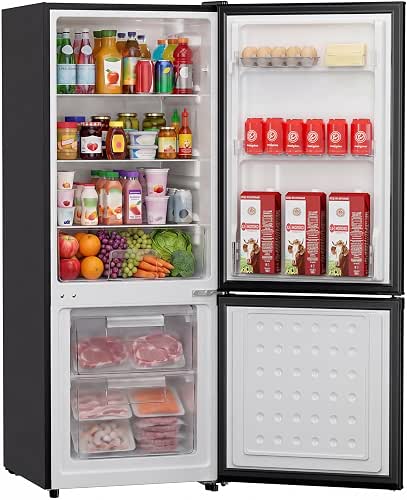
If your planning includes lifting heavy frozen items regularly, the bottom-freezer layout of this Upstreman 7.1 cu.ft model feels built for everyday practicality. Reaching for frozen items at waist height avoids bending and aching after grocery days. The fridge portion offers flexible shelf arrangements and enough vertical space for gallon jugs, making it useful for small households that still need sensible storage.
The unit is engineered with energy performance in mind, reporting around 1 kWh per day and running quietly at about 39 dB. I can picture a small apartment where the fridge sits near the living space; the quiet running and efficient consumption keep both noise and bills reasonable. It also includes adjustable thermostat settings and a built-in light for convenient late-night raids, which is surprisingly helpful when you are grabbing snacks in the dark.
Pros
- Bottom freezer ergonomics reduce strain when lifting frozen goods
- Large 7.1 cu.ft capacity with flexible shelving
- Energy-conscious operation with modest daily consumption
- Quiet running suitable for open-plan apartments
- Reversible door and leveling feet improve installation flexibility
Cons
- Not as energy-efficient as some certified mini fridges per cubic foot
- May be larger than needed for single-person households
This Upstreman model performs best in apartments and small kitchens where a balance of usable space and energy efficiency matters. It’s a good middle ground between tiny dorm fridges and full-size family refrigerators. If you want a compact, practical fridge that makes frozen meal access easier, this hits the mark. If absolute lowest energy use per year is your only metric, compare Energy Star minis for a better figure.
To buy this product, click here.
5. Best Portable: NEWBULIG Mini Fridge for Bedroom, Office & Car (4.23QT)

If you want a tiny cooler that travels with you, the 4.23 QT NEWBULIG portable mini fridge is a clever fit. It uses semiconductor cooling instead of a compressor, so it avoids refrigerants like Freon and operates at low power. This is handy for skincare, breast milk storage, or keeping a small stash of beverages chilled in a dorm room or on a desk. I remember hauling a portable fridge to a weekend road trip and being grateful for the DC power option that let us keep snacks cold between stops.
The unit’s AC/DC compatibility means you can plug it into a car for longer trips or a household outlet at home, making it practical for commuters or anyone who needs cool storage on the go. Noise is impressively low at around 31 dB, so it won’t interfere with sleep or phone calls. Keep in mind semiconductor systems typically cool several degrees below ambient rather than hitting freezer temperatures, so plan storage accordingly.
Pros
- Portable with AC and DC power cords for home and car use
- Very quiet operation at about 31 dB
- No compressor and no chemical refrigerants
- Removable shelf and handle improve organization and transport
- Small footprint fits on desks, counters, or in vehicles
Cons
- Semiconductor cooling limits how cold it can get compared with compressor units
- Very small capacity only suitable for personal items
Choose this portable mini fridge when you need compact, low-noise cooling for skincare, snacks, or travel. It’s perfect for nurses, road-trippers, or office workers who want chilled beverages at their desk. Avoid it if you need freezer-level temperatures or a permanent kitchen fridge. The key tradeoff is portability and low power against maximum cooling depth.
To buy this product, click here.
6. Best Value Compact Fridge: Erivess 3.2 Cu.Ft Mini Fridge with Freezer
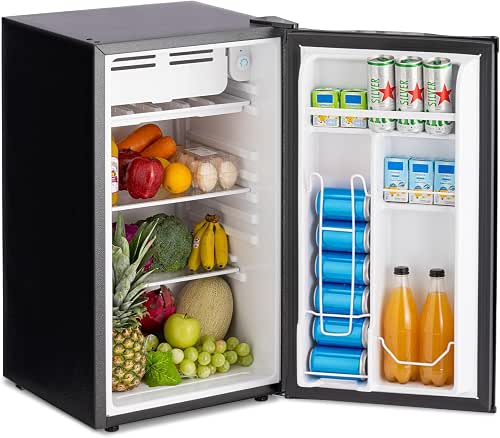
If your priority is squeezing the most practical features into a modest budget, the Erivess 3.2 cu.ft packs surprising value. It offers seven temperature settings and a 0.3 cu.ft freezer, letting you dial in the exact cooling you need for different foods. I picture a shift worker who needs reliable cold storage for lunch prep and a place to keep a frozen gel pack. The range of temperature control helps keep meats and dairy at safe temperatures without excessive cold that wastes energy.
The unit’s quieter compressor and built-in LED light make usability straightforward. Storage options like removable shelves and a crisper drawer add to everyday convenience so you can organize drinks, snacks, and produce with minimal fuss. Backed by a one-year warranty, the model leans heavy on practical performance over premium finishes, which is often a sensible trade for budget-conscious buyers.
Pros
- Seven temperature settings for fine-tuned storage
- Energy-efficient compressor designed for quiet operation
- Good organizational features like crisper and door racks
- Solid value with a one-year warranty
- Compact footprint fits many small spaces
Cons
- Build materials are basic compared with premium minis
- Freezer is small and best for short-term use
This Erivess unit is an excellent option for students, renters, and anyone who wants sensible mini fridge functionality without paying a premium. It’s particularly good for people who value temperature control and internal organization. If you want a showpiece or the absolute quietest unit, look at higher-end options, but for dependable daily use this model delivers strong practical value.
To buy this product, click here.
7. Best Energy Star Mini: Upstreman 3.1 Cu.Ft Mini Fridge with Freezer

If minimizing daily running cost is the main criterion, the Energy Star-rated Upstreman 3.1 cu.ft earns strong marks. With estimated costs that can be as low as a few cents per day, this mini fridge has an attractive operating profile for long-term savings. Imagine leaving a compact fridge running 24/7 in a home office or studio apartment. Over months, low kWh consumption becomes a meaningful part of your utility bill savings.
The dual-door design separates fridge and freezer so cold air does not migrate when you open one compartment. Practical touches like a crisper drawer and removable shelves make meal prep and grocery storage more efficient. The unit’s quiet 38 dB operation is another reason it fits bedrooms and offices, where noise matters. For buyers focused on efficiency certification and real-world running costs, this is a top pick.
Pros
- Energy Star certified for verified efficiency
- Very low estimated daily operating cost
- Separate fridge and freezer compartments improve cold retention
- Quiet operation suitable for bedrooms and study areas
- Customizable shelving and removable seals for cleaning
Cons
- Smaller freezer may not suit heavy frozen-food users
- Fewer premium features compared with larger fridges
This Upstreman Energy Star mini is a sensible buy for energy-conscious renters, students, and anyone who plans to run a fridge continuously. If you need more freezer space or luxury conveniences, consider a larger or convertible unit. If your priority is verified efficiency and minimal running costs paired with practical storage, this model is hard to beat.
To buy this product, click here.
8. Best Stylish Option: FRIGIDAIRE Black Retro Mini Refrigerator

Buying a fridge is practical, yet style matters if the unit sits in a visible living area. This FRIGIDAIRE retro mini blends form and function with a compact 1.6 cu.ft footprint, organized storage, and a classic look. The built-in bottle opener is a small, delightful detail for weekend gatherings. For a subscriber who wants their kitchen or living room to feel curated, this mini fridge adds personality while still offering the core benefits of a low-use refrigeration unit.
For light-duty users who store drinks, snacks, and occasional perishables, the retro fridge keeps things simple. The flush-back design helps place it against walls or in tight alcoves. Think of a rented studio where you want a conversation piece that also keeps beverages cold for impromptu friends dropping by. The small size means low running costs compared with larger units, though it is designed for short-term chilled storage rather than heavy meal prep.
Pros
- Iconic retro styling that doubles as decor
- Compact size is ideal for closets, patios, or tiny kitchens
- Organized storage with wire shelf and door basket
- Reversible door adds placement flexibility
- Practical extras like ice tray and chiller compartment
Cons
- Very limited capacity for serious refrigeration needs
- Less energy-efficient per cubic foot than certified mini fridges
Choose the FRIGIDAIRE retro mini if you want a fridge that fits a design-forward space and sees light to moderate use. It’s perfect for home bars, dorm rooms, or as a secondary fridge in a stylish apartment. Avoid it if your shopping habit requires large chilled storage or if you rely on frequent frozen meals. This is where aesthetic value meets everyday functionality.
To buy this product, click here.
9. Best For Businesses: BODEGACOOLER 255L Commercial Beverage Refrigerator

For commercial settings where visibility, capacity, and steady cooling matter, the BODEGACOOLER merchandiser is designed to handle heavy daily use while focusing on energy-saving features. The double-layer tempered glass and magnetic seal improve insulation, which helps reduce the load on the compressor. If you run a small café, office breakroom, or bar, the LED lighting and defogging system maintain product visibility while helping the unit run efficiently.
This cooler’s temperature range and adjustable shelving give flexibility in arranging cases of drinks or bottled water. I recall a small café upgrading to a glass-door merchandiser and immediately noticing smoother temperature stability during busy afternoon service. The commercial motor and smart defogging help keep the interior consistent without requiring frequent manual maintenance, which saves both time and operating cost over months of continuous use.
Pros
- High capacity suitable for retail, office, or bar use
- LED lighting and defogging maintain clear visibility and insulation
- Adjustable shelves and strong insulation improve energy performance
- Quiet operation for commercial standards
- Rolling casters for mobility and locking brakes for stability
Cons
- Higher upfront cost and larger footprint than domestic units
- Requires routine cleaning and professional servicing for long-term reliability
Pick this merchandiser for a business needing a reliable, visible fridge that balances performance and operating cost. It is worth the investment for stores, offices, and hospitality spaces where product presentation and steady cooling are essential. Skip this option if you need a small home fridge or anything meant to be portable. This is a commercial solution that prioritizes capacity, visibility, and steady energy-efficient operation.
To buy this product, click here.
Best Energy Saving Refrigerator FAQ
How do I compare energy use between refrigerators?
Look for kWh/year numbers or daily kWh figures. Energy Star certification is the most reliable shorthand for verified efficiency. For mini fridges without annual kWh listed, compare manufacturer daily consumption or look for ETL/DOE testing marks. Keep capacity in mind: a larger fridge with low kWh per cubic foot is more efficient than a tiny fridge that runs constantly.
Are all compressor fridges more energy-efficient than thermoelectric models?
Compressor fridges generally cool to lower temperatures and are more efficient for sustained refrigeration and freezing. Thermoelectric or semiconductor units are fine for portability and short-term cooling but are less efficient when you need deep cooling or significant capacity. Use them for personal items, skincare, or travel rather than primary kitchen storage.
Does noise level affect energy efficiency?
Noise and efficiency are related but not the same. A noisy fridge might have an older or overworked compressor that cycles frequently, which can indicate inefficiency. Conversely, quiet compressors can be efficient if matched to the fridge size. Check dB ratings and manufacturer kWh numbers together for the best picture.
How much space should I choose for a single person versus a family?
Single adults or students will usually be fine with 1.6 to 3.2 cu.ft models. Couples or small households often find 7 to 11 cu.ft more practical. Choose the smallest unit that meets your typical weekly shopping volume to avoid excess cycling and wasted energy.
Is Energy Star certification worth prioritizing?
Yes, for long-term savings. Energy Star models meet tested efficiency thresholds and typically translate into lower utility bills. For high-use situations or continuous running, certification is a meaningful way to reduce operating costs over the appliance lifetime.
How should I install a new fridge to maximize efficiency?
Leave space for ventilation per the manual, keep the fridge out of direct sunlight or heat sources, and allow it to sit upright for a few hours after delivery before plugging in. Set the thermostat to recommended settings and avoid blocking internal airflow with overpacking. Regularly clean the coils if accessible to maintain heat exchange efficiency.
Can a second small fridge save money compared with one larger fridge?
Sometimes two smaller units can be more efficient if each one is sized precisely to its use and runs only when needed. However, two units mean two compressors and potentially more total standby energy. Evaluate actual usage patterns and look at rated yearly kWh to compare combined operating costs.
Are there savings tips beyond the fridge choice?
Yes. Keep the door closed, avoid hot items inside, defrost manual-freeze units regularly, and set fridge temps between 35 and 38°F and freezers around 0°F for safe storage without overcooling. Good seals and regular maintenance prevent energy waste.
Final Verdict
Choosing the best energy saving refrigerator starts with matching capacity to real daily use. For most people wanting a compact, quiet, and efficient fridge for a bedroom, office, or small apartment the EUHOMY 3.2 cu.ft offers a reliable balance of low daily consumption and practical storage. If you buy for a family or want bulk flexibility, the 11 cu.ft upright convertible model is the better match because it gives extra capacity and mode switching that can cut down the need for a second unit.
Budget and specialized needs also matter. Energy Star-certified minis such as the Upstreman 3.1 cu.ft are smart when long-term running cost matters most. Portable semiconductor fridges are perfect for travel, skincare, or car use, while commercial merchandisers suit businesses where capacity and visibility matter. The sensible final advice is simple: pick a size that matches your shopping habits, favor certified efficiency where possible, and double-check noise and placement constraints. That combination will keep food safe, utility bills lower, and your living space quieter while delivering the cooling you need.