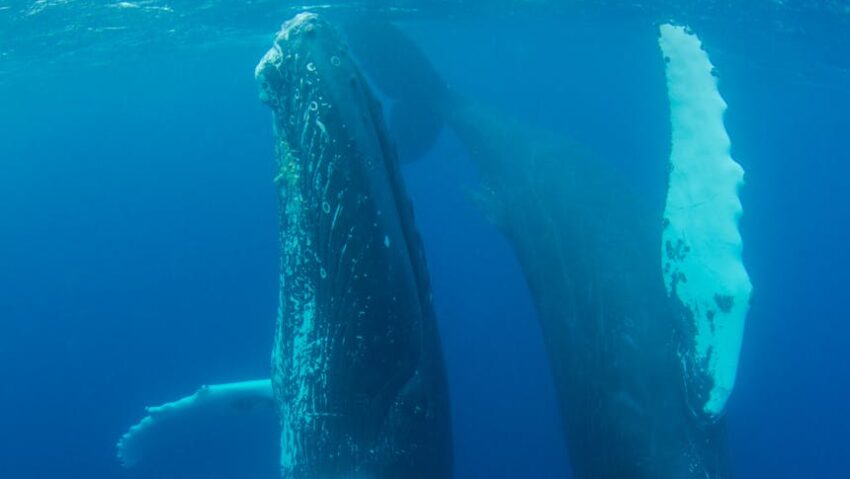
The humpback whale is equal parts poetry and muscle, the ocean’s soundtrack and acrobat, famous for song, slap, breach and the theatrical ring of long white pectoral fins. Known scientifically as Megaptera novaeangliae, this baleen whale ranges from polar feeding grounds to tropical breeding lagoons, and it has become one of the most recognizable marine icons of conservation. Once driven to the brink by industrial whaling, humpbacks have seen dramatic recoveries in many regions, yet they still face a suite of modern threats that make ongoing protection essential.
Biology and behavior
Physical characteristics
Adult humpback whales typically reach 12 to 16 meters in length and can weigh up to around 40 metric tons. They are distinguished by very long pectoral fins, knobbly tubercles on the head, a stocky body, and a distinctive dorsal hump from which their common name derives. Individual whales often show unique patterns on the underside of their flukes, which researchers use like fingerprints to identify animals.
Diet and feeding
Humpbacks are filter feeders that consume krill and small schooling fish such as herring, sand lance, and mackerel. They use a variety of feeding tactics, most famously bubble-net feeding, a coordinated strategy where whales blow a ring of bubbles to herd and concentrate prey near the surface. This cooperative and highly visual technique highlights both the intelligence and social coordination of the species.
Song and communication
Male humpbacks produce long, complex songs during the breeding season. These songs can last for many minutes and are repeated and modified over time. Song functions are still studied, but they appear linked with mating behavior and social interaction. Beyond song, humpbacks use a wide range of vocalizations and surface behaviors such as tail slaps and breaching to communicate.
Migration and reproduction
Humpbacks undertake some of the longest migrations of any mammal, traveling from high-latitude feeding grounds in summer to low-latitude breeding and calving areas in winter. Breeding occurs in warmer waters where females give birth to a single calf after a gestation of about 11 to 12 months. Mothers nurse calves for several months while navigating between shallow lagoons and offshore waters.
Conservation status and history
From whaling to recovery
Commercial whaling in the 19th and 20th centuries decimated humpback populations worldwide. The 1986 International Whaling Commission moratorium on commercial whaling was a turning point, and protections under national laws and international agreements helped many populations recover. As of the most recent global assessments, the species is listed as Least Concern on the IUCN Red List overall, but that global designation masks important differences between regional populations.
Regional differences and persistent risk
Certain humpback distinct population segments remain at risk or retain endangered status under national or regional listings. Recovery rates vary by ocean basin and depend on historical depletion levels, current threats, and the effectiveness of local conservation measures.
Major threats today
- Entanglement in fishing gear: Rope and nets can trap humpbacks, causing injury, chronic stress, compromised feeding and reproduction, and often death.
- Ship strikes: Collisions with vessels can be fatal. Speed reduction rules and routing in sensitive areas reduce risk but are not universal.
- Noise pollution: Increased shipping, seismic surveys, and industrial activity raise ambient ocean noise and can interfere with communication, navigation and foraging.
- Climate change: Shifts in ocean temperatures and productivity affect prey distribution and abundance, altering migration timing and success.
- Pollution and marine debris: Plastics, chemical contaminants and oil impacts health and habitat quality for humpbacks and their prey.
- Habitat disturbance: Coastal development, tourism pressure in breeding grounds and habitat degradation can reduce the quality of critical areas.
Conservation measures and successful strategies
Conservation of humpback whales combines international agreements, national laws, local actions and community engagement. Key measures that have proven effective include:
- International protection and regulation: The IWC moratorium, alongside national laws like endangered species and marine mammal protections, halted commercial whaling and created frameworks for recovery.
- Monitoring and science: Photo-identification, tagging, acoustic monitoring and population surveys inform management, track recovery and identify hotspots for threats.
- Bycatch reduction and fishing gear innovation: Gear modifications, ropeless fishing trials and fishing-area management reduce entanglements.
- Vessel speed limits and routing: Enforced speed reductions in busy shipping lanes and seasonal route changes lower ship strike risk.
- Marine protected areas and seasonal closures: Protecting feeding and breeding habitats helps sustain recovery by safeguarding critical life stages.
- Disentanglement response teams: Trained crews and rapid response protocols improve outcomes when whales become entangled.
- Noise mitigation and better maritime practices: Quieter ship technologies, traffic management and restrictions on seismic activity help preserve acoustic habitat.
How people can help humpback whales
Individual choices matter. Practical ways to support humpback conservation include:
- Choose responsible whale watching operators that follow codes of conduct and keep respectful distances.
- Support policies and organizations that fund research, disentanglement teams and marine protected areas.
- Reduce plastic use and properly dispose of fishing gear to limit marine debris.
- Advocate for vessel speed restrictions and safer shipping lanes in local coastal communities.
- Make climate-smart choices that reduce carbon emissions and help stabilize ocean ecosystems.
- Report injured or entangled whales to local wildlife authorities so responders can act quickly.
Frequently asked questions
Are humpback whales endangered?
Globally the species has recovered enough to be classified as Least Concern on the IUCN Red List. However, several regional populations remain vulnerable or endangered due to ongoing threats, so conservation and monitoring continue to be necessary.
How long do humpbacks live?
Humpbacks commonly live into their 40s or 50s, and some individuals may live longer. Lifespan can be shortened by disease, injury or human-caused threats.
What is bubble-net feeding?
Bubble-net feeding is a coordinated behavior where whales blow bubbles to encircle and concentrate prey. A group then swims upward through the concentrated prey, mouths open, to feed at the surface. It is one of the most dramatic and cooperative feeding techniques seen in whales.
Is it safe to go whale watching?
Yes, when tours follow best practices. Choose operators that adhere to regulations on approach distances, vessel speed and engine noise. Responsible whale watching minimizes stress to animals and supports local economies invested in healthy ocean ecosystems.
Final note
Humpback whales are a conservation success story in many parts of the world, but success is not uniform or permanent. Continued science, adaptive management and public engagement are essential to maintain and extend recoveries. Protecting humpbacks also safeguards broader ocean health, because measures that reduce entanglement, noise, pollution and greenhouse gas emissions benefit entire marine ecosystems.