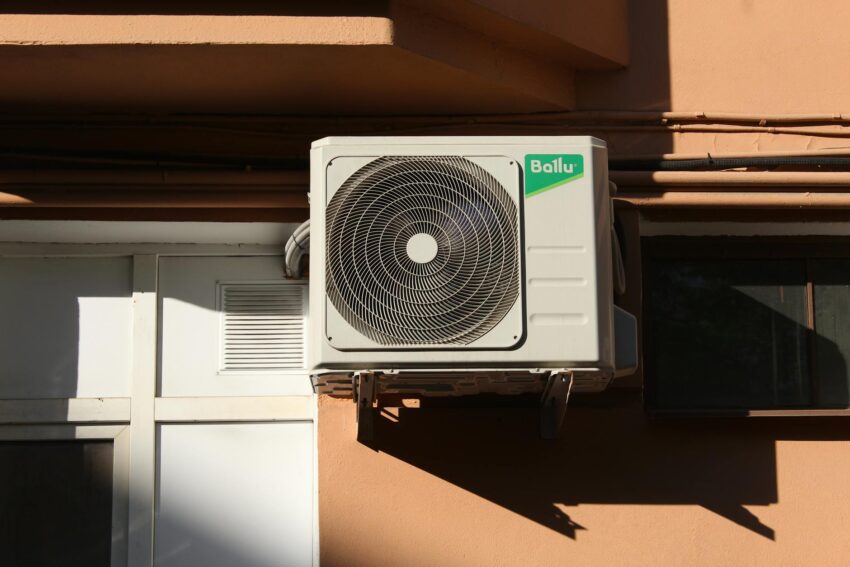
Most homeowners start paying attention to their air conditioner only after opening an unusually high electricity bill during a heat wave. Air conditioning can be one of the largest electricity users in a home, but how much it actually uses depends on the type of unit, its size, how you run it, and where you live. This guide explains, in plain language, how much electricity an air conditioner uses, how to estimate costs for specific units, and which practical steps reduce energy use without making your home uncomfortable.
How much electricity does an air conditioner use?
Short answer: a typical home air conditioner draws anywhere from about 500 watts for a small window unit up to 3,500 watts or more for a large central system while running. That translates to roughly 0.5 to 3.5 kilowatt-hours for every hour the system operates. Actual energy use depends on unit size, efficiency rating, and how long and how hard the system runs.
Putting those numbers into context helps. A 1,200-watt window unit that runs for 8 hours a day uses about 9.6 kWh per day. At an electricity price of $0.18 per kWh, that is about $1.73 per day and about $52 per month for that one unit if used every day. A central air system that averages 2,500 watts while running and operates 8 hours per day would use about 20 kWh per day, or $3.60 per day at the same rate, adding up to about $108 per month.
Key factors that determine AC electricity use
Unit type and size
Different air conditioners are built for different tasks. Common types are window units, portable units, mini-splits, and central air systems. Size is usually rated in BTU per hour or tons. One ton equals 12,000 BTU per hour. A properly sized unit cools efficiently. An oversized unit short-cycles, wasting electricity and leaving the room humid. An undersized unit runs constantly and uses more energy over time.
Efficiency rating: SEER, EER, and COP
Efficiency ratings tell you how much cooling you get per unit of electricity. SEER, or Seasonal Energy Efficiency Ratio, is the common label for split and central systems. Higher SEER numbers mean better efficiency. EER is an instant-time performance measure at a given outdoor temperature. COP is used more in technical contexts and heat pumps.
As a rule of thumb, each increase in SEER reduces seasonal energy use. For two systems sized the same, a 16 SEER unit will use less electricity over a season than a 10 SEER unit. Newer inverter-driven mini-splits often reach high SEER values, meaning they can be far more efficient in practice because they run continuously at lower power instead of cycling on and off.
Runtime and duty cycle
AC energy use is a product of how much power the compressor and fans draw while running, and how long they run. Most systems do not run at full power continuously. On milder days or when the unit is well matched to the space, the compressor runs intermittently. On very hot days, run times increase. If a system operates at 50 percent duty cycle, it will use roughly half the energy of continuous running.
Indoor setpoint and outdoor temperature
The colder you set the thermostat, the longer the system runs. Raising the thermostat a few degrees reduces runtime significantly. Outdoor temperature affects how hard the unit must work. A hotter outdoor temperature increases compressor work and raises electricity use.
Household factors: insulation, windows, shading, and occupancy
Heat gain in the building matters. Poor insulation, single-pane windows, and large sun-facing windows increase cooling load. People, cooking, electronics, and lights add internal heat. Addressing these factors can reduce AC runtime without changing the system.
Typical electricity use by AC type: quick reference table
| Unit type | Typical cooling size | Typical running power (watts) | kWh per hour | Hourly cost at $0.15/kWh | Hourly cost at $0.30/kWh |
|---|---|---|---|---|---|
| Small window unit | 5,000 to 8,000 BTU | 400 to 900 W | 0.4 to 0.9 kWh | $0.06 to $0.14 | $0.12 to $0.27 |
| Medium window / portable | 8,000 to 12,000 BTU | 800 to 1,500 W | 0.8 to 1.5 kWh | $0.12 to $0.23 | $0.24 to $0.45 |
| Mini-split (single head) | 9,000 to 18,000 BTU | 500 to 1,800 W (inverter) | 0.5 to 1.8 kWh | $0.08 to $0.27 | $0.15 to $0.54 |
| Central AC (residential) | 1.5 to 5 tons (18,000 to 60,000 BTU) | 1,200 to 4,000+ W while running | 1.2 to 4+ kWh | $0.18 to $0.60+ | $0.36 to $1.20+ |
These are typical running power levels for when the compressor is active. Fans draw additional power when running between compressor cycles. Exact numbers vary by model and age.
How to estimate your AC energy use and cost
Step-by-step calculation
- Find the unit’s power draw in watts. Look on the nameplate, the spec sheet, or the EnergyGuide label. If only BTU and EER are available, estimate watts as BTU divided by EER. For example, a 12,000 BTU unit with an EER of 10 uses around 1,200 watts.
- Convert to kilowatts by dividing watts by 1,000. 1,200 W becomes 1.2 kW.
- Estimate average hours of operation per day. Use typical hours for your climate and habits.
- Multiply kilowatts by hours to get kWh per day. Multiply by days in a billing cycle for monthly use.
- Multiply kWh by your electricity rate to estimate cost.
Example: a 1,500 W window unit running 6 hours per day at $0.20 per kWh uses 1.5 kW times 6 hours = 9 kWh per day. Cost is 9 kWh times $0.20 = $1.80 per day, or about $54 for a 30-day month.
When nameplate numbers are missing
If you cannot find a power rating, use typical category values from the table earlier, or measure directly with a plug-in energy meter for window and portable units. For central systems, a whole-home energy monitor or checking changes in your utility bill before and during the cooling season gives a reasonable estimate.
Real-world usage examples
Example 1: Apartment with a small window AC
Scenario: A 1-bedroom apartment uses a 6,000 BTU window AC (about 600 to 800 W while running). The occupant runs it 10 hours per day during a heat spell.
- Running power estimate: 700 W, or 0.7 kW
- Daily energy: 0.7 kW x 10 hours = 7 kWh
- Monthly energy at daily use: 7 kWh x 30 = 210 kWh
- Monthly cost at $0.18/kWh: 210 x $0.18 = $37.80
That looks modest, but combine it with other loads and long-term use and it can be one of the largest contributors to a bill for an apartment.
Example 2: House with central AC
Scenario: A 2,600 square foot house uses a 3-ton central AC with an average running draw of about 2,800 W while the compressor runs. The system cycles on for a total of 10 hours per day, broken into intermittent runtime.
- Running power estimate: 2,800 W, or 2.8 kW
- Daily energy when compressor runs: 2.8 kW x 10 hours = 28 kWh
- Monthly energy: 28 kWh x 30 = 840 kWh
- Monthly cost at $0.18/kWh: 840 x $0.18 = $151.20
For many US households, that level of AC use accounts for a large portion of summer electricity consumption. If the AC has a low SEER or if the home is poorly insulated, costs will be higher.
Example 3: Efficient mini-split in a single room
Scenario: A 9,000 BTU inverter mini-split in a home office averages 600 W during regular use because it modulates power to match load. It runs 8 hours per day.
- Running power estimate: 600 W, 0.6 kW
- Daily energy: 0.6 kW x 8 = 4.8 kWh
- Monthly energy: 4.8 x 30 = 144 kWh
- Monthly cost at $0.18/kWh: 144 x $0.18 = $25.92
Variable-speed compressor designs often perform better than fixed-speed units in real use because they avoid frequent starts and can stay at efficient partial-load levels.
Ways to reduce air conditioner electricity use
Adjust thermostat sensibly
Raising the thermostat by a few degrees is one of the fastest ways to cut energy use. Each degree higher can lower the cooling load by roughly 3 to 5 percent. For many homes, keeping the thermostat at 78 F when people are home and bumping it up when away strikes a good balance between comfort and cost.
Use fans to extend comfort
Ceiling fans and portable fans move air, increasing perceived comfort so you can set the thermostat higher. Fans use far less power than air conditioners. Remember to turn fans off when a room is unoccupied, since fans cool people, not rooms.
Improve shading and window treatments
Blocking direct sun with blinds, shades, or exterior shading cuts heat gain dramatically. Window films and low-e curtains help too. Effective shading reduces the workload on the AC and shortens runtime.
Improve insulation and air sealing
Sealing gaps around doors and windows and adding insulation where needed lowers the cooling load. Small investments in caulking, weatherstrips, and attic insulation often pay back quickly through lower AC use.
Service and maintenance
Dirty filters, blocked condensers, and low refrigerant reduce efficiency. Replace filters monthly or per manufacturer guidance during heavy use. Clear debris around outdoor units and have the system serviced yearly. A well-maintained AC runs less and cools better.
Choose efficient equipment
If you are replacing a unit, pick one with a higher SEER and Energy Star certification when possible. Variable-speed or inverter compressors maintain comfort with lower average power draw. Right-size the system to the home; proper load calculation ensures efficiency and avoids short cycling.
Use zoning or mini-splits for targeted cooling
Cooling only the rooms you use saves energy. Duct losses and cooling the whole house when only one room is occupied are common sources of wasted energy. Installing ductless mini-splits for frequently used rooms is more efficient than running a whole-house central system at low loads.
Schedule runtime and use smart thermostats
Programmable thermostats or smart thermostats help avoid unnecessary cooling. Schedule higher setpoints when everyone is away and return to comfort levels shortly before occupants arrive. Smart thermostats can also learn patterns and optimize runtime while avoiding large comfort sacrifices.
Night ventilation and natural cooling
In climates with cooler nights, open windows at night to flush out heat and close them during the day. Use whole-house fans or attic ventilation to reduce indoor temperatures before the AC needs to run.
Myths and common mistakes
Myth: Turning the AC off and on wastes more energy than leaving it on
Reality: If you are going to be away for several hours, turning the AC up or off saves energy. The misconception comes from comparing the short startup energy to continuous operation, but in practice the energy used to cool the house back down is usually less than the energy saved while the system was off, especially if you allow the temperature to rise significantly during absence.
Myth: Setting the thermostat much lower cools the house faster
Reality: The AC cools at roughly the same rate regardless of setpoint. Lowering the setpoint just means the system runs longer. Set the thermostat to a comfortable but not extreme temperature.
Mistake: Oversizing the AC
An oversized unit cycles on and off frequently, which reduces dehumidification and wastes energy. Proper sizing based on a load calculation yields better comfort and efficiency.
Mistake: Closing vents to unused rooms
Closing many vents in a forced-air system can raise static pressure in the ducts, decrease efficiency, and cause duct leakage or damage. If you want to avoid cooling unused rooms, consider zoning controls or a ductless solution.
Myth: All old AC units are irredeemably inefficient
Reality: Older units are less efficient than modern ones, but maintenance, proper airflow, and thermostat strategies can still make them reasonably efficient. Replacement sometimes makes sense, but only after weighing upfront cost versus long-term savings and expected remaining life.
Choosing between AC options: pros and cons
Window and portable units
Pros:
- Low upfront cost
- Good for single rooms or rentals
- Easy to install for window units
Cons:
- Noisy and less efficient than modern mini-splits
- Block windows and may be less secure
- Portable units can be inefficient and venting is awkward
Mini-splits (ductless)
Pros:
- High efficiency, particularly inverter models
- Good for room-by-room control and retrofits without ducts
- Lower operating cost in many cases
Cons:
- Higher upfront cost per zone
- Multiple indoor units may be needed to cover a whole house
Central air with ducts
Pros:
- Even cooling for whole-house comfort
- Integrates with existing HVAC systems and central filtration
Cons:
- Duct losses can be significant in older homes
- Replacing or adding ducts is costly
- May be less efficient if only a small portion of the house needs cooling
When to replace your air conditioner
Consider replacement when:
- The unit is older than 10 to 15 years and needs frequent repairs
- Energy bills have steadily risen despite reasonable maintenance
- The unit cannot maintain comfort or humidity control
- Upgrading yields a reasonable payback based on your cooling needs and local electricity rates
Before replacing, get a load calculation and multiple quotes. Compare estimated seasonal costs using the new unit’s SEER and your usage pattern. Factor in rebates, tax credits, or utility incentives for high-efficiency systems, which can shift the economics.
How to measure your AC’s actual electricity use
For window and portable units
Use a plug-in energy meter. These devices display real-time watts, kWh used, and cost estimates. They are inexpensive and accurate for single-plug appliances.
For central systems
Options include:
- A whole-home energy monitor that clamps around the service panel. These show system-level consumption and can be useful for identifying AC runtime patterns.
- Smart thermostats and HVAC sensors that estimate runtime and can integrate with energy monitors.
- Comparing utility bills month-to-month. Look at the increase in kWh from a non-cooling month to a cooling month and attribute most of the difference to air conditioning, adjusting for other seasonal loads.
Interpreting measurements
Measure during a typical hot day. Note both compressor and fan runtime. If your compressor cycles frequently for short bursts, measure over several days and average results to smooth out variability.
Cost-saving upgrades and their impact
Not every upgrade pays back quickly. Here are common improvements, approximate impact, and practical notes.
| Upgrade | Typical energy impact | Practical notes |
|---|---|---|
| Seal and insulate attic | Lower cooling load by 10 to 30 percent | Often high return on investment in climates with significant cooling season |
| Install programmable or smart thermostat | Reduce cooling hours by 5 to 15 percent | Works best if users program sensible setbacks and avoid overriding schedules frequently |
| Replace old AC with high-SEER model | 20 to 50 percent seasonal energy savings depending on old unit and SEER difference | Higher upfront cost, check incentives and expected payback |
| Add ceiling fans | Allow higher thermostat setpoint, effectively reducing AC use 10 to 20 percent | Fans should be off when rooms are empty |
Regional and seasonal differences
AC electricity use varies widely by region. Homes in hot and humid climates run air conditioning many more hours per year than those in temperate climates. In the Sun Belt and parts of the Southwest, cooling can be the largest annual energy use. In coastal or northern climates, occasional use may only add modest amounts to your annual bill.
Also consider humidity. In humid climates, the AC not only cools but removes moisture, which increases runtime. A system that cannot dehumidify effectively may run longer or leave occupants uncomfortable, prompting lower thermostat settings and higher consumption.
Policy and incentive landscape to reduce AC costs
Many utilities and governments offer rebates for high-efficiency ACs and heat pumps, or for home energy improvements such as insulation and duct sealing. Time-of-use electricity rates may make it cheaper to run the AC at night in some areas, while peak pricing can raise daytime costs. Check local utility programs for incentives and consider replacement timing to capture rebates.
Practical checklist to lower AC electricity use
- Set your thermostat a few degrees higher and use fans to stay comfortable.
- Replace or clean filters monthly during heavy use.
- Schedule annual maintenance to keep coils clean and refrigerant at the correct level.
- Shade windows and use reflective window coverings on sun-facing glass.
- Seal attic and common air leaks around doors and windows.
- Use programmable or smart thermostats to set sensible schedules.
- Consider mini-splits for rooms you use most instead of cooling the whole house.
- Measure real usage with a plug-in meter or whole-home monitor before major upgrades.
- When replacing equipment, get a load calculation and compare SEER ratings, not just capacity.
- Explore utility rebates and time-of-use rates that could lower operating costs.
FAQ
How many kWh does an air conditioner use per hour?
It depends on the unit. Small window units use roughly 0.4 to 1.5 kWh per hour while running. Central systems commonly use 1.2 to 4 kWh per hour when the compressor is on. Mini-splits often use 0.5 to 1.8 kWh per hour because they can modulate. Check your unit’s wattage or measure directly for the most accurate number.
Does a higher SEER always mean lower bills?
Higher SEER usually reduces seasonal energy use, but savings depend on runtime and climate. If an efficient unit is oversized, or if the house has poor insulation, real-world savings may be less than expected. Look at the whole system and house envelope when projecting savings.
Is it cheaper to leave the AC on at a higher temperature or turn it off when away?
For periods longer than a couple of hours, increasing the thermostat or turning the AC off usually saves energy. If you are home for short breaks, keeping a moderate temperature may be more practical. Smart thermostats can help automate sensible setbacks.
How much will a new AC save on my bill?
Savings depend on the current unit’s age and SEER, local electricity prices, and how often you run the system. Replacing a 10 SEER unit with a 16 SEER unit can reduce cooling energy use by roughly 35 percent in many cases. Run a basic calculation with your average cooling kWh to estimate savings, and factor in rebates and installation costs for payback timing.
Are mini-splits worth the extra upfront cost?
For many homes, especially those without ducts or with rooms used selectively, mini-splits pay off through lower operating costs and better comfort. They are more efficient than window or portable units and provide zonal control. The upfront cost is higher, but energy savings and comfort often justify the investment over time.
How much does insulation affect AC energy use?
Significantly. Improving attic insulation and sealing air leaks can reduce cooling loads by 10 to 30 percent in many homes. Insulation helps keep heat out during the day and reduces the workload on the air conditioner.
Can I use a smart plug to reduce AC energy use?
Smart plugs are useful for window and portable units if the unit is compatible. They allow scheduled operation and remote control. However, they cannot measure compressor runtime accurately for hardwired central units. For central systems, smart thermostats or home energy monitors are better choices.
Final practical takeaways
How much electricity an air conditioner uses varies widely, but you can estimate it with a few simple steps: find the unit’s wattage or estimate from BTU and EER, convert to kilowatts, and multiply by hours of operation. Small window units often use under 1 kWh per hour. Central systems commonly use 1.2 to 4 kWh per hour while running. Mini-splits can deliver similar cooling at lower average power because they modulate.
To lower energy use and bills, focus first on behavior and low-cost changes: raise the thermostat a few degrees, use fans, shade windows, and keep filters clean. For larger savings, address the building envelope with insulation and sealing, and consider upgrading to a high-SEER or inverter-driven system where the economics make sense. Measure usage before expensive upgrades so you understand the baseline and can evaluate payback realistically.
Air conditioning is a major household expense in many places, but a mix of better habits, small upgrades, and the right equipment choice can reduce electricity use substantially while keeping your home comfortable.