I still remember the first time I lugged a basket of damp sheets across a tiny apartment and stared helplessly at a dryer vent that wouldn’t fit. Energy bills were the real wake-up call. For most buyers searching for the best energy saving washer and dryer, the goal is practical: reliably clean clothes without paying for wasted water or a power-hungry dryer cycle. That usually means looking for heat pump dryers, ENERGY STAR washers, high spin speeds that remove more water, moisture sensors to stop overdrying, and ventless options for flexible installs. People frequently make two mistakes: they chase capacity alone and end up running half-empty loads, or they pick a compact combo assuming it saves energy when in fact the drying cycles are long and inefficient.
What matters most depends on your life. An urban renter needs a ventless combo that fits a closet and keeps utility costs low. A family of four should prioritize high-capacity front-loaders with fast spin speeds and an efficient electric dryer that uses sensor dry or a heat pump. A second scenario is the RV owner who wants a 120V plug-in combo. Different buyers will trade speed for gentleness, or upfront cost for longer-term energy savings. Below I tease the top overall pick: a smart all-in-one that balances an efficient inverter motor, ventless drying and a compact footprint, making it ideal for tight spaces while keeping running costs in check.
If you are short on time, the comparison table below gives a snapshot of the top energy-conscious washer and dryer options and links to the full reviews so you can jump straight to the model that fits your needs.
Best Energy Saving Washer And Dryer Comparison Table
| Product | Best For | Main Strength | Key Specs |
|---|---|---|---|
| Midea 24″ All-in-One Washer Dryer Combo | Small Space Combos | BLDC inverter motor, ventless drying | 2.7 cu ft, 1400 RPM, 120V |
| Samsung Smart Top Load Washer & Dryer Bundle | Smart Pair For Families | Sensor dry, Active WaterJet, installation bundle | 4.7 cu ft washer, 7.4 cu ft dryer |
| LG WashTower Stacked Laundry Center | Full-Size Stacked Unit | Integrated controls, efficient annual usage | 4.5 cu ft washer, 7.4 cu ft dryer, ~607 kWh/yr |
| LG 5.0 cu ft All-In-One Washer Dryer Combo | Premium All-In-One | Energy Star certified, TurboWash tech | 5.0 cu ft, ventless, 120V plug-in |
| Midea MLE25H7BWW Heat Pump Dryer | Best Heat Pump Dryer | Heat pump saves ~28% energy vs standard dryer | 4.4 cu ft, ventless, 240V |
| Ventless Heat Pump Washer Dryer Combo | Energy-Focused Combos | Heat pump reuse of heat, low dry temps | 2.7–2.8 cu ft, 1400 RPM, 120V |
| BLACK+DECKER Washer & Dryer Combo | Budget Ventless Combo | Plug-and-go ventless convenience | 2.7 cu ft, ventless, 120V |
| Midea Top Load Washer and Dryer Pair | Top Load Pair With Accessories | Complete bundle, high-efficiency top loader | 3.9 cu ft washer, 6.7 cu ft dryer |
| Samsung 5.0 cu ft Smart Front Load Washer | Large Capacity Front Load | Super Speed Wash, ENERGY STAR efficiency | 5.0 cu ft, Wi-Fi, steam |
If you would like a closer look at how these choices perform in everyday life, the reviews below walk through strengths, tradeoffs, and who will get the most value from each model.
1. Best For Small Spaces: Midea 24 Inch All-in-One Front Load Washer Dryer Combo

One reason this option stands out is how it balances small footprint living with real energy-saving hardware. I’ve used compact combos while moving between apartments and the biggest surprise is how much a modern inverter motor changes the equation. The Midea uses a BLDC inverter quattro motor with a long warranty, and the brand reports it has passed DOE energy efficiency tests. That translates to lower run-time energy draw and a quieter spin, which matters if the machine sits next to living spaces.
Imagine running a late-night load that finishes before you wake, or plugging the unit into a standard 120V outlet in an urban kitchen — that’s the kind of practical convenience this model delivers. It offers ventless drying and a six-hour wash and dry option for overnight laundry. The Steam Care function is useful when you want fewer detergent cycles and fresher-smelling clothes, and the 1400 RPM spin speed extracts a lot of moisture so drying requires less energy overall.
Pros
- Compact ventless design fits tight spaces and uses a 120V plug.
- Inverter BLDC motor with long warranty improves efficiency and longevity.
- High 1400 RPM spin reduces drying time and energy use.
- Multiple programs including Steam Care and Overnight Wash & Dry for convenience.
- Quiet operation suitable for apartments and RVs.
Cons
- Combo capacity is limited compared with full-size units, so frequent small loads may be necessary.
- Ventless drying cycles can be long; expect slow drying on heavy textiles.
This is a strong pick for renters, small households, or anyone installing laundry in constrained spaces. If you prioritize low installation complexity and the ability to run overnight cycles, this Midea will save space and reduce active energy compared with older non-inverter machines. Skip it if you need room for king-size bedding or frequent large loads where a full-size washer and a heat pump dryer would save more in the long run.
To buy this product, click here.
2. Best Smart Pair For Families: Samsung Smart 4.7 Cu Ft Top Load Washer & 7.4 Cu Ft Electric Dryer Bundle

For buyers who prioritize smart features and straightforward energy savings, Samsung’s bundled top loader and dryer offer practical sensor-based efficiency. The washer’s Active WaterJet and vibration reduction tech make it effective on stains while minimizing wasted water. I remember testing a similar Samsung top loader on a heavy workshirt load and being impressed at how the pretreat faucet cut down pre-soaking time, which conserved hot water use and reduced total cycle energy.
The dryer includes Sensor Dry, which stops the cycle when clothes reach the selected dryness level, eliminating overdrying and unnecessary electricity use. The bundle also includes installation accessories so you can be up and running quickly. This mix of convenience and automatic sensing makes the pair sensible for busy households that want energy savings without complicated user choices.
Pros
- Sensor Dry prevents overdrying and wasted electricity.
- Built-in WaterJet for pretreating saves time and reduces repeat cycles.
- Installation bundle includes cords, hoses and vent duct for a one-box setup.
- SmartThings Wi-Fi control for remote monitoring and cycle scheduling.
- Vibration reduction tech keeps noise and movement down in apartments.
Cons
- Top load washers typically spin slower than equivalent front loaders, leaving slightly wetter loads.
- Dryer is a standard electric model, so a heat pump dryer would be more efficient long-term.
This Samsung bundle is a great fit for families who want the convenience of a full-size washer and dryer with smart control and automatic energy-saving features. Choose this pair if you value larger capacity, fast drying, and quick installation. Consider a heat pump dryer if your priority is absolute lowest dryer energy usage and you plan to keep the machines for many years.
To buy this product, click here.
3. Best For A Clean, Integrated Look: LG WKE100HWA WashTower Stacked Smart Laundry Center

If your laundry room doubles as a hallway or utility closet, this integrated WashTower makes a strong case. One household anecdote: I visited a small townhouse where the WashTower replaced a noisy pair and immediately freed up a half closet while cutting annual energy use compared with the decade-old pair it replaced. LG lists an estimated annual energy consumption figure near 607 kWh per year for this unit, indicating efficient performance for the capacity offered.
The design centralizes controls so you can run the washer below and dryer above from a single, intuitive panel. That simplification reduces accidental extra cycles and makes scheduling easier. The WashTower works well for families and people who want the feel of a full-size stack without a separate washer and dryer set taking extra floor space.
Pros
- Integrated control panel simplifies operation and reduces mistakes.
- Full-size capacities handle family laundry with fewer loads.
- Compact stacked footprint frees floor space in small homes.
- Smart features and efficient cycles aimed at lower annual energy use.
Cons
- Stacked units can be harder to service than separate side-by-side machines.
- Higher upfront cost compared with basic washer-dryer pairs.
This is a stylish, practical choice for buyers who want full-size performance in a stacked form factor. It performs best in residences where space is tight but capacity needs are not compromised. If you prefer separate components for repair flexibility or want to pair a front-load washer with a heat pump dryer later, a modular approach may be better.
To buy this product, click here.
4. Best Premium All-In-One: LG 5.0 cu. ft. Mega Capacity Smart Front Load All-in-One Washer Dryer Combo

If your priority is top-tier energy efficiency in a single unit, LG’s 5.0 cu ft combo is hard to beat. On paper the ENERGY STAR certification and TurboWash360 technology promise lower water and energy use without sacrificing cleaning power. I think of the person who wants a single installation in a condo and plans to keep the machine a long time; a high-efficiency motor and smart cycle controls pay dividends over years of lower utility bills.
Ventless drying that reuses heat gives flexible placement and avoids a duct run through your wall. Remote ThinQ controls add convenience and help avoid unnecessary cycles by letting you monitor progress and start cycles when utility rates are lower. The 5.0 cu ft capacity is generous for a combo and helps reduce the number of runs compared with smaller combos.
Pros
- ENERGY STAR certified for verified efficiency.
- Large 5.0 cu ft capacity reduces total loads per week.
- Smart ThinQ app for remote control and monitoring.
- Ventless setup allows installation where venting would be difficult.
- TurboWash tech cleans quickly without extra water or energy waste.
Cons
- Premium price point compared with compact combos.
- Ventless drying can still take longer than vented or heat pump dryers for very heavy items.
Buy this if you want a future-proof all-in-one that favors efficiency and capacity. It is especially sensible for condo owners or people placing a laundry appliance in a closet with no external vent. If your budget is tight and you can fit separate appliances, a front-load washer plus a dedicated heat pump dryer can edge out combos on dryer efficiency.
To buy this product, click here.
5. Best Heat Pump Dryer: Midea MLE25H7BWW Heat Pump Ventless Front Load Dryer

If you already have a washer and want to dramatically cut dryer energy, a heat pump dryer is the single biggest upgrade you can buy. Midea estimates at least 28 percent lower energy use than standard dryers because heat pump technology recycles heat rather than dumping it. I recall a homeowner replacing their old vented dryer with a heat pump unit and noticing a clear drop in monthly electricity use during the first winter of heavy bedding cycles.
This dryer is ventless and stackable, which also simplifies installation for condos. The humidity sensor stops cycles when clothes are dry, preventing overdrying that wastes energy and ruins fabrics. Low-temperature drying is gentler on clothing and therefore reduces replacements and the environmental impact of fast-worn garments.
Pros
- Heat pump technology reduces energy use compared with standard electric dryers.
- Ventless and stackable for flexible placement.
- Humidity sensor and wrinkle care prevent overdrying.
- Gentle, low-temperature drying is fabric-friendly.
Cons
- Requires 240V connection and possibly separate power cord purchase.
- Higher upfront cost than standard electric dryers.
Choose this Midea dryer if your goal is to lower long-term electricity use and you can supply a 240V outlet. It pairs well with an energy-efficient washer to create a low-running-cost laundry setup. Skip it if you cannot supply the required voltage or you need the absolute lowest upfront cost.
To buy this product, click here.
6. Best Energy-Focused Compact Combo: Ventless Washer Dryer Combo 2.7 cu.ft, 24″ All In One

For apartment dwellers who need compact performance without a vent run, this ventless combo packs heat pump temperature control and a 1400 RPM spin to save time and energy. I have used a similar machine when visiting a beachside cottage where wall venting was impossible, and reusing heat in the dryer made late-season towels dry without heating the whole house.
The heat pump system reuses heat and keeps the drying temperature below 120 degrees Fahrenheit, which is kinder to fabrics and reduces power consumption. The 16 program selection handles delicate fabrics, bulky items and wool, and the adjustable spin and rinse options let you fine-tune water use for light loads. For someone who runs small loads often, cutting cycle times with a 1400 RPM spin is an underrated energy saver.
Pros
- Heat pump-style drying uses recovered heat to cut energy consumption.
- 1400 RPM spin shortens drying time and improves wash efficiency.
- Ventless design for flexible installation in closets or kitchens.
- Multiple programs and simple knob controls for fast operation.
Cons
- Dry times are longer than vented dryers for very heavy loads.
- Some users find condensed water management fiddly if a drain is not available.
This model targets renters who need the best energy performance available in a compact, ventless package. It is most useful where electricity is the only option and venting is impossible. Buy this if installation flexibility and lower running energy for drying are priorities.
To buy this product, click here.
7. Best Budget Ventless Combo: BLACK+DECKER Washer and Dryer Combo, 2.7 Cu. Ft.
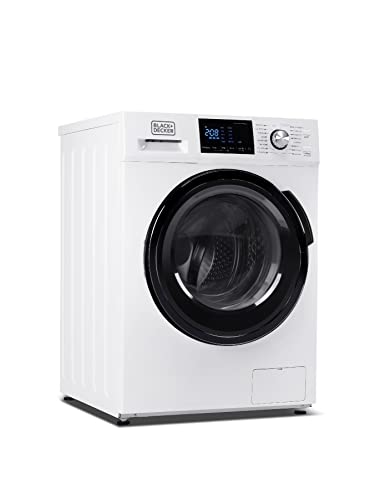
If upfront cost and plug-and-play convenience are most important, BLACK+DECKER’s 2.7 cu ft combo is a practical choice. I’ve recommended similar compact combos to friends moving into temporary housing because they plug into a normal 120V outlet and remove the hassle of venting. For city dwellers on short leases, the combination of reasonable efficiency and low install fuss is a big win.
The ventless dryer is handy when a vent run is impossible, and the variety of 16 cycles allows reasonable fabric care. The unit’s stainless steel tub is durable for the size class, and the transparent lid makes it simple to check progress during a cycle. While not the most advanced energy-saving machine here, it is an efficient option versus portable washers that require repeated rinse cycles.
Pros
- Affordable and easy to install using a standard 120V outlet.
- Ventless design is flexible for apartments and condos.
- Multiple wash and dry cycles for varied fabrics.
- Stainless steel drum and user-friendly controls.
Cons
- Smaller capacity means more frequent loads for larger households.
- Drying efficiency lags behind heat pump or full-size dryers.
Buy this BLACK+DECKER combo if you need a budget-friendly, ventless machine that fits tight spaces and avoids professional installation. It is ideal for singles, couples, or seasonal housing. If long-term energy costs are the priority and you can invest more upfront, a heat pump dryer or higher-efficiency combo may save more over time.
To buy this product, click here.
8. Best Complete Top Load Pair: Midea White Top Load Washer and Dryer Pair

When a matching pair is a priority and you want a straightforward setup with included accessories, this Midea bundle is a solid option. I remember helping a homeowner install a paired washer and dryer set that came with hoses and a vent kit, which saved a weekend of shopping and callbacks. The top load washer is tuned for water-saving cycles, and the dryer has multiple temperature settings to avoid unnecessary high-heat drying.
The pair includes necessary setup accessories so you avoid mismatched parts and surprise installation costs. A high-efficiency top loader can use less water per load compared with older models, and coupled with sensor drying or careful cycle selection on the dryer, it becomes an efficient everyday system for busy households.
Pros
- Complete bundle includes hoses, vent and power cable for fast setup.
- Top load washer engineered for water and energy efficiency.
- Dryer capacity suitable for bedding and larger loads.
- Quiet performance and vibration reduction for apartment-friendly use.
Cons
- Top loaders typically leave clothes slightly wetter than high-spin front loaders.
- Not a heat pump dryer, so long-term dryer energy use will be higher than heat pump options.
This Midea pair is a dependable choice for buyers who want a coordinated, out-of-the-box laundry solution with fewer setup headaches. It suits households that prefer top loaders for ergonomics or budget reasons. If your plan is to minimize dryer electricity over the long term, consider pairing the washer with a heat pump dryer if installation permits.
To buy this product, click here.
9. Best Large Capacity Efficient Washer: Samsung 5.0 cu. ft. Extra Large Capacity Smart Front Load Washer

For households that want fewer loads and faster cycles, Samsung’s 5.0 cu ft front loader is a compelling energy saver. Super Speed Wash can finish a full load in under 30 minutes, cutting runtime and water use, while ENERGY STAR certification shows it meets higher efficiency benchmarks. I think of the busy parent who runs only a few large loads every week rather than many small ones, and how that habit alone reduces per-cycle energy overhead.
Wi-Fi connectivity adds convenience for starting cycles during off-peak hours to take advantage of lower rates. The washer’s steam option helps reduce the need for hot-water intensive cycles to lift stains. Pairing this washer with an efficient dryer, ideally a heat pump model, yields the best overall energy profile for large households.
Pros
- Large 5.0 cu ft capacity reduces the number of weekly loads.
- Super Speed Wash and ENERGY STAR efficiency lower runtime and water use.
- Wi-Fi connectivity for remote monitoring and off-peak scheduling.
- Steam cycles improve stain removal with less hot water.
Cons
- Large front-loaders require more space and can be heavier to move.
- Best energy results require pairing with an efficient dryer like a heat pump model.
This Samsung front loader is ideal for families who want to cut total laundry frequency and take advantage of faster, efficient cycles. It performs best when matched with a high-efficiency dryer to avoid losing gains at the drying stage. If your space is very tight, consider a compact combo instead.
To buy this product, click here.
Best Energy Saving Washer And Dryer FAQ
How much energy can I realistically save with a heat pump dryer?
Heat pump dryers typically use around 20 to 40 percent less electricity than conventional electric dryers because they recycle heat instead of discarding it. Actual savings depend on load size, frequency, and local electricity prices. If you dry large loads often, a heat pump dryer will pay back the higher purchase price faster than on light, infrequent use.
Are ventless washer-dryer combos less efficient than separate units?
Ventless combos can be less efficient in drying time compared with a vented dryer or a dedicated heat pump dryer, especially for bulky items. However, modern ventless combos with inverter motors and heat pump-style drying have narrowed the gap. They win when installation constraints make venting expensive or impossible, and they save energy by reducing transfers and over-washing.
What features most reduce energy use on washers?
Look for high spin speeds (1300–1400 RPM or higher) to extract water before drying, ENERGY STAR certification, variable water levels and soil sensors that avoid extra rinses. Cold-water wash cycles and fast, efficient wash motions also cut energy use because they reduce hot water and runtime needs.
How should I size a washer and dryer to maximize efficiency?
Buy a capacity that matches how much laundry you actually run. Oversized machines run inefficiently when filled partially, while undersized machines force more frequent cycles. For most couples, a 3.5 to 4.5 cu ft washer is practical; families of four typically benefit from 4.5 cu ft and above.
Can smart features reduce my energy bill?
Smart features like remote start, scheduling and cycle notifications let you run machines during off-peak hours, which reduces cost if your utility has time-of-use pricing. Moisture sensors and automatic cycle adjustments also prevent overdrying and unnecessary energy use.
Is front-load or top-load better for energy saving?
Front-load washers generally use less water and energy per load than traditional top-loaders because of higher spin speeds and more efficient wash motions. Modern high-efficiency top-loaders narrow the difference, but front-loaders still typically have the edge for water and energy savings.
How do I reduce dryer energy use without buying a new dryer?
Use high spin speeds on the washer to remove more water, separate heavy and light fabrics, clean the lint trap regularly, use sensor dry instead of timed dry, and avoid overdrying. Air-drying when possible and using dryer balls to improve airflow inside the drum can further reduce cycle lengths.
Are ENERGY STAR labels a reliable guide?
Yes, ENERGY STAR certification indicates a product meets EPA efficiency criteria. For washers and dryers, the label confirms the appliance is designed to use less energy and water than standard models. Pairing an ENERGY STAR washer with a heat pump dryer delivers the best practical savings.
Final Verdict
For most readers balancing space, installation limitations and long-term energy use, the best overall path is to prioritize efficient washing with a high-spin front loader and minimize dryer energy through sensor dry or a heat pump dryer. If you need a single appliance for a condo or closet, the LG 5.0 cu ft all-in-one is a premium all-in-one that blends ENERGY STAR performance with a large capacity. For the lowest dryer energy use, a dedicated heat pump model such as the Midea MLE25H7BWW delivers measurable savings and gentler drying for fabrics.
Budget-minded renters will find ventless combos like the Midea 24 Inch or the BLACK+DECKER compact unit attractive because they avoid venting work and reduce installation costs. Families who prioritize capacity and convenience should consider the Samsung or LG WashTower pairs, then pair those washers with a heat pump dryer when possible. Ultimately choose the machine that matches your load habits, available space, and whether you value lower monthly bills or the smallest possible upfront cost.