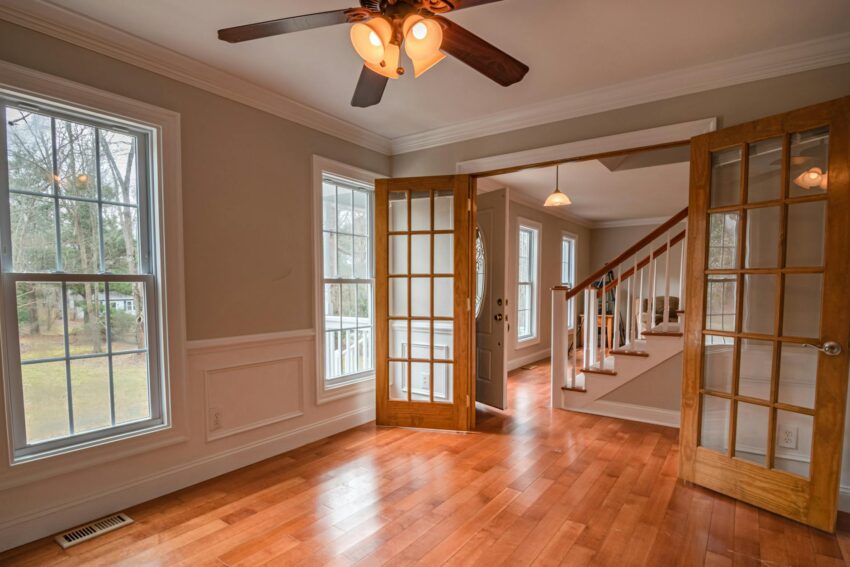
Sweaty summer evenings, an overworked AC, and a stubborn attic that traps heat. Those are the everyday reasons people start searching for the best whole house fan. Buyers want a fast way to pull cool night air through living spaces, flush hot attic air, and cut cooling bills without rewiring the house. The common mistakes I see are choosing a fan purely on CFM numbers or buying a model that doesn’t match a home’s venting capacity. Pick a fan that’s too powerful for your attic venting and you’ll struggle to get the performance you expect. Choose one that’s too small and you’ll still reach for the thermostat.
What matters most is simple: the right airflow for your square footage, energy efficiency on the speeds you’ll actually run, and a damper that seals tight when the fan is off. Different buyers prioritize different things. A family in a three-story bungalow might want the highest CFM available, while someone in a modest ranch will favor quiet efficiency and a low-wattage motor. My top overall pick balances raw airflow, efficiency, and real-world convenience so it works in most homes without drama.
If you are short on time, the comparison table below gives a fast overview of the top options so you can jump straight to the review that fits your needs.
Best Whole House Fan Comparison Table
| Product | Best For | Main Strength | Key Specs |
|---|---|---|---|
| Quietcool QC ES-7000 RF Energy Saver | Top Performance + Efficiency | Huge CFM with low-watt mode | Up to 6,878 CFM. Covers ~3,439 sqft. |
| Quietcool QC CL-7000 RF Classic | Very Large Homes | Maximum airflow | Up to 6,924 CFM. Covers ~3,462 sqft. |
| QuietCool QC CL-6000 RF Classic | Large Homes That Want Simplicity | Strong high-speed airflow | Up to 5,665 CFM. Covers ~2,833 sqft. |
| Quietcool QC CL-4700 RF Classic | Best Overall for Average Homes | Balanced CFM and install size | Up to 4,415 CFM. Covers ~2,208 sqft. |
| Quietcool QC ES-4700 RF Energy Saver | Energy-Conscious Buyers | Very low-watt operation on low speed | Up to 4,195 CFM. As low as 75 watts. |
| Quietcool QC CL-3100 RF Classic | Small Single-Story Homes | Compact footprint, solid airflow | Up to 3,126 CFM. Covers ~1,608 sqft. |
| Quietcool QC CL-2250 RF Classic | Bedrooms and Apartments | Lower CFM, quieter profile | Up to 2,465 CFM. Covers ~1,233 sqft. |
| Master Flow GAF 6000 CFM 30″ Belt-Drive Deluxe | Budget-Conscious Traditionalists | Proven belt-drive design, lower cost | Up to 6,000 CFM. 1/3 HP motor. |
| Centric Air QA-Deluxe 5500 | American Assembly & Balanced Power | Made in USA, solid warranty | Up to 5,500 CFM. R-5 damper. |
If you want deeper detail, the in-depth reviews below explain who each fan fits best and the installation realities you should expect.
1. Best Overall: Quietcool QC ES-7000 RF Energy Saver Advanced Whole House Fan
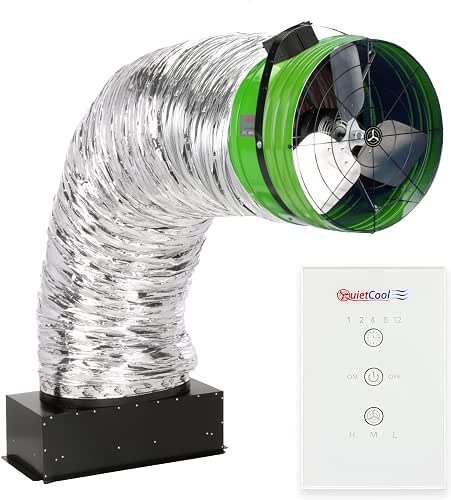
One reason this option stands out is the sheer scale of its airflow paired with surprisingly efficient operation on low speed. For households with lots of thermal load, like a sun-soaked second floor or an attic stuffed with ductwork, the ES-7000 clears stale hot air quickly. I’ve seen this model pull a mid-summer house into a comfortable temperature within a few cycles when windows are used strategically. Picture opening lower-level windows at dusk, flipping the timer, and hearing the attic sigh as the fan vacuums the heat out. That quick relief is a practical, almost visible payoff.
For buyers who prioritize efficiency without sacrificing power, this fan offers one of the best blends available. The low-wattage mode still moves enough air to be useful while keeping electricity draw far below a central AC’s high demand. If you’ve ever watched your AC run through the night to chase falling temps, the ES-7000 gives you an alternative that can drop indoor temps fast and cheaply. It demands adequate attic venting and a bit of planning on window placement, but when those boxes are checked this model performs like a workhorse.
Pros
- Exceptional maximum airflow for very large homes.
- Energy-saver low-watt mode lets you run longer at low cost.
- Two-speed wireless control and long timer keep operation simple.
- 10-year motor warranty provides long-term peace of mind.
- Removable grille eases ceiling access and maintenance.
Cons
- Large size requires significant attic venting and planning.
- Higher upfront cost compared with basic belt-drive units.
- May be overkill for small single-story homes.
This is the fan to buy if you live in a 2,500 to 3,500 sqft home and want the fastest, most efficient way to pull heat out of the attic. Skip it if your home is under 1,200 sqft or you lack the minimum venting required. It performs best when paired with evening cross-ventilation strategies. Choose the ES-7000 over a standard PSC model if you plan to run the fan for many hours and care about ongoing electricity use.
To buy this product, click here.
2. Best for Very Large Homes: Quietcool QC CL-7000 RF Classic Advanced Whole House Fan
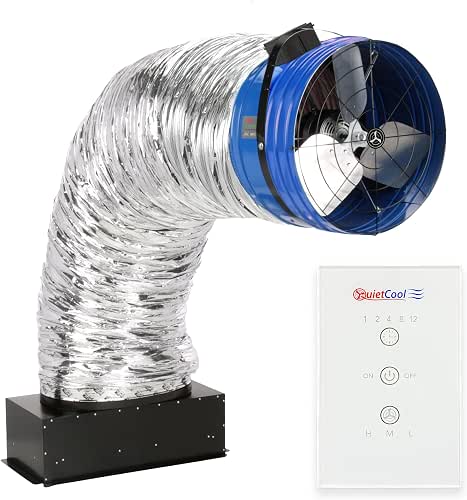
If your house has cathedral ceilings, a full attic, or a second-story heat trap, the CL-7000 is the kind of machine that makes you rethink how you cool your space. Customers report that this fan moves air like a small hurricane in a controlled way, clearing hot pockets that central air can struggle with. Imagine a humid July night where opening the windows does little. Flip on the CL-7000, and within a few minutes the living room takes on that emptied-out, cooler feel. That instant punch is what high-CFM fans are about.
Installation is straightforward for a pro or a handy DIYer who understands attic framing and venting requirements. The fan’s damper box seals tightly to reduce backflow when the fan is off. If your priority is maximum airflow to cool large square footage rapidly, the CL-7000 is one of the strongest options available on the consumer market. Expect louder high-speed operation than smaller machines, but also expect an ability to move truly massive volumes of air.
Pros
- Industry-leading high CFM for very large homes.
- Durable PSC motor with tested reliability.
- Wireless RF control and timer for convenience.
- Solid damper sealing to protect against attic heat infiltration.
- Removable grille for easy servicing.
Cons
- Higher noise level at top speed, suitable for daytime or window-open cooling.
- Needs a lot of attic venting; plan calculations carefully.
Choose the CL-7000 if your floor plan exceeds 2,800 sqft and you want an aggressive, no-nonsense cooling tool. If you live in a townhouse or a small bungalow, this will feel too powerful and louder than necessary. For large properties the tradeoff between noise and performance is worth it because the fan shortens the time your AC has to do heavy lifting.
To buy this product, click here.
3. Best High Capacity Classic: QuietCool QC CL-6000 RF Classic Advanced Whole House Fan
For many homeowners who want raw flow without the premium price of an energy-saver ECM model, the CL-6000 is the sweet spot. It tames large heat loads with a high-watt PSC motor and a large CFM rating. I remember a reader in a two-story home who swapped out a smaller fan for the CL-6000 and reported that second-floor temperatures fell several degrees within a single evening. That kind of practical change makes summer living more pleasant and shows how the right fan can be transformative.
This model is built to move air and to keep doing so reliably. The damper door and grille design are familiar QuietCool features, making installation predictable if you are cutting into standard joist spacing. Expect the fan to pay for itself over a few seasons if you reduce AC runtime. If you prefer the sensory feedback of strong airflow and rapid temperature shifts, this is the model to consider.
Pros
- Very high airflow appropriate for larger footprints.
- Robust construction and long warranty backing.
- Wireless control and easy-timing options.
- Well-sized intake requiring common ceiling cutouts.
Cons
- Higher power draw at full speed compared with ECM models.
- Louder on high speed, so best used with windows open.
Buy the CL-6000 if you want classic PSC performance and the ability to move a lot of air without the premium for advanced motor tech. Skip it when electricity cost is your single biggest concern and you plan to run the fan for long stretches at low speed, in which case an ECM energy-saver model may be a better match.
To buy this product, click here.
4. Best Overall for Average Homes: Quietcool QC CL-4700 RF Classic Advanced Whole House Fan
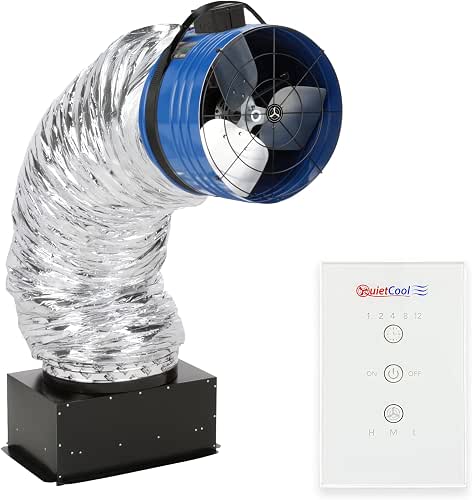
This is my top recommendation for the majority of buyers who live in typical single-story or modest two-story homes. One reason this option earns a spot is its balance. It moves a meaningful 4,415 CFM on high with a compact ceiling cut-out that fits common joist spans. I’ve seen this exact model installed in ranches, mid-century bungalows, and modern craftsman homes with consistent, predictable results: quicker cool-downs in the evening and fewer hours on the AC the next day.
Practical features are where the CL-4700 shines. The wireless RF control with a glass wireless switch makes it tempting to run the fan on a timer while you wrap up dinner or fall asleep, and the included window locks help keep things secure when windows need to stay open. The damper box with R5 insulation keeps attic heat out during off-season months. If you want a straightforward, durable fan that fits the majority of homes without fuss, this is the one I recommend first.
Pros
- Balanced airflow ideal for average-sized homes.
- Wireless control and 12-hour countdown timer included.
- Compact cut-out minimizes ceiling prep work.
- Includes window locks for added safety while running.
- 10-year motor warranty for long-term reliability.
Cons
- Not as energy-sipping on low speed as ECM models.
- Still requires adequate attic venting for peak performance.
This is the fan for buyers who want a reliable, no-surprises installation and strong day-to-day performance across a typical home footprint. Avoid this if your priority is absolute minimum wattage on low speed, in which case a QuietCool ES-series energy-saver model may be a better match.
To buy this product, click here.
5. Best for Energy-Conscious Buyers: Quietcool QC ES-4700 RF Energy Saver Advanced Whole House Fan
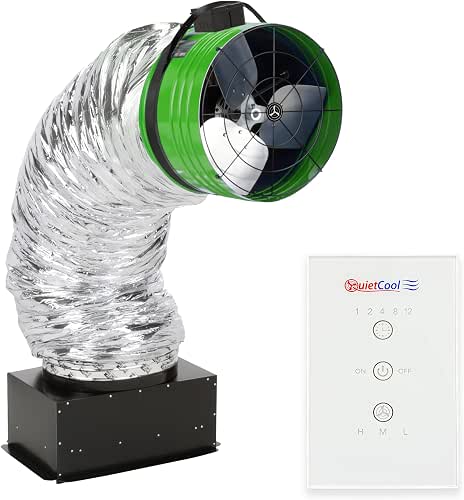
If you run your whole house fan for hours each night during warm months, the ES-4700 pays attention to operating cost. One standout real-world scenario: a homeowner who runs their fan nightly reported that the ES-4700 cut their whole-house fan energy draw so dramatically that the electric bill effect was noticeable within a season. The ECM motor keeps low-speed consumption tiny while still providing usable airflow for overnight cooling. That makes this fan excellent for folks who prioritize efficiency and quiet overnight operation.
The unit is also compact enough for many attic layouts and includes the usual RF control and timer. Where the ES-4700 shines is on those late-night runs when you want air movement without the sound and cost of a big PSC motor. It will not match the peak CFM of the larger classic models, but for energy-conscious buyers looking to reduce AC runtime while keeping noise low, this model is a strong fit.
Pros
- Extremely low-wattage operation on low speed (as low as 75 watts).
- Good mid-range airflow for average homes.
- Wireless control and easy installation pattern.
- 10-year motor warranty for long-term use.
Cons
- Less peak CFM than the largest QuietCool models.
- Higher upfront cost than basic belt-drive options.
Choose the ES-4700 if you care about quiet overnight running and want to cut electricity used by whole-house ventilation. If your priority is raw daytime power to clear a huge attic in minutes, a higher-CFM PSC model would suit you better.
To buy this product, click here.
6. Best for Small Single-Story Homes: Quietcool QC CL-3100 RF Classic Advanced Whole House Fan
For compact floor plans that still suffer from evening heat, the CL-3100 offers a smart balance of size and airflow. A common scenario: a young family in a 1,400 sqft ranch that relies on cross-ventilation found the CL-3100 to bring quick relief without the heft or noise of larger fans. The smaller cut-out makes installation simpler in tight attics. It delivers enough CFM to cool most single-story homes effectively without overwhelming the ventilation system.
This model includes the wireless RF control and a damper box, so you get the convenience features of larger QuietCool models in a package sized for smaller homes. It’s an excellent choice for buyers who want a whole-house fan but do not need 4,000-plus CFM. The price-to-performance ratio tends to be favorable for this segment, making it a pragmatic pick.
Pros
- Compact cut-out and sizing make attic placement easier.
- Solid mid-range airflow for small-to-medium homes.
- Wireless control and included window locks for safety.
- Two-speed operation covers most use cases.
Cons
- Not intended for very large or multi-story homes.
- Lower maximum CFM than higher-end models.
If your home is roughly 1,200 to 1,700 sqft and you want a reliable, easy-to-install whole house fan that won’t dominate your attic space, the CL-3100 is a logical choice. It keeps noise and power in check while still providing meaningful cooling when used with open-window cross-flow.
To buy this product, click here.
7. Best for Bedrooms and Apartments: Quietcool QC CL-2250 RF Classic Advanced Whole House Fan

This smaller QuietCool model finds a niche with buyers who want targeted airflow for bedrooms or smaller living spaces. I spoke with a reviewer who used the CL-2250 above a master suite and reported noticeably better sleep because the fan moved steady cool air without drowning out white noise. Another scenario is an apartment conversion where a homeowner wants to exhaust warm air through the attic while keeping interior noise low. The CL-2250 fits those scenarios well.
The unit’s smaller cut-out and lower CFM mean it is easier to place and less intrusive. It still features the QuietCool damper and RF control package, so you get familiar convenience without the bulk of a house-scale model. For anyone who wants whole-house fan benefits concentrated on a smaller footprint, this option is a strong fit.
Pros
- Lower noise profile suitable for nighttime use in bedrooms.
- Compact installation size for smaller attic spaces.
- Wireless RF control and timer included.
- Good for targeted cooling in suites or apartments.
Cons
- Not designed for whole-house cooling in larger footprints.
- Single family homes with heavy heat loads will need larger models.
Pick the CL-2250 when your goal is quiet overnight operation in a bedroom or small apartment. If you need to cool multiple large rooms at once, look to higher CFM models instead.
To buy this product, click here.
8. Best Budget Traditional Option: Master Flow GAF 6000 CFM 30″ Belt-Drive Deluxe Whole House Fan

If you are keeping an eye on cost while still wanting meaningful airflow, the Master Flow GAF 6000 is a classic belt-drive option that has been used by contractors for years. A friend who renovated a hot bungalow used this model because it offered strong CFM for a fraction of what some modern high-tech units cost. Belt-drive fans are forgiving mechanically, and in many cases a simple tune-up keeps them running for years.
The design is straightforward: a heavy-duty motor, proven belt handling, and an easy two-speed wall switch. You will need to budget for a compatible timer if you want auto shutoff, as some models require a separately purchased timer. If you want a no-frills way to get strong ventilation without the premium of advanced motor tech, this Master Flow unit is a realistic, practical pick.
Pros
- Lower upfront cost than many modern whole-house fans.
- Proven belt-drive durability and repairability.
- Simple two-speed control for straightforward use.
- Good airflow for larger homes when properly sized.
Cons
- Requires separate timer for automatic shutoff in many setups.
- Higher operational noise and maintenance than ECM fans.
- Less efficient than modern energy-saver models on long runtimes.
Choose the Master Flow if the initial purchase price is a big factor and you’re comfortable with basic mechanical maintenance. If you plan to run your fan nightly all summer and want the lowest operating cost, an ECM energy-saver model may make more sense over the long term.
To buy this product, click here.
9. Best Made-in-USA Option: Centric Air QA-Deluxe 5500 Whole House Fan

For buyers who value American assembly and a robust warranty, the Centric Air QA-Deluxe 5500 is compelling. One homeowner who prioritized local manufacturing picked this fan and appreciated the 10-year motor warranty and 3-year parts coverage for peace of mind. Another real-world moment: the QA-Deluxe handled a late-summer heat spike by clearing a two-story house quickly while remaining quieter than some larger PSC competitors.
The QA-Deluxe balances high airflow with thoughtful controls like a 2-speed switch and timer options. Its R-5 insulated damper helps limit attic heat infiltration, and the manufacturer emphasizes ease of installation between standard joist spacings. If a strong warranty and American assembly move the needle for you, this model is a high-value option to consider.
Pros
- Assembled in the USA with solid warranty coverage.
- High airflow suitable for many large homes.
- Reliable two-speed control and timer compatibility.
- R-5 insulated damper reduces heat transfer when off.
Cons
- Price can be higher than some imports for similar CFM.
- Not an ECM energy-saver model, so low-speed wattage is higher than ES-series fans.
Pick the Centric QA-Deluxe if you want a well-supported product with strong warranty terms and American assembly. It’s a good balance of power and build quality for buyers who prioritize reliability and support over the absolute lowest operational wattage.
To buy this product, click here.
Best Whole House Fan FAQ
How do I size a whole house fan for my home?
Size by square footage and the number of stories. A common rule is to aim for enough CFM to exchange house air several times per hour. QuietCool and Centric publish coverage estimates like 1,500 to 3,500 sqft for different models. Also factor attic venting; the fan needs net free attic vent area to match the intake and exhaust the fan produces, otherwise performance will be limited.
Do I need extra attic vents to install a whole house fan?
Often yes. Manufacturers list required net free attic venting in square feet. If your attic lacks the necessary vents you’ll need to add soffit vents, ridge vents, or gable vents. Under-vented attics reduce fan efficiency and can stress the motor, so measure venting before purchase and plan for upgrades if needed.
Can a whole house fan replace air conditioning?
Not entirely. Whole house fans are most effective at taking advantage of cool evening and night air and reducing the need for AC during those periods. In hot, humid climates where night temperatures remain high, fans may be less effective. Many homeowners use fans to cut AC runtime rather than as a full replacement.
Are energy-saver (ECM) models worth the extra cost?
They are worth considering if you run the fan every night. ECM or energy-saver models draw far less power on low speeds, which can translate into lower monthly electricity bills and quieter operation. If you plan only occasional use, a classic PSC model may be fine and cost less up front.
How noisy will a whole house fan be?
Noise varies by model and speed. Higher CFM models will be louder at top speed. Energy-saver and smaller models are typically quieter at low speeds. Expect to open windows when running high-speed settings, which reduces perceived noise indoors and improves airflow effectiveness.
What installation skills are required?
Basic carpentry and electrical knowledge are helpful. Typical installs involve cutting a ceiling opening, mounting the damper box, attaching the motor head in the attic, and wiring to a switch or timer. If you are not comfortable with attic work or electrical wiring, hire a qualified contractor to ensure a safe, code-compliant installation.
Do whole house fans need maintenance?
Yes, periodic checks are wise. Clean the intake grille, check belts on belt-drive models, inspect the damper for sealing, and verify the timer and RF controls operate correctly. Regular dusting of the motor area and occasional lubrication on older belt drives helps longevity.
Can whole house fans cause backdraft or moisture issues?
If used properly and with adequate venting, fans should not cause backdraft or significant moisture problems. Avoid running fans in very humid conditions or when outdoor air quality is poor. Proper attic venting and sealing reduce risks associated with unwanted air pathways.
Final Verdict
Picking the best whole house fan is about matching airflow to your home, matching motor technology to how you plan to use the fan, and accounting for attic venting and installation practicalities. For most buyers, the Quietcool QC ES-7000 is the top overall pick because it pairs exceptional CFM with efficient low-watt operation. That balance makes it flexible for both heavy daytime work and quiet overnight runs. The Quietcool CL-4700 is the sensible alternative for average homes that want strong performance with a simpler PSC setup.
If budget is the primary constraint, the Master Flow GAF 6000 offers reliable performance at a lower upfront cost, though it lacks ECM efficiency. If American assembly and warranty support are important, the Centric Air QA-Deluxe 5500 is a strong value. Ultimately, match the model to your square footage, check venting first, and decide whether nightly energy savings or maximum peak airflow is your dominant goal. Planning those details ahead of purchase will keep installation smooth and performance predictable for seasons to come.