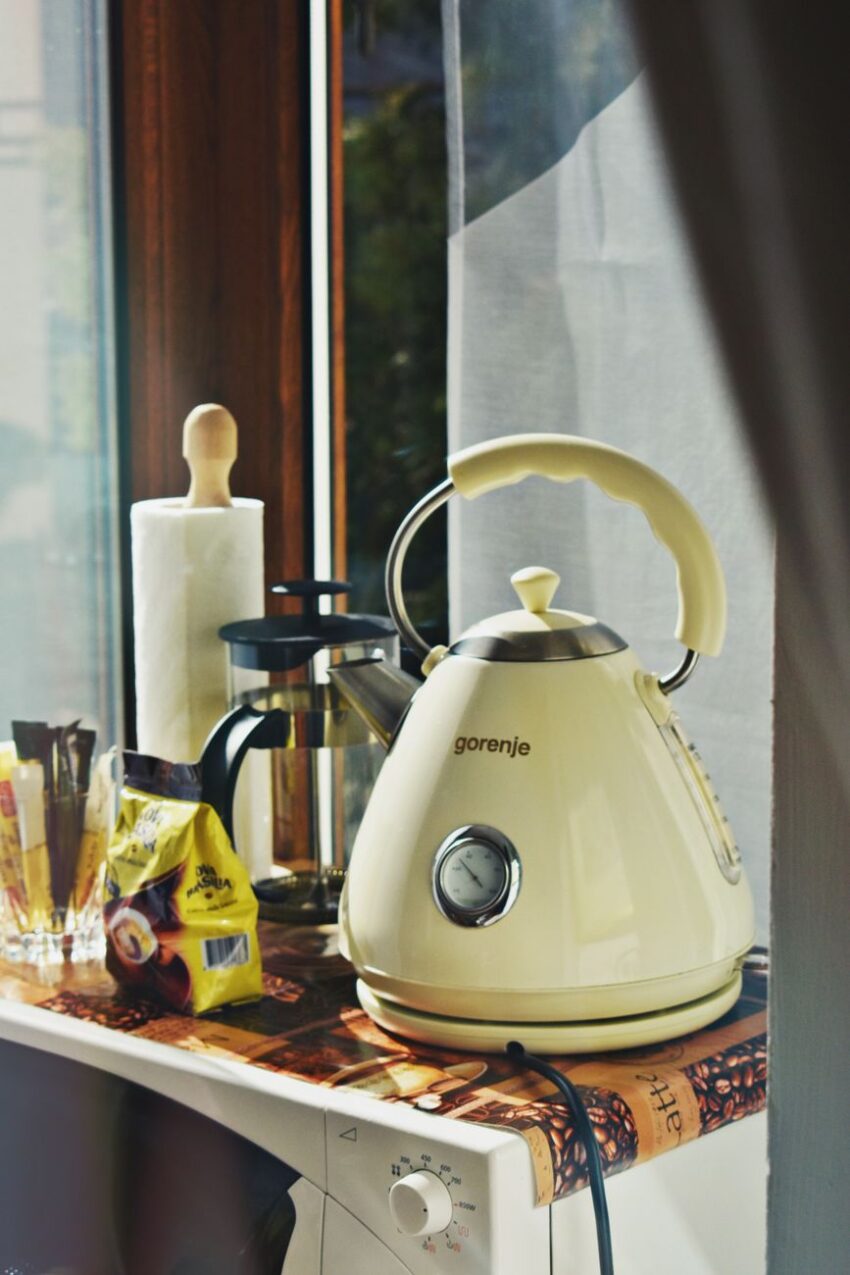
Many people only notice how much electricity their small kitchen appliances use after comparing a utility bill or trying to cut back on everyday running costs. A common question is simple enough: is an electric kettle cheaper than a microwave for heating water or making a quick drink?
The short answer is usually yes, but the full picture depends on what you are heating, how much water you use, and how efficiently each appliance does the job. For a mug of tea, coffee, instant soup, or hot water for cooking, an electric kettle is often the more efficient choice. A microwave can still be useful, though. It is not always the loser in every situation, especially if you are heating a small amount of water in a microwave-safe cup or reheating liquid you already have.
If you are trying to save electricity without changing your whole kitchen routine, this comparison is worth understanding. The difference is not huge in the way that switching off a space heater would be, but it can add up over time, especially in a busy household where hot drinks, instant meals, and quick reheats happen every day.
Is an electric kettle cheaper than a microwave?
In most real-world cases, an electric kettle is cheaper than a microwave for heating water. That is mainly because kettles are designed to transfer heat directly into water with very little waste. They heat quickly, shut off automatically, and spend most of their energy doing one specific task well.
A microwave heats water differently. It sends energy into the water molecules, but the process is less direct. Some energy is lost into the container, the air inside the microwave cavity, and the appliance itself. Microwaves are versatile, but they are not especially efficient at boiling water compared with a decent electric kettle.
The difference in cost is usually small per use. We are talking about fractions of a penny to a few cents per cup in many places, depending on local electricity rates. Still, if you heat water several times a day, the more efficient appliance can be the cheaper one over the course of a year.
Why kettles usually use less electricity
The main reason kettles tend to win is simple design. A kettle is built to heat water directly. A microwave is built to heat many different foods and liquids, which means it is a compromise appliance.
Direct heating versus indirect heating
An electric kettle has a heating element in the base, and most of the electrical energy goes straight into the water. The kettle body is also shaped to hold heat in a fairly controlled way. Many modern kettles are fairly efficient at bringing water to a boil in just a few minutes.
A microwave, by contrast, heats the water container and the surrounding cavity as part of the process. If you use a large mug or bowl, a fair amount of the energy goes into warming that container too. Some microwaves are efficient enough for small jobs, but they still have more overhead than a kettle.
Speed matters
For most people, speed is part of efficiency. A kettle can boil water quickly, which means it is running for a shorter time. A microwave may take longer to heat the same amount of water, especially if you are careful and stop it before the water erupts or overheats.
That shorter runtime is one reason kettles are usually cheaper to operate. They do the job in less time and with less waste.
Typical electricity use for kettles and microwaves
Power ratings vary by model, but the numbers below are useful as a general guide.
| Appliance | Typical power draw | What that means in practice |
|---|---|---|
| Electric kettle | 1,500 to 3,000 watts | Heats water very quickly, often in 2 to 5 minutes |
| Microwave | 700 to 1,200 watts output, often 1,000 to 1,700 watts input | Can heat water or food, but usually takes longer for boiling water |
That table can be misleading if you look only at watts. A kettle may draw more power at once, but it runs for a shorter period. A microwave often uses less power per minute, yet it may take longer and waste more energy in the process.
For cost, what matters is energy used, measured in kilowatt-hours, not just the wattage printed on the label.
A simple example
Suppose you heat a mug of water for tea once or twice a day. An electric kettle might use roughly 0.03 to 0.06 kWh per boil, depending on how much water you heat and how efficient the kettle is. A microwave might use something in the same neighborhood or slightly more, especially if the mug is large and the heating time is longer.
If your electricity costs 30 cents per kWh, a kettle boil might cost around 1 cent or less in many cases, while a microwave could be similar or a little higher. That sounds tiny, and it is. But a household that does this several times a day can still see the difference over months.
What actually affects the cost
The answer to is an electric kettle cheaper than a microwave is not just about the appliance itself. Several practical details change the result.
How much water you heat
The bigger the amount of water, the more energy it takes. Heating one mug is very different from filling a large bowl. A kettle usually handles larger volumes more efficiently because it is designed for that task. A microwave becomes less attractive as the amount grows, especially if you need the water close to boiling.
The shape of the container
A wide bowl in a microwave behaves differently from a narrow mug. More surface area can mean more heat loss. A kettle has a more controlled shape, so less heat escapes during the process.
Heat retention
If the appliance or container loses heat quickly, it has to keep working longer. Kettles are generally better insulated for boiling water than a random mug in a microwave.
Your local electricity rate
Electricity prices vary a lot. A small difference in energy use matters more in places with high rates. If your power is cheap, the savings are smaller, but the kettle is still often the more efficient pick.
How often you use it
Once a week is not the same as five times a day. Daily use is where efficiency differences start to matter in a noticeable way.
Electric kettle versus microwave for common household tasks
It helps to compare the two appliances based on real jobs people actually do in the kitchen.
| Task | Better choice | Why |
|---|---|---|
| Boiling water for tea | Electric kettle | Faster, more efficient, and easier to control |
| Heating water for instant coffee | Electric kettle | Usually cheaper and more convenient |
| Warming soup in a bowl | Microwave | Microwave is better suited to reheating food |
| Heating one small cup of water | Depends | Microwave can be close, but kettle still often wins on efficiency |
| Making hot water for porridge or noodles | Electric kettle | Usually faster and less wasteful |
| Reheating a mug of tea or coffee | Microwave | Convenient if the liquid is already in a microwave-safe cup |
The biggest mistake people make is treating the microwave like a substitute kettle for every hot-water job. It can work, but it is not always the best tool.
How much does it cost to boil water?
Here is a practical way to think about it.
Say you heat about 500 ml of water, which is enough for two mugs of tea or a small pot. A reasonably efficient kettle may use around 0.04 to 0.07 kWh for that amount, depending on the starting water temperature and the kettle design. At 30 cents per kWh, that is roughly 1 to 2 cents.
A microwave heating the same amount may come out close in some cases, but it often uses a little more energy because it is less targeted. If it takes longer or you overheat the water to avoid underheating, the cost rises a bit more.
For a single cup, the difference may be too small to worry about. But if you make several drinks a day, use hot water for quick meals, or have a family who constantly boils water, the kettle usually keeps the bill a bit lower.
Example of yearly use
Imagine a household that heats water 4 times a day for drinks and instant food.
- If a kettle saves even a fraction of a cent per use, the yearly difference is modest.
- If the microwave is used inefficiently or with extra reheating, the gap gets larger.
- Over a year, the savings might be a few dollars to maybe around ten dollars or more for a heavy user.
That is not life-changing money, but it is enough to matter if you are trying to trim every unnecessary watt. It also matters more in homes where lots of small appliances are used constantly.
Why the microwave still has a place
It would be a mistake to treat this as a straight victory for the kettle in every situation. Microwaves are still useful, and they often make more sense for food than for plain water.
Microwaves are better for reheating food
If you are warming leftovers, soup, or a mug meal, the microwave is usually the right choice. An electric kettle cannot do that job. So the comparison only really applies to heating water or other liquids.
They are useful if you do not want another appliance on the counter
Some kitchens are short on space. In a small apartment, adding a kettle may not be worth it if you rarely heat water separately. If you already own a microwave and use it only occasionally for water, you may decide the convenience matters more than a small efficiency gain.
Microwaves can be practical for very small amounts
One small cup of water can sometimes be heated in the microwave fairly cheaply. If the kettle would need to heat a full minimum fill line and you only want a tiny amount, the microwave may be reasonable. That said, many kettles are still efficient enough at small volumes if you use them carefully.
Common mistakes that waste electricity
If you want the cheapest option, the appliance choice is only part of the story. A lot of wasted electricity comes from habits, not equipment.
Boiling more water than you need
This is the most common mistake. People fill the kettle halfway because they are used to it, or they heat a large mug of water when they only need a small one. Extra water means extra electricity.
The same problem happens in a microwave, where people heat more liquid than they actually need and then pour some away.
Reboiling water repeatedly
If water is already hot, reheating it over and over wastes energy. It is better to pour only what you need, or use a thermos if you know you will want more later.
Using an oversized kettle for tiny amounts
Some kettles are great for family kitchens but less ideal for a single person who usually wants one mug. If the kettle has a high minimum fill line, you may end up heating more water than necessary. In that case, the microwave can be competitive for very small amounts, though not always better.
Leaving the kettle on the base too long
Modern kettles switch off automatically, but older models or bad habits can still waste energy. If you keep pressing the boil button again or forget it on the base with the warming function active, you are spending more than you need to.
Using the microwave with the wrong container
A thick ceramic mug or a wide bowl can absorb more heat than a simple container. That does not make the microwave unusable, but it can make it less efficient. Also, some people overheat water in the microwave and then let it sit, which can be both wasteful and risky.
Safety matters too
Energy cost is only part of the decision. Safety and convenience are worth considering, especially if you have children, limited mobility, or a busy household.
Why kettles feel easier
An electric kettle is straightforward. Fill it, switch it on, wait for the click, and pour. You can see what is happening. That makes it easier to use correctly and harder to overdo it.
Microwaves need more care with water
Heating plain water in a microwave can sometimes lead to superheated water, which means it can appear calm and then suddenly bubble over when disturbed. That does not happen every time, but it is a reason many people prefer a kettle for boiling water.
In practical terms, a kettle is usually the safer and more predictable option for hot drinks and quick water heating.
Which appliance is more energy efficient overall?
If you look at the whole picture, the answer is usually that the electric kettle is more energy efficient for boiling water, while the microwave is more versatile for reheating food.
That does not mean every kettle is excellent and every microwave is wasteful. A cheap kettle with poor insulation and a large minimum fill line can lose some of its advantage. A very efficient microwave used carefully for a small volume may come close in certain cases. But as a general rule, if your goal is to heat water as cheaply and efficiently as possible, the kettle usually wins.
What about induction or stovetop boiling?
Some readers compare a kettle to a stove, not just a microwave. In that broader comparison, an electric kettle often beats a gas stove for speed and efficiency, and it can be comparable to or better than electric stovetop heating for small water jobs. If you are only making hot drinks, the kettle is hard to beat.
How to make either option cheaper to use
There are a few simple habits that cut waste no matter which appliance you use.
Heat only what you need
This is the single most effective habit. If you need one mug, heat one mug. If you need two, do two. Avoid the habit of filling a kettle to the top just because that is what you always do.
Use a lid or closed container where appropriate
Keeping heat contained helps. A kettle is designed for this. In a microwave, using a suitable covered container can reduce splatter and help heat more evenly, though you need to follow microwave safety guidelines and leave a vent if the container requires it.
Match the tool to the task
Use the kettle for water and the microwave for reheating food. That division of labor usually keeps total electricity use lower and reduces frustration.
Keep appliances clean
Scale buildup in kettles can make them work harder and take longer. A kettle with mineral deposits does not just look bad. It can become less efficient over time. Cleaning it periodically with a descaling method suited to the appliance can help it run properly.
Don’t keep hot water sitting around
If you boil a full kettle and let it sit for a long time, the heat you paid for slowly escapes. If you know you will not use it right away, consider heating less water next time.
Pros and cons: electric kettle versus microwave
Electric kettle pros
- Usually cheaper to run for boiling water
- Fast and easy for tea, coffee, and instant meals
- Designed for the job, so there is less wasted energy
- Often safer and more predictable for boiling water
Electric kettle cons
- Only useful for water and a few related tasks
- Takes up counter or storage space
- Can waste energy if you boil more than needed
- Cheap models can have poor insulation or a high minimum fill line
Microwave pros
- Very versatile for reheating food
- Already present in many kitchens
- Can heat a small mug of water without needing another appliance
- Useful when counter space is limited
Microwave cons
- Usually less efficient for boiling water
- Can heat unevenly
- Less convenient for pouring and precise hot-water use
- Not the best tool for every liquid-heating task
Myths about kettles and microwaves
There are a few common assumptions that do not always hold up well.
Myth 1: The microwave always uses less electricity because it runs at a lower wattage
Not necessarily. A lower wattage does not automatically mean a lower bill. If the microwave takes longer to do the job or wastes more heat, it may use just as much or more energy overall.
Myth 2: A kettle is always the cheapest appliance in the kitchen
Only for water-related tasks. If you are reheating leftovers, the microwave is usually the better choice. The cheapest appliance is the one designed for the job you actually need.
Myth 3: Small appliances do not matter
One use is tiny, yes. But repeated daily habits do matter. If you make drinks, instant oats, or quick soups every day, the difference becomes more noticeable over time.
Myth 4: Boiling water in a microwave is a normal replacement for a kettle
It can be done, but it is not always the most practical or safest approach. Many people find kettles easier, faster, and more consistent.
What type of user benefits most from a kettle?
An electric kettle makes the most sense if you:
- Drink tea or coffee every day
- Use instant oats, noodles, or soup often
- Want a fast, low-effort way to heat water
- Prefer a safer and more predictable appliance for boiling water
- Are trying to keep small electricity costs as low as possible
It is especially practical in homes where several people are making hot drinks throughout the day. In that setting, the kettle becomes a real utility saver, even if the individual savings are modest.
What type of user may be fine with a microwave?
A microwave can be the better fit if you:
- Rarely need hot water on its own
- Live in a very small kitchen and want to avoid extra appliances
- Mostly reheat food instead of boiling water
- Only heat a small mug of liquid occasionally
If that sounds like your routine, buying a kettle solely for occasional tea may not make much sense. The best energy-saving choice is not always the appliance with the lowest theoretical cost. It is the one you will actually use correctly.
FAQ: electric kettle versus microwave
Is an electric kettle cheaper than a microwave for boiling water?
Usually yes. Electric kettles are generally more efficient for boiling water because they are built specifically for that job.
Is a microwave cheaper for heating one cup of water?
Sometimes the difference is small enough that either could be close in cost. Even so, a kettle usually remains the more efficient and convenient choice.
Does a kettle use a lot of electricity?
Not usually for normal use. Kettles draw a fair amount of power briefly, but they shut off quickly. The cost per boil is typically low.
Is it safe to boil water in a microwave?
It can be done carefully, but it is less straightforward than using a kettle. There is also a risk of superheated water in some cases, so many people prefer a kettle for water heating.
What is the cheapest way to heat water at home?
For most people, an efficient electric kettle is one of the cheapest and simplest ways to heat water for drinks or quick meals. The exact cost depends on your electricity rate and how much water you heat each time.
Bottom line for everyday households
If your main question is is an electric kettle cheaper than a microwave, the practical answer is that the kettle usually wins for boiling water. It is faster, more direct, and generally more efficient for tea, coffee, instant meals, and other hot-water tasks.
The microwave still makes sense for reheating food and for occasional small jobs, especially in a compact kitchen where you do not want another appliance. But if you heat water regularly and care about trimming small energy costs, a kettle is usually the smarter buy and the better habit. Just keep fills sensible, match the appliance to the task, and you will get the best value from either one.