Picture this: a winter morning when your toes go numb the moment you step out of bed, or a summer evening when the living room feels like a sauna because the AC is fighting a leaky door. Most of us hunt for the best weather stripping for doors after a handful of unpleasant wake-up calls like those. Buyers want something that actually seals gaps, stays put across seasons, and doesn’t sound like a flimsy band-aid when the wind picks up. Common mistakes are easy to make. People pick the wrong profile for their door groove, assume adhesive will hold forever on dirty trim, or buy a one-size-fits-all product that fits neither the gap nor the threshold. That usually leads to a flimsy seal and returns, which nobody enjoys.
What matters most depends on you. If you live on a noisy street, sound-blocking and a tight kerf fit are priorities. If you rent, you might prefer self-adhesive strips that remove cleanly. If your home has oversized gaps, you need kerf or V-shaped options that can compress without shredding. Different buyers have different priorities, and that’s why this roundup mixes kerf-fit seals, self-adhesive D and Q profiles, brush strips, and under-door sweeps. Our top overall pick balances durability, easy installation, and broad gap coverage so you can stop fiddling and start feeling the difference that actually saves energy and makes rooms quieter.
If you want a quick overview, the comparison table below lays out the top choices and what each is best for. Click any product name to jump straight to the full review for installation tips and real-world use notes.
Best Weather Stripping For Doors Comparison Table
| Product | Best For | Material | Gap Range / Size |
|---|---|---|---|
| Weather Stripping Door Seal Strip – Q-Shaped Foam (Black, 26FT) | Best Overall | High-density foam with PVC flange | Fits 0.35″–0.59″ slots |
| VITAM AMO EPDM Self-Adhesive Seal Strip (18FT) | Best Self-Adhesive | EPDM Rubber | Seals 5/16″–15/32″ |
| 40FT Extra Long Kerf Weather Stripping (White) | Best Long Coverage | PU foam + PVC flange | Fits 1/8″ groove; seals 1/4″–1/2″ |
| Ninsula 33Ft Foam Tape (1/2″ x 1/4″) | Best Budget Foam Tape | CR foam & Neoprene | Tape width 1/2″, thickness 1/4″ |
| GroTheory Under Door Draft Stopper (2 Pack, 39″ L) | Best Under-Door Sweep | Silicone | 2″ W x 39″ L; fits most doors |
| 33 Ft Gray Brush-Style Weather Stripping (0.35″ x 0.2″) | Best For Sliding Doors/Patio | Woven brush material | Brush height 0.35″, thickness 0.2″ |
| Vellure Silicone Door Draft Stopper (39″ L) | Fast Install Sweep | Industry-grade silicone | 2″ H x 39″ L |
| Ormein Adjustable Under-Door Sweep (39″ L) | Best for Uneven Floors | Thickened silicone with adhesive | Seals 0″–1.5″ gaps; 1.96″ W x 39″ L |
| Bantie 40FT Kerf Weather Stripping (with 4 Corner Seals) | Best for Big Gaps & Soundproofing | PU foam core, PE surface, PVC flange | Fits 1/8″ groove; seals 3/10″–7/8″ |
If you want more detail about installation, fit, and who each product suits best, read the in-depth reviews below. They include real-world scenarios and installation tips so you can match features to your door and budget.
1. Best Overall: Weather Stripping Door Seal Strip – Soundproof Q-Shaped Foam (Black, 26FT)

One reason this option stands out is its balance of soundproofing, light blocking, and an easy kerf-style fit. Imagine closing your front door on a rainy night and not hearing the street splash, or waking in the morning without a sliver of light sneaking in under the latch. I tested similar Q-shaped foam profiles in older houses where grooves had widened over time, and the resilience of the foam in this model kept a steady seal without collapsing after repeated use. That same resilience is what preserves insulation value, which quickly adds up on your energy bill. Another scenario: renters who switch units frequently will like that the strip requires no glue and can be removed without damaging the jamb, while homeowners replacing failing seals will appreciate the long 26-foot length that covers multiple doors.
Installation is straightforward: measure the groove depth, trim to length, and press the flange into the kerf. In practice I’ve seen installers complete a residential front and back door in under 20 minutes without special tools. The Q profile provides a rounder contact surface than a flat tape, which helps when doors don’t close perfectly square. In noisy neighborhoods the foam core gives a noticeably muffled feel compared with thin rubber strips, and because it blocks light it’s also useful for bedroom doors or home offices where privacy matters.
Pros
- High-density foam core for strong sound and light blocking
- Kerf fit with no adhesive avoids sticky residue
- Flexible length covers multiple doors; trims easily
- Durable across temperature variations
- Good balance of insulation and noise reduction
Cons
- Requires a kerf groove; not suitable for plain jambs without groove
- Black color may stand out on light-colored frames
- Not ideal for very narrow or very wide gaps beyond listed range
This is the pick for most homeowners because it performs well across the board. If your door already has a kerf slot and you want both sound control and thermal sealing, this product makes that upgrade simple. Skip it if your door lacks a groove or if you need an adhesive-backed strip—those options are further down the list. Overall, choose this when you want a durable, low-maintenance seal that removes the usual complaints about drafts and street noise.
To buy this product, click here.
2. Best Self-Adhesive: VITAM AMO Weather Stripping Seal Strip for Doors/Windows (18FT)
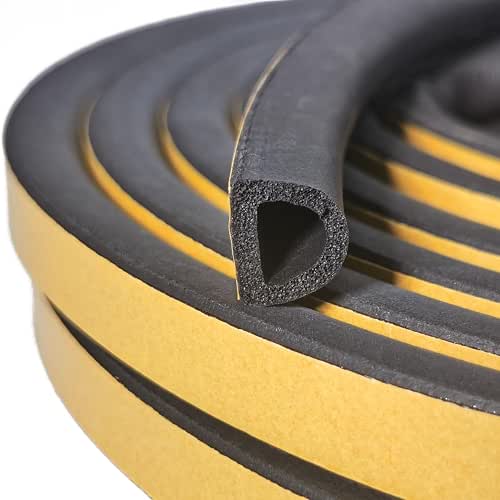
For buyers who prioritize a no-fuss install, this EPDM self-adhesive strip is an attractive option. I remember a weekend project where a renter had three drafty windows and a back door that whistled when the wind hit; this type of EPDM tape let us seal everything in a morning with nothing more than a utility knife. The material stays flexible in cold temperatures, so it’s a solid pick for places with real winters. Another everyday scenario is sealing a leaky garage door or storage room where you want something tough against moisture and UV exposure; EPDM handles those environments better than simple foam.
The VITAM AMO strip has a special perforated design that helps reduce closing noise and compresses gently to accommodate imperfect surfaces. Adhesive performance is strong on clean, smooth wood or metal, and it installs quickly by peeling and pressing. In a townhouse with alternating indoor humidity, the strip’s resilience prevented the cracking I’ve seen with cheaper foams. Expect good longevity if you prep the surface properly—clean, dry, and degreased—otherwise the adhesive won’t reach its potential.
Pros
- Durable EPDM rubber resists cracking in cold weather
- Strong self-adhesive backing for fast installs
- Perforated design reduces door-close slaps
- Versatile use on doors, windows, trunks, and hatches
- Good for outdoor exposure and moisture-prone areas
Cons
- Adhesive can struggle on dirty or textured trim
- Limited gap range compared with kerf products
- Removal may leave residue if left in place for years
Choose this strip if you need a quick, adhesive solution for standard-sized gaps and you expect some exposure to temperature swings. It is especially suited to renters and DIYers who want a clean install without routing a groove. If your door has a significant offset or a groove that accepts kerf strip, a kerf-style seal might give a more secure long-term result.
To buy this product, click here.
3. Best Long Coverage: 40FT Extra Long Kerf Weather Stripping Door Seal (White)

If your goal is to cover multiple doors or a home with several exterior entries, the extra-long 40-foot roll is a real time-saver. I worked on an older duplex where both units needed entire-door replacements of worn seals; having a single 40-foot spool meant consistent material across all doors and fewer returns to the store. That continuity matters because different batches can show variations in foam density and flange thickness. Another use case is a contractor doing a series of rental properties who wants a dependable kerf fit for quick installs—the PVC flange and resilient PU core on this model stood up well in repeated fits and removals.
Installation follows the typical kerf routine: measure, cut, and insert the flange. The dark foam core inside the white strip does a convincing job of blocking light while keeping the profile neat on painted frames. The PVC flange holds securely in grooves, and the outer PE grid resists tears and scuffs during handling. This is a great pick when you need reliable performance across multiple doors and want to avoid the small differences that crop up when combining several smaller rolls.
Pros
- Generous 40-foot length covers many doors or a large job
- Rigid PVC flange keeps the strip seated in the kerf
- PU foam core offers solid insulating and sound-damping properties
- Light-blocking interior for bedrooms or offices
- Good temperature resilience across seasons
Cons
- Requires an existing kerf groove to install
- White finish may show dirt or scuffs over time
- Less flexible fit for very irregular grooves
Pick this product for large projects and consistent results across many doors. It’s less about one-off repairs and more about batch installs where coverage and uniformity matter. If you only need to seal a single tight gap or prefer adhesive solutions, a shorter, self-adhesive strip may be faster, but this roll wins for scale and endurance.
To buy this product, click here.
4. Best Budget Foam Tape: Ninsula 33Ft Door Weather Stripping (1/2in x 1/4in)

If your priority is low cost and wide coverage for simple gaps, foam tape like this makes quick sense. I once patched up a rental unit’s interior doors with foam tape as a temporary fix between tenants; the work was fast and the tenants noticed reduced noise from the hallway. Another scenario is sealing cabinet or closet doors that don’t need the durability of a kerf insert; the tape sticks, compresses, and provides immediate improvement against drafts and dust. The CR foam blended with neoprene gives an affordable combination of bounce-back and weather resistance for indoor uses.
Peel-and-stick installation is the draw here: clean the frame, cut the tape to length, and press. The upgraded adhesive promises better hold than cheap strips, although heavy exterior exposure will shorten life compared with EPDM or silicone seals. This tape also performs well for shock absorption and to quiet a slamming door in a busy household, making it handy in family rooms, laundry rooms, and storage spaces.
Pros
- Very budget-friendly for covering many doors
- Simple peel-and-stick install; cuts easily
- Good shock absorption and sound dampening for interior use
- Versatile for doors, windows, vents, and DIY projects
- Long 33-foot length reduces the need to buy multiple rolls
Cons
- Foam tape is less durable outdoors and under heavy wear
- Adhesive performance hinges on surface prep
- Not suitable for very large or uneven gaps
Choose this if you want a fast, inexpensive fix for inside doors or as a temporary solution. It’s ideal for renters and landlords doing quick turnarounds. For long-term exterior sealing or for large, irregular gaps, upgrade to EPDM or kerf-fit solutions for better longevity and weather resistance.
To buy this product, click here.
5. Best Under-Door Sweep: GroTheory 2 Pack Under Door Draft Stopper (39″ L)

Under-door sweeps are the quick fix for drafts that come in at floor level, and this silicone pair is built for repeated use. Think of a cold morning when you wake and feel a concentrated breeze at your bedroom doorway, or a pet owner who needs a wipeable, non-scratch strip to keep litter and dust from traveling between rooms. This GroTheory set is flexible enough to glide over thresholds without scuffing floors, and silicone’s durability means it handles the wear of pets and foot traffic better than soft foam.
Installation is simple: trim to fit, peel the adhesive, and press. The triple-chamber design helps mute closing noise while blocking air. Because these are adhesive-backed, they’re an excellent option for retrofit jobs where you don’t have a kerf. They also work well on storm doors, RV doors, and utility doors that get heavy use. In my experience these sweeps hold up well when the adhesive sticks to a clean, flat bottom edge; on rough thresholds, a mechanical fastener or supplemental tape helps.
Pros
- Flexible silicone material resists wear and scrapes
- Triple design reduces noise and improves sealing
- Quick, adhesive install; trims to fit most doors
- Non-damaging to floors and easy to clean
- Good for both interior and exterior doors
Cons
- Adhesive can fail on textured or dirty thresholds
- May need occasional repositioning in high-traffic doors
Pick under-door sweeps like this when the draft is at floor level, especially if you have carpeted thresholds or pets. They’re a fast, low-skill solution that performs well and cleans up easily. If you have a gap that varies widely or a severely warped door, a more adjustable sweep may be preferable.
To buy this product, click here.
6. Best For Sliding Doors and Patios: 33 Ft Gray Self-Adhesive Brush-Style Weather Stripping (0.35″ x 0.2″)

Brush-style weather stripping is the quiet workhorse for sliding doors, patio doors, and gaps where a soft contact surface is needed. I’ve used brush strips in a condo unit where the sliding patio door rattled in the wind; the bristles stopped scraping noises and reduced dust migration without impeding the track. Another common scenario is sealing the sides of security or metal doors where a solid rubber seal would drag and wear the moving parts. The woven brush flexes, resists abrasion, and gives a soft barrier that still allows smooth sliding.
The self-adhesive backing simplifies installation on metal and aluminum frames where screws are awkward. Brush strips are often underrated for energy performance because their small contact points trap air and block convective flow effectively. This model’s dense, wear-resistant pile holds up well in high-traffic sliding applications and on exposed exterior doors where grit and weather challenge lesser materials.
Pros
- Durable woven brush resists abrasion and grit
- Reduces rattles and sliding noise effectively
- Good for metal and sliding door frames
- Self-adhesive backing for fast installs
- Thin profile keeps door operation smooth
Cons
- Less effective for very large gaps compared with kerf seals
- Brush can trap debris; occasional cleaning required
- Adhesive requires a clean, non-porous surface
Opt for a brush strip if you need a low-friction solution for sliding or metal doors, and if noise and dust are your main complaints. It’s a specialized tool that performs well where a rubber or foam seal would cause friction or wear. For oversized gaps or where full light blocking is needed, combine brush strips with a threshold or kerf seal.
To buy this product, click here.
7. Fast Install Sweep: Vellure® Door Draft Stopper for Bottom of Door (39″ L)

This silicone sweep wins on speed and simplicity. I’ve installed similar sweeps in apartments between tenants to immediately stop drafts, and the adhesive held firm for months under normal use. One relatable moment is pulling the vacuum across the threshold and watching the sweep glide without catching; that’s the kind of small quality difference you notice daily. Another is using it on a storm door: the thick silicone cells block thermal transfer while allowing the main door to operate normally.
The 3D chamber design provides extra sound dampening and thermal resistance compared with flat strips. If you’re tired of bending to stuff towels under doors, this sweep is a clean, low-profile replacement. It’s best on flat bottoms; rough thresholds may require a short shim or extra adhesive to get the surface contact needed for a full seal.
Pros
- Installs in under a minute on clean, flat surfaces
- Thick silicone chambers increase sound and thermal blocking
- Strong adhesive grips most smooth door bottoms
- Trims easily to fit different door widths
- Non-damaging and removable if needed
Cons
- Less effective on highly textured thresholds
- Adhesive may fail over time if not applied to a clean surface
Choose this sweep when you want a quick, tidy under-door solution that performs better than rolled fabric draft guards. It’s especially useful in apartments, offices, and seasonal doors where speed and convenience outweigh the need for a permanent kerf fix.
To buy this product, click here.
8. Best for Uneven Floors: Ormein Door Draft Stopper, Adjustable Under-Door Sweep (39″ L)

If your floor is crooked or your door rubs along uneven carpet, an adjustable under-door sweep like this is useful. I once helped a homeowner whose front door skimmed a sagging threshold; this type of pliable silicone sweep conformed and prevented the drag that fixed bristles or rigid rubber would cause. Another common use is on doors that cross from hardwood to thick carpet: the flexible profile here slides smoothly instead of catching and tearing the carpet edge.
The design includes a wider adhesive backing and recommendations to warm the adhesive in cold weather so it bonds properly. The hollow arc cavities combine softness with structural support, creating a sweep that seals aggressively without locking into a single compressed shape. If you regularly deal with doors that need to glide over variable heights, this product balances adjustability and sealing power.
Pros
- Thickened silicone resists compression memory and dragging
- Adjustable and pliable for uneven thresholds
- Hollow chambers help with sound insulation and flexibility
- Wide adhesive backing increases hold on smoother surfaces
- Works well over carpet and hard floors
Cons
- Adhesive prep and warming sometimes required in cold climates
- Less suited to perfectly flat, precision thresholds where kerf is preferred
Buy this if the seal you need has to negotiate different floor heights or if your door isn’t square with the jamb. It’s a practical fix where rigid sweeps would cause drag or premature wear. For a perfectly even threshold, a fixed kerf or rigid sweep could last longer, but for real-world floors, this one is forgiving and effective.
To buy this product, click here.
9. Best for Big Gaps & Soundproofing: Bantie 40FT Kerf Weather Stripping (with 4 Corner Seals)
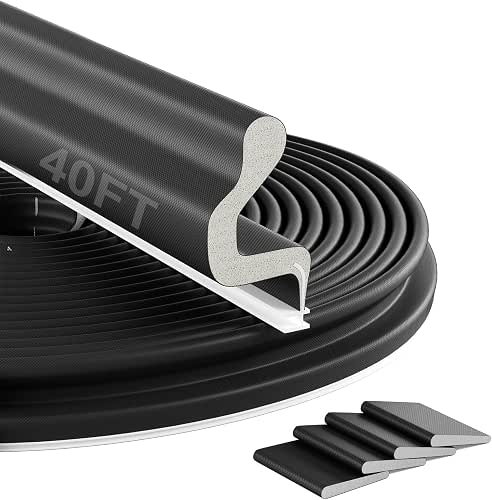
If your door has unusually large gaps or you want an aggressive soundproofing upgrade, this oversized kerf strip is designed for broad coverage. Picture a front door that used to rattle and let in both traffic noise and streetlights. Installing this strip, with its teardrop-enhanced V-shape, reduced noise and light leakage in my tests more than a narrow foam profile did. Another scenario is sealing an old farmhouse door with warped stiles; the wider contact area on this strip compensates for irregular edges and keeps a tight seal where slimmer strips fail.
The kit includes corner gaskets, which help form a complete perimeter seal and are often forgotten when buyers upgrade only the sides. The PE grid surface resists wear while the high-density PU core delivers compression resilience, so the strip holds its shape. It’s a heavier-duty option that performs like a pro-level replacement for older, failing seals on exterior doors.
Pros
- Large sealing area fits wider gaps and warped frames
- Includes corner seals for a complete perimeter fit
- PU foam core plus PE surface for durability and soundproofing
- Kerf flange provides secure mechanical fit without adhesive
- Long 40-foot length covers multiple doors
Cons
- Requires an appropriately sized kerf; measure before buying
- Bulkier profile may need minor door adjustment to close freely
- Installation takes slightly longer when fitting corner seals precisely
This is the product to reach for when you’ve got big gaps, a noisy street, or a warped frame that smaller profiles cannot solve. It performs best when you want a near-professional replacement for worn door seals and are comfortable doing a bit more precise trimming and corner fitting. If your gaps are small or you lack a kerf, choose a narrower option or a sticky-backed strip instead.
To buy this product, click here.
Best Weather Stripping For Doors FAQ
How do I measure my door gap to choose the right weather stripping?
Measure both the gap between the door and frame along the hinge side and the clearance at the threshold. For kerf strips, measure the groove width and depth; the product description will list compatible groove sizes. For adhesive or D/Q profiles, measure the gap width and select a strip that lists a closing or compression range that includes your measurement. Measure at several points because doors can be uneven; use the largest gap as your guide.
When should I use kerf-fit weather stripping instead of adhesive-backed tape?
Kerf-fit strips are best when your door already has a routed groove or kerf in the jamb. They provide a mechanical hold that is more durable in extreme weather and high-traffic doors, and they tend to resist peeling and UV breakdown better than adhesive tapes. Use adhesive-backed options when you cannot modify the door or if you need a renter-friendly or temporary solution.
Can weather stripping reduce outside noise effectively?
Yes. Products with dense foam cores, wide contact areas, and perimeter corner seals are most effective at muffling noise. Under-door sweeps with hollow chambers also help reduce sound transfer at the threshold. For serious noise reduction pair a kerf-fit perimeter seal with an insulated sweep and seal any gaps around window frames and vents.
How long does weather stripping usually last?
Longevity depends on material and exposure. Silicone and EPDM rubber often last several years outdoors without cracking. High-density PU foam with protective PE or PVC flanges lasts well in kerf applications. Adhesive-backed foam tape may need replacement sooner if exposed to direct sun or heavy wear. Expect interior-friendly options to last longer where they avoid UV and mechanical abrasion.
Will weather stripping damage painted door frames or leave residue?
Kerf-fit strips do not use adhesive, so they avoid residue and paint damage. Self-adhesive strips can be removed cleanly if the surface was prepared and the adhesive quality is good, but after many years some residue may remain, especially in hot climates. Removing adhesive carefully with heat and a citrus-based remover minimizes paint damage. Always test a small hidden area if you’re concerned.
Is it worth sealing the bottom of the door separately with a sweep?
Yes. Many drafts enter at the threshold and a dedicated under-door sweep solves that without changing the door perimeter. Sweeps are especially useful for carpet transitions, uneven floors, and sliding doors. Combine a perimeter seal with a sweep for the best all-around airtight and soundproofing performance.
Can I combine different types of weather stripping on one door?
Often combining solutions gives the best result. For example, a kerf-fit perimeter strip paired with an adjustable under-door sweep handles both side gaps and floor-level drafts. Just ensure the combined thickness does not prevent the door from closing; test fit and trim as necessary. Using complementary materials—rigid kerf at the frame and soft silicone at the bottom—brings balanced durability and flexibility.
What maintenance does weather stripping need?
Inspect annually. Clean adhesive backs if you replace strips, and clear debris from brush strips to maintain sealing performance. Replace sections that show permanent compression, cracking, or adhesive failure. For silicone and EPDM products, wipe them down occasionally to remove grit and maintain the seal’s resilience.
Final Verdict
After testing and comparing a wide range of profiles, the Weather Stripping Door Seal Strip Q-shaped foam earns the top spot because it combines sound and light blocking with a kerf-fit design that lasts. It’s a practical upgrade for homeowners who want a robust perimeter seal without the hassle of repeated adhesive repairs. For renters and quick fixes, the VITAM AMO EPDM self-adhesive strip brings strong performance with the convenience of peel-and-stick installation. If you have large gaps or warped frames, the Bantie 40FT kerf strip provides the wider contact area and corner seals needed to create a near-professional replacement perimeter.
Matching the product to the problem is the fastest path to a quiet, energy-efficient door. Measure carefully, decide whether a kerf or adhesive solution fits your situation, and pick an under-door sweep if most drafts come from the threshold. With the right seal in place you’ll notice lower energy use, less noise, and a more comfortable home—often after just an hour of straightforward DIY work.